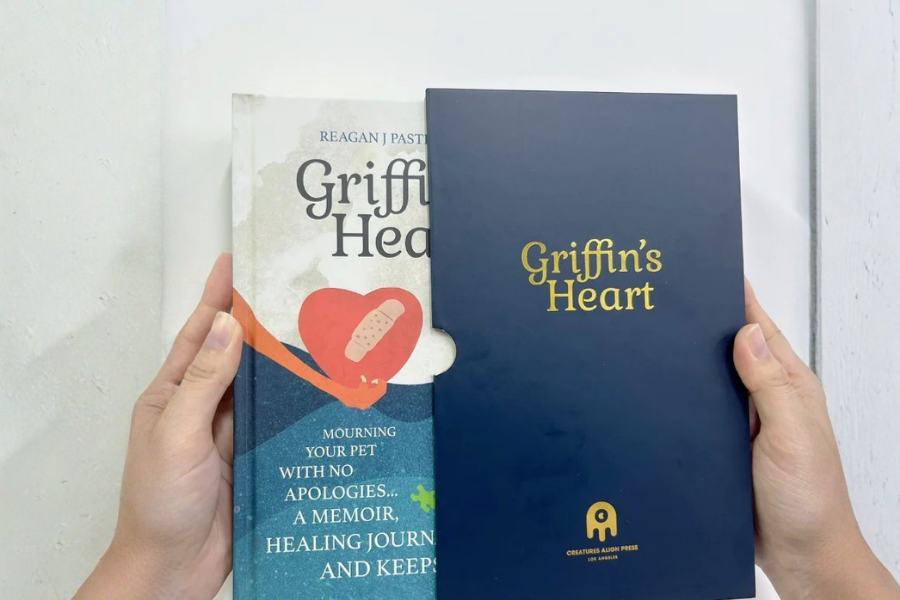


“Peguei um livro parecido com o meu – mesmo gênero, contagem de páginas semelhantes, mesma prateleira na Barnes & Nobre. Mas lado a lado, algo parecia errado. O meu parecia quase caseiro.” Por que esse fenômeno ocorre? O problema não era a história ou o design da capa dura. Era a dimensão do livro de capa dura.
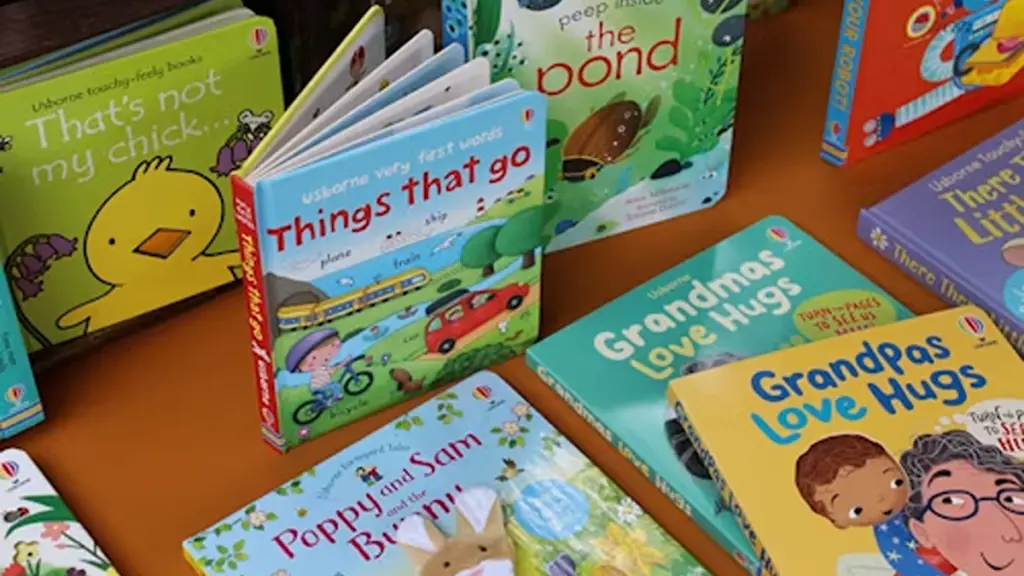
Quando colocado ao lado de capas duras publicadas tradicionalmente, muitos livros independentes imediatamente pareciam diferentes. As proporções pareciam estranhas. A coluna não estava bem. Alguns tamanhos de acabamento usados raramente vistos em livrarias, fazendo o livro se destacar da maneira errada.
E essa é a realidade da publicação de capa dura: Os leitores julgam o livro antes de lê-lo.
A dimensão, grossura, e as proporções de uma capa dura afetam instantaneamente o quão profissional ela fica em uma prateleira. Mesmo um livro lindamente desenhado pode parecer deslocado se as dimensões estiverem erradas.
Neste guia, detalhamos tudo o que você precisa saber sobre livro de capa dura dimensões, desde tamanhos padrão de capa dura até uma fórmula de cálculo de capa passo a passo, além de um método confiável para estimar a espessura da lombada antes da impressão.
Tabela de referência rápida: Tamanhos padrão de capa dura
Abaixo estão os tamanhos de acabamento mais comuns (o tamanho do bloco de livro finalizado). Estas dimensões irão ajudá-lo a comunicar claramente com qualquer impressora profissional.
| Tipo de livro de capa dura | Tamanho do corte (polegadas) | Tamanho do corte (mm) | Casos de uso típicos |
| Negociar capa dura | 6″ × 9 ″ | 152 × 229 | Romances, memórias, livros de negócios |
| Compactar / Resumo de capa dura | 5.5″ × 8,5″ | 140 × 216 | Livros para presente de bolso, poesia, e pequenos livros devocionais |
| Capa dura da carta dos EUA | 8.5″ × 11″ | 216 × 280 | Livros didáticos, manuais, Relatórios |
| Capa dura A5 | 5.8″ × 8,3″ | 148 × 210 | Revistas, planejadores, Notebooks |
| B5 Capa dura | 6.9″ × 9,8″ | 176 × 250 | Livros didáticos, guias técnicos |
| Capa dura em quadrinhos | 6.625″ × 10,25″ | 168 × 260 | Histórias em quadrinhos, quadrinhos |
| Capa dura de bolso | 4.25″ × 6,87″ | 108 × 175 | Romances de bolso, livros de viagem |
| Capa dura real | 6.14″ × 9,21″ | 156 × 234 | Livros acadêmicos e de não ficção |
| Livro Infantil Quadrado | 8″ × 8″ | 203 × 203 | Livros ilustrados infantis |
| Capa dura de paisagem | 10″ × 8″ | 254 × 203 | Livros de fotografia e arte |
Se você está almejando o mercado dos EUA, 6″×9″ é de longe a escolha mais popular para ficção e não ficção em geral. Para os mercados do Reino Unido e da Europa, Royal e Demy continuam fortes candidatos.
Como as dimensões do livro de capa dura são calculadas
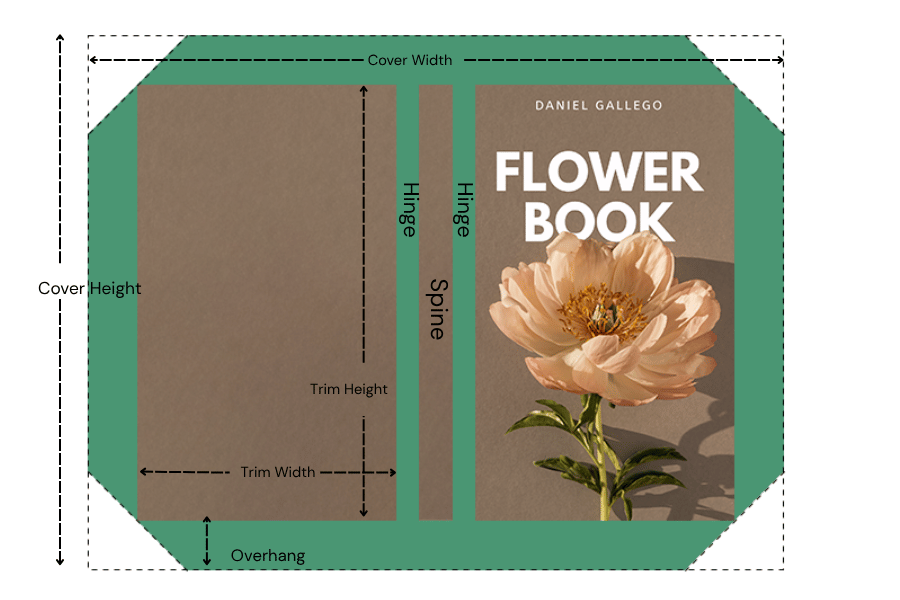
Ao imprimir um livro de capa dura, o tamanho do acabamento por si só não é suficiente para criar o layout final da capa. É preciso calcular: Largura da lombada, Tamanho do corte, Saliência, e tamanho da capa. Essas medidas funcionam juntas para determinar as dimensões completas da caixa de capa dura.
| Dimensão | Descrição | Exemplo (6guarnição ″×9″, 0.7" coluna) |
| Tamanho do corte(bloco de livro) | A largura e altura das páginas após encadernação e corte. Isto é o que o leitor vê quando o livro é fechado, excluindo a capa. | 6″ × 9 ″ |
| Tamanho da capa | As dimensões externas da caixa rígida de capa dura (quadro + material de cobertura). É sempre maior que o tamanho de corte para proteger as páginas. | ≈ 6,25″ × 9,25″ |
| Saliência | A quantidade que a capa dura se estende além das páginas cortadas em cada lado. | ≈ 0,125″ por lado |
| Largura da lombada | A espessura da espinha dorsal do livro, determinado pela contagem de páginas e espessura do papel. | ≈ 6,25″ × 9,25″ |
Dimensões do livro de capa dura versus tamanho do acabamento
Antes de projetar sua arte de capa dura, é importante calcular corretamente as dimensões completas da tampa da caixa. Isso garante que a coluna, enrolar, e os elementos da capa se alinham corretamente durante a impressão e encadernação. Abaixo estão as fórmulas padrão que as impressoras usam para determinar as medidas finais da capa de capa dura.
- Largura da capa = (Largura do corte × 2) + Largura da lombada + (Saliência esquerda + Saliência direita)
- Altura da tampa da caixa = Altura do acabamento + (Saliência superior + Saliência inferior)
O tamanho da saliência normalmente aumenta à medida que o livro fica mais grosso. Livros maiores de capa dura exigem uma extensão de caixa mais larga para proteger melhor as páginas internas e manter proporções equilibradas na prateleira.
Como orientação geral:
- Livros de capa dura abaixo 400 as páginas geralmente usam uma saliência de cerca de 0,125″ (3 mm) em cada lado aberto.
- Livros entre 400 e 800 as páginas geralmente exigem uma saliência um pouco maior de aproximadamente 0,1875 ″ (4.5 mm).
- Capas duras muito grossas 800 as páginas podem usar uma saliência de 0,25″ (6 mm) ou mais, dependendo da estrutura de encadernação e da espessura da placa.
Porque a construção da coluna, tipo de papel, e o estilo de encadernação podem afetar as dimensões finais da caixa, é sempre recomendável confirmar as especificações exatas de balanço com sua impressora antes do início da produção.
Exemplo (Comércio dos EUA 6″×9″, 300 páginas)
Vamos supor:
- Tamanho do corte: 6″ largura × 9 ″ altura
- Largura da lombada (estimado): 0.7″ (veja a seção 4 para cálculo)
- Saliência: 0.125″ de cada lado
Largura da capa
= (6″ × 2) + 0.7″ + 0.125″ + 0.125″
= 12″ + 0.7″ + 0.25″
= 12,95″
Altura da tampa da caixa
= 9″ + 0.125″ + 0.125″
= 9,25″
Portanto, o tamanho final da capa da sua caixa é 12,95 "de largura x 9,25" de altura.
Esta é a dimensão que você deve usar para o tamanho de acabamento da arte da capa(antes de adicionar sangramento).
Recomendações de saliências de capa dura
A quantidade de saliência da capa dura normalmente aumenta à medida que o livro fica mais grosso. Livros maiores e mais pesados geralmente exigem uma extensão de caixa um pouco mais larga para melhorar a durabilidade, proteger as bordas da página, e manter proporções equilibradas.
Como diretriz geral de produção:
| Espessura do livro (páginas) | Saliência recomendada |
| Até 400 páginas | Cerca de 0,125″ (3 mm) |
| 400–800 páginas | Cerca de 0,1875″ (4.5 mm) |
| Sobre 800 páginas | Cerca de 0,25″ (6 mm), dependendo da estrutura de ligação |
As dimensões reais da saliência podem variar dependendo do estilo de encadernação da capa dura, espessura da placa, e padrões de produção de impressoras.
Como a largura da lombada afeta as dimensões da capa dura
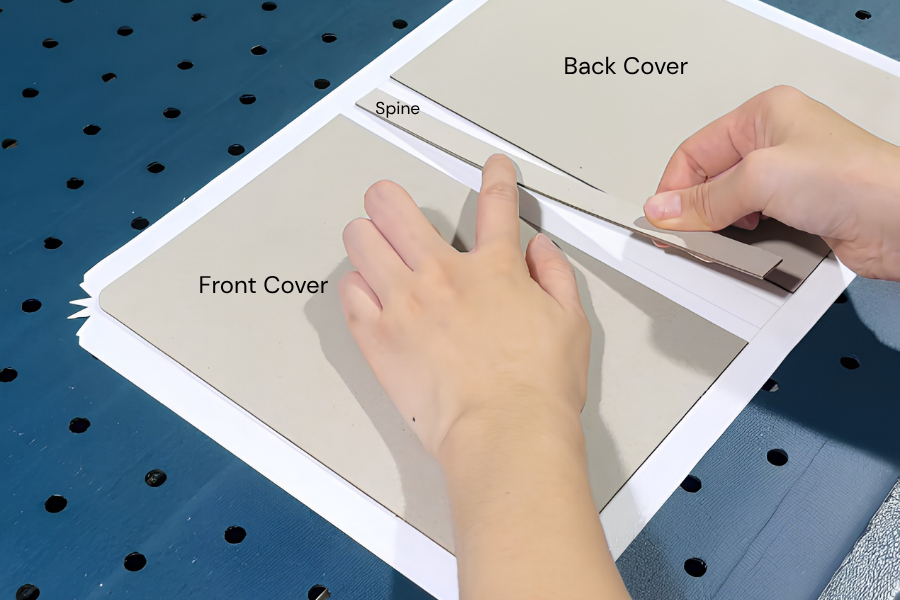
Estimando espessura da coluna com precisão é essencial para o tamanho da capa dura – especialmente se a lombada incluir texto ou gráfico. Como você não terá um bloco de livro impresso antes de a capa ser projetada, use o seguinte método.
- Espessura da coluna (mm) = (Total de páginas ÷ 2) × Espessura do papel (mm por folha)
Tabela de referência de espessura de papel
| Tipo de papel | GSM | Espessura por folha (mm) | Espessura por folha (polegadas) |
| Papel revestido fosco/brilhante | 80 | 0.10 | 0.0040 |
| Deslocamento não revestido (prêmio) Papel | 100 | 0.12 | 0.0047 |
| Papel revestido fosco/brilhante | 128 | 0.11 | 0.0043 |
| Papel revestido fosco/brilhante | 157 | 0.14 | 0.0055 |
| Ppaer revestido fosco/brilhante | 200 | 0.18 | 0.0071 |
Exemplo de cálculo
Cenário:
- 300 páginas
- 80 papel não revestido gsm (0.10 mm por folha)
Espessura da coluna = (300 ÷ 2) × 0.10 milímetros = 150 × 0.10 = 15,0mm(aprox.. 0.59″)
Como os estilos de encadernação afetam o tamanho da capa dura?
Diferentes estilos de encadernação de capa dura podem alterar ligeiramente as dimensões finais da capa.
- Capas duras quadradas usam a fórmula de cálculo padrão diretamente.
- Capas duras com lombada arredondada geralmente exigem uma margem de lombada um pouco mais larga para compensar o formato curvo.
- As sobrecapas são impressas um pouco maiores do que o estojo de capa dura para permitir embrulhar e dobrar em torno das placas.
Porque a estrutura de ligação afeta as medições finais, é sempre melhor confirmar o modelo exato da capa com sua impressora antes de finalizar a arte.
Livros reais de capa dura que imprimimos
Não apenas cálculos – livros reais, dimensões reais, resultados reais. Abaixo estão alguns títulos de capa dura que fabricamos para editoras, autores independentes, e marcas na América do Norte e Europa.
As aventuras de Alice no país das maravilhas

O exemplo acima mostra um livro de capa dura de grande formato projetado para uma apresentação visual premium. Com base nos requisitos do cliente, as especificações desta versão são as seguintes:
- Tamanho finalizado: 8 polegadas × 10 polegadas
- Vinculativo: Capa dura (lombada quadrada)
- Largura estimada da lombada: 20 mm
- Estilo de capa: Capa de papelão cinza com sobreposição de papel impresso
- Acabamento de superfície: Laminação fosca, impressão em cores especiais
- Estilo de página interna: Impressão com borda preta/bordas de página escuras
Este tamanho de livro de capa dura é comumente usado para:
- Livros ilustrados infantis
- Edições de colecionador
- Livros de presente premium
- Publicações de arte e fantasia
O tamanho maior dos livros de capa dura os torna mais marcantes visualmente nas estantes, atraindo a atenção das crianças, enquanto a lombada quadrada e grossa dá ao livro um aspecto mais sofisticado, sensação de publicação tradicional, aumentando seu valor de exibição em estantes ou balcões de varejo.
Aprendendo minhas partes do corpo com Gygy
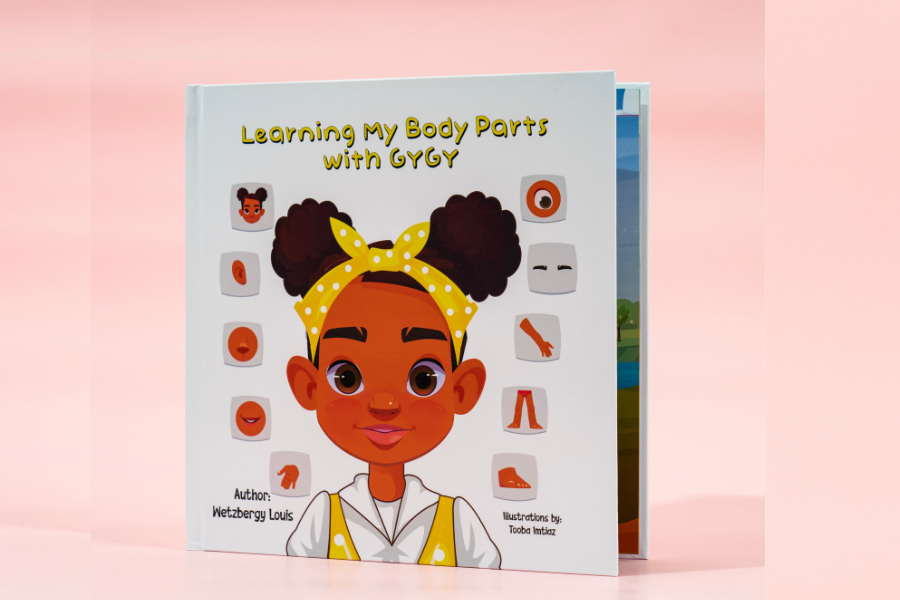
Com base nas proporções, este livro usa um formato infantil vertical. As especificações deste livro de capa dura são as seguintes:
- Tamanho do corte: 8.5″ × 11″
- Tipo de ligação: Capa dura encadernada com lombada quadrada
- Material de tampa: Papel de arte impresso montado em quadro cinza
- Acabamento: Laminação fosca para um acabamento suave, superfície durável
- Espessura da placa: Placa de capa dura de peso médio para durabilidade adequada para crianças
Este tamanho é comumente usado para livros infantis educacionais porque cria um melhor equilíbrio entre legibilidade, espaço de ilustração, e interação da página. Para livros infantis de capa dura, Um tamanho de acabamento maior permite:
- Ilustrações maiores e tipografia mais clara
- Layouts de página mais confortáveis para jovens leitores
- Melhor visibilidade durante a leitura em sala de aula ou entre pais e filhos
- Maior apelo nas prateleiras de livrarias e mercados educacionais
Você também pode notar as proporções relativamente largas da capa frontal e as grossas placas de capa dura, que ajudam o livro a parecer durável e premium, ao mesmo tempo que protegem as páginas internas contra dobras ou danos. É por isso que os editores normalmente usam tamanhos maiores de capa dura para livros ilustrados, livros educacionais, e títulos de aprendizagem interativos como este.
Considerações Finais
Porque cada projeto é diferente, recomendamos que os usuários calculem o tamanho do livro de capa dura com base no número de páginas, espessura do papel, método de ligação, e uso pretendido no mercado antes do início da produção.
Se você está planejando um projeto de capa dura personalizado e precisa de ajuda para determinar o tamanho correto do acabamento, largura da lombada, ou layout de capa, nossa equipe pode ajudar a fornecer recomendações de produção e modelos de capa dura prontos para impressão para o seu projeto.