

The spine is the back edge of a bound publication. It is the surface that holds the leaves together, and it is the panel a reader sees first on a shelf. Two other words cover the same ground. The backbone is the structure inside, and the spine panel is the printed face outside.
This guide follows the order a factory works in. It covers how each binding builds the back, the shapes those methods produce, the arithmetic behind a spine width, and the panels and clearances a cover file needs. The round versus square decision has its own article on this site, linked below, so this page stays on structure and sizing.

What a Book Spine Actually Is
Strip a book down and three parts remain. The text block is the trimmed stack of printed leaves. The casing is the rigid cover built separately and joined later. The spine is where those two meet, and it is the only part of a hardcover that carries the title on a shelf.
Paperback construction collapses that separation. There the cover is one sheet of cardstock, and its middle strip wraps the glued edge of the block. That strip is still called a spine, and it behaves differently under load. O binding types page lists both routes side by side.
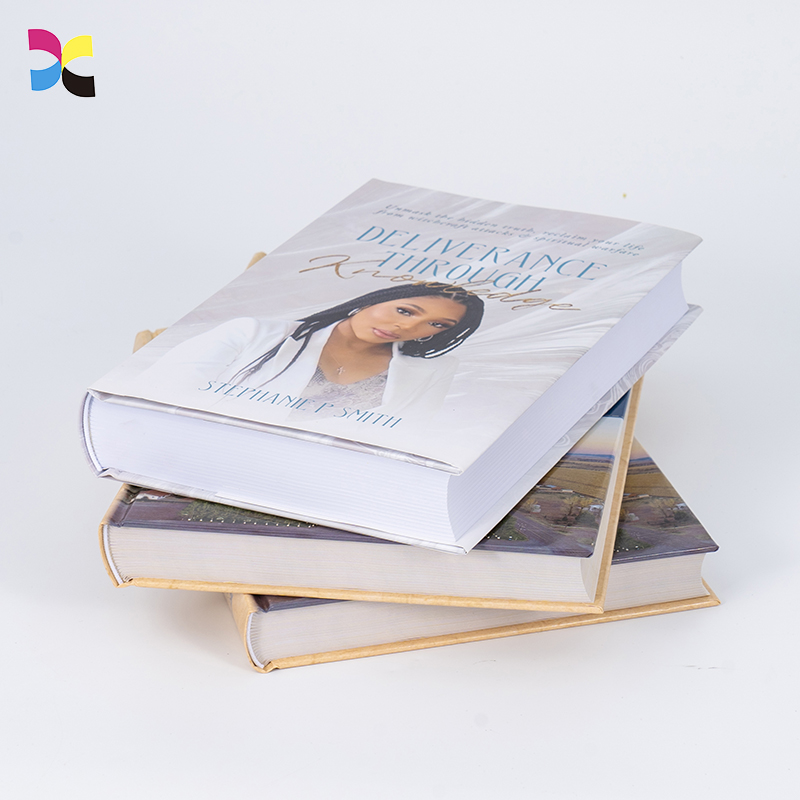
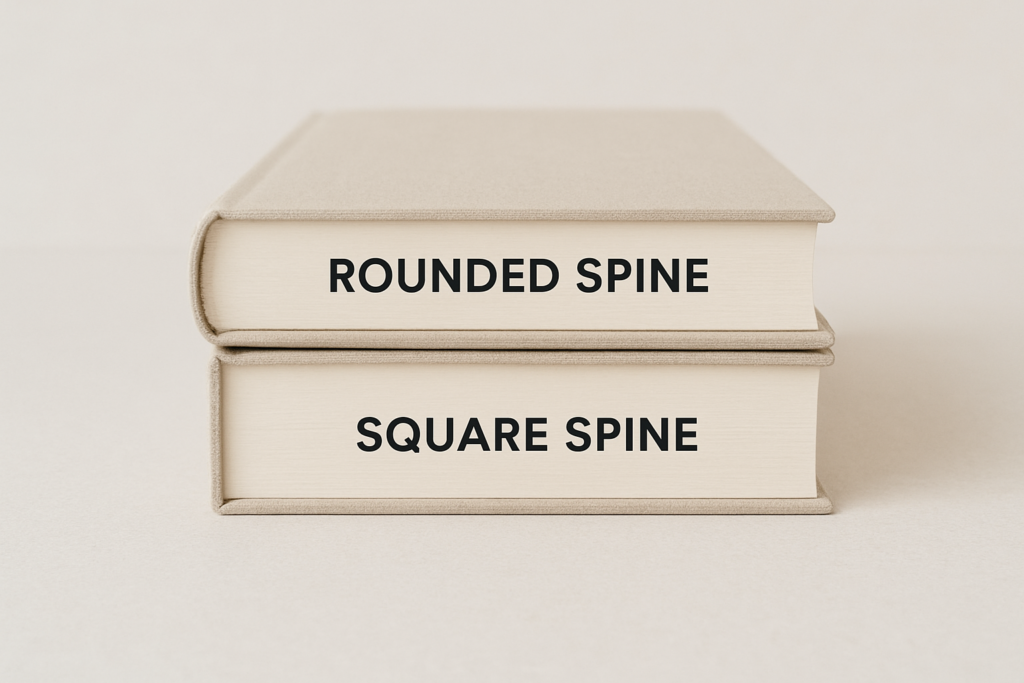
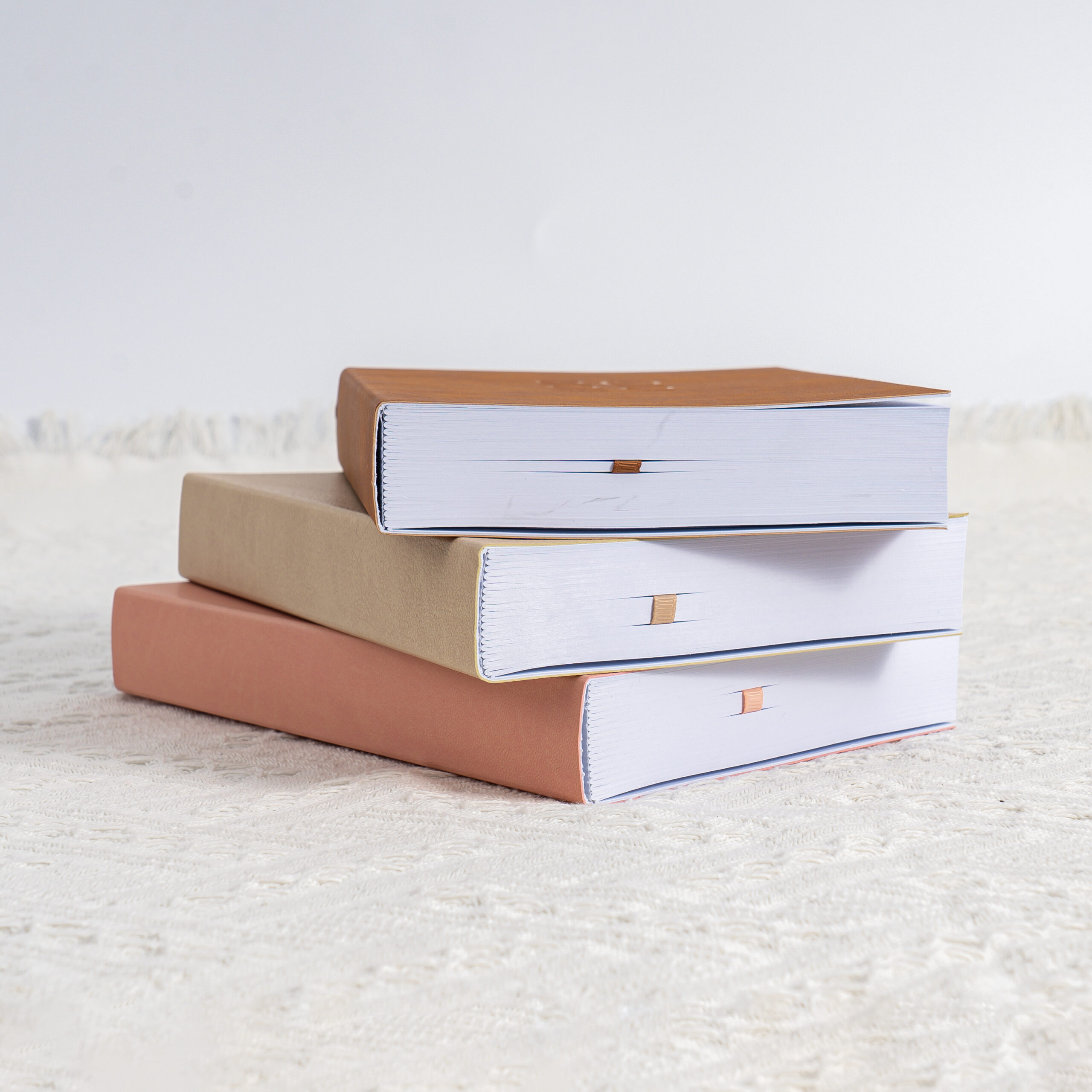
Rounded shoulders are what the stack above shows. Bookbinding, the encyclopedia entry, describes rounding and backing as the operation that forms a curved spine and shoulders wide enough to support the block. That shape is what made upright shelving and spine titling practical. The article is a general reference on the craft, not a description of our own line.
How the Backbone Gets Built
Every spine begins as a book block. What happens to that block before a cover touches it decides how the finished back looks, how far it opens, and how long it survives.
Sewing or Gluing the Block
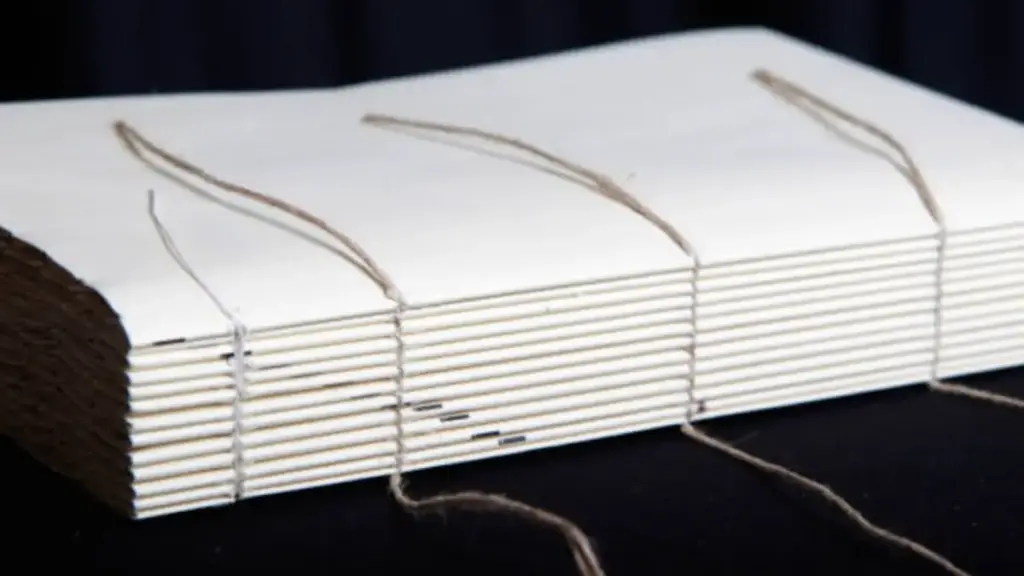
Thread sewing passes through folded signatures, which are nested groups of printed sheets. Adhesive binding runs along the cut edge of a stacked block instead. Our casing lines are automated, and the binding page names the Müller Martini and Kolbus equipment behind them.
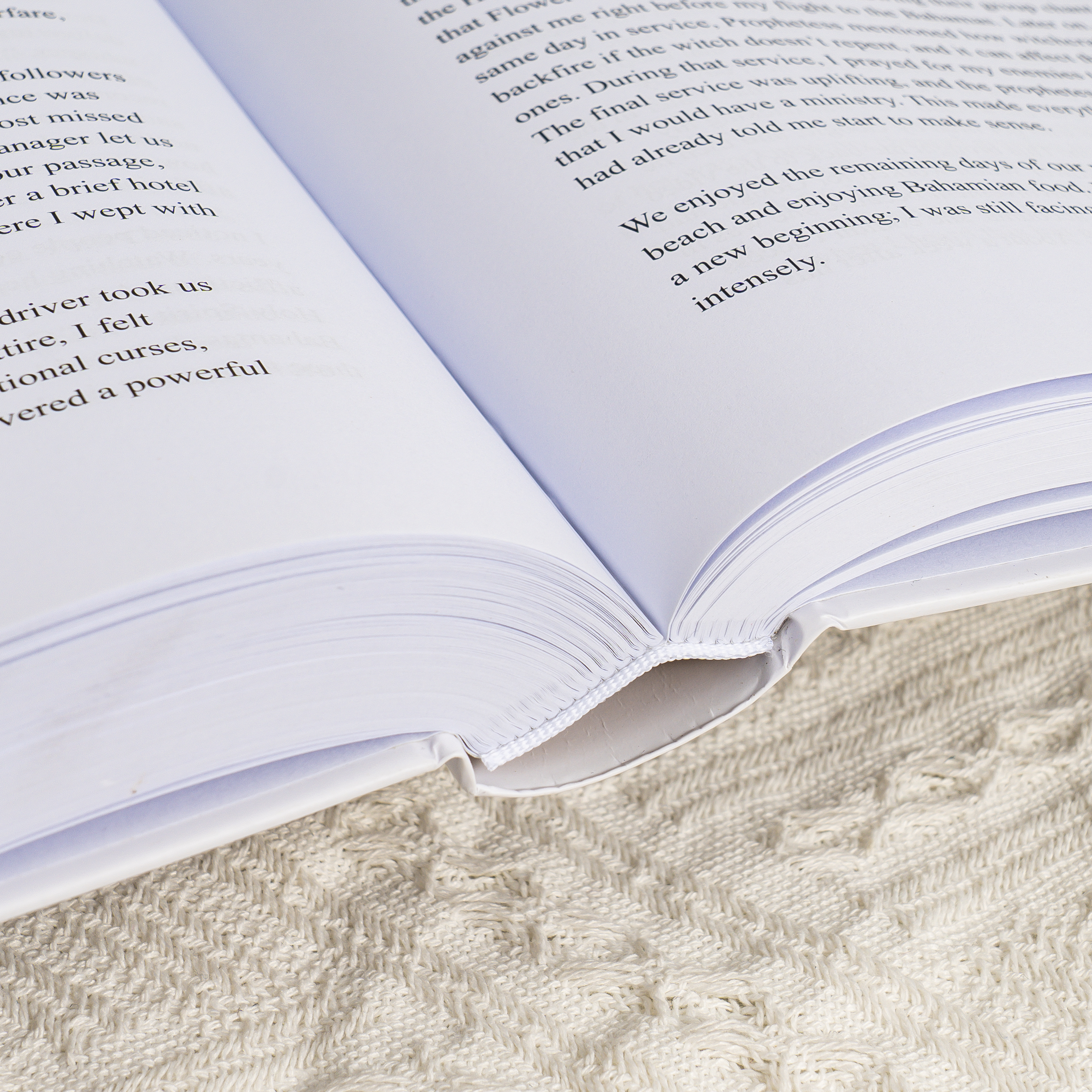
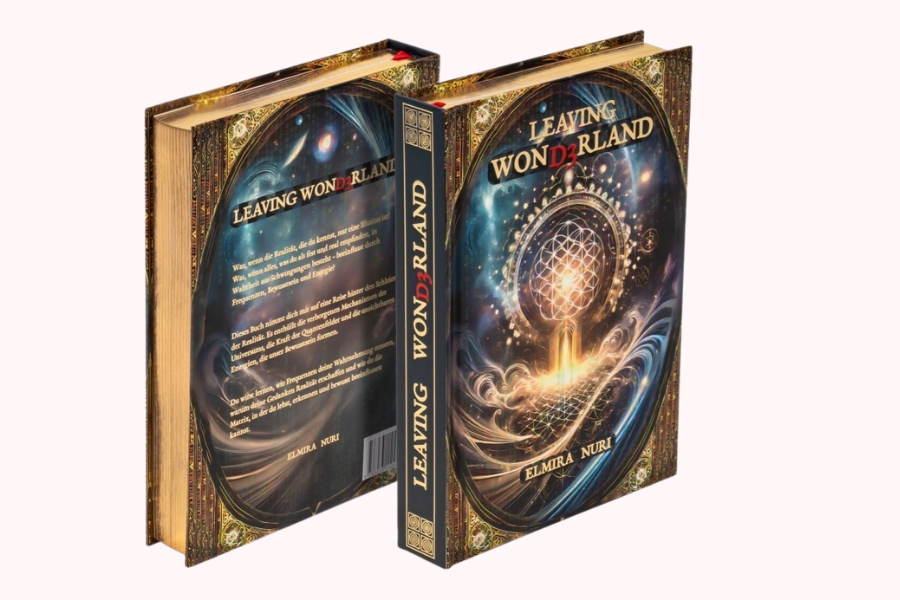
The image above is the sewn side of that choice. Signatures are joined along the fold before the block is trimmed, so no single leaf carries the load on its own. Our binding types guide places section sewn work with art books, catálogos, and academic titles.
Milling and Adhesive
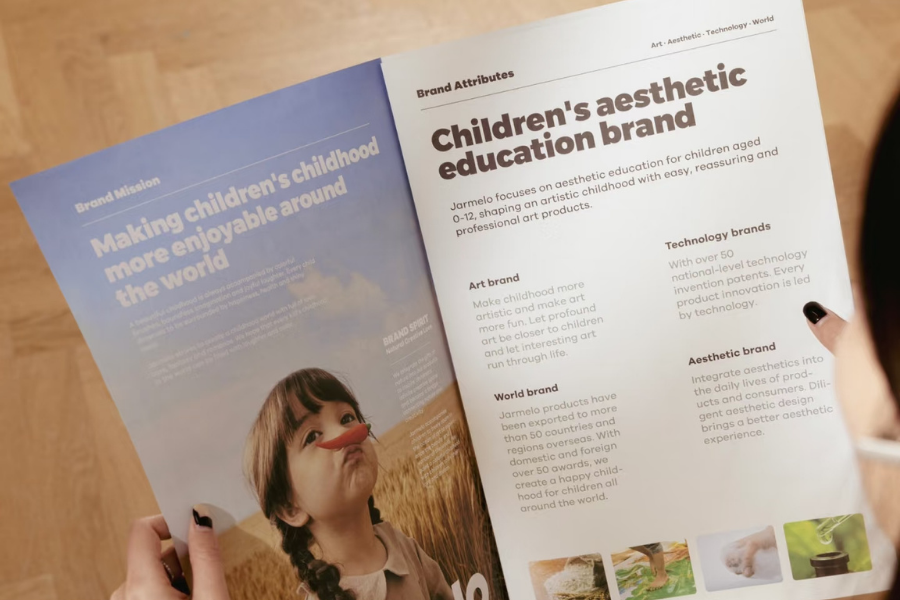
A glued spine needs a keyed surface. The cut edge of the block is roughed so adhesive reaches between fibres instead of sitting on a smooth stack. The result is what the binding page calls a clean rectangular spine, formed by a hot-melt adhesive and a creased cardstock cover.
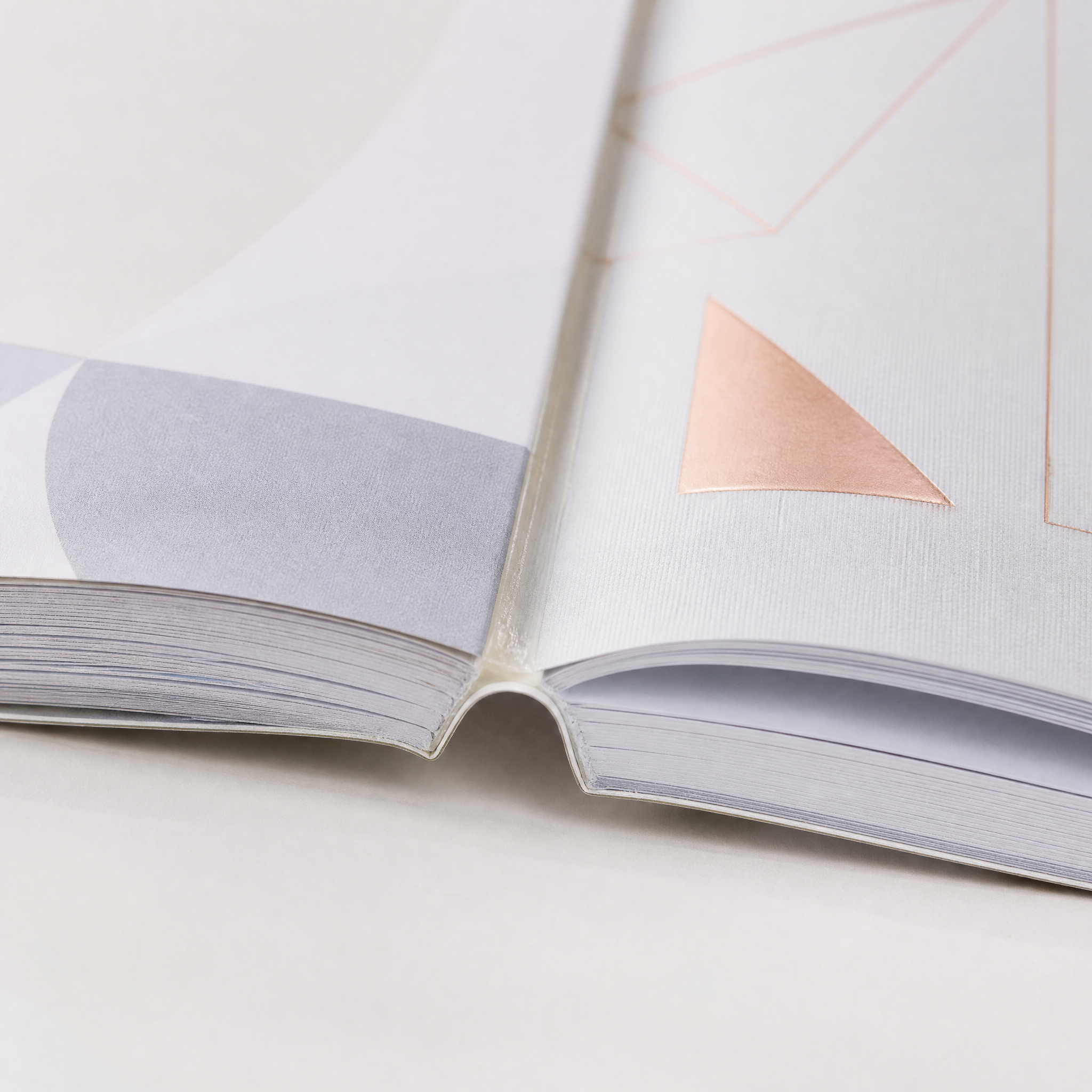
Two adhesives sit behind that finish. EVA is the standard hot-melt, and PUR is a reactive polyurethane the binding page credits with three times the pull strength and better resistance to temperature swings. Both produce a flat face, and the finished block is shown above at rest.
Rounding and Backing
Rounding presses the sewn spine into an arc. Backing then spreads the block wider than its own thickness so the shoulders can carry the boards. Our turtleback guide describes the outcome as a rounded, reinforced spine that distributes stress across a wider arc.
That article also puts the board on a library edition at 2 para 3 mm, against the 2.0 para 3.0 mm greyboard listed for standard casebinding. The difference is the extra reinforcement at the shoulders and the corners.
Casing-In and Turn-Ins
Casing-in is the moment block and cover meet. Endpapers are pasted to the inside boards, and the case is pressed onto the block on the automated casing line. From there the book is a single object, and the spine is the hinge that carries every opening cycle.
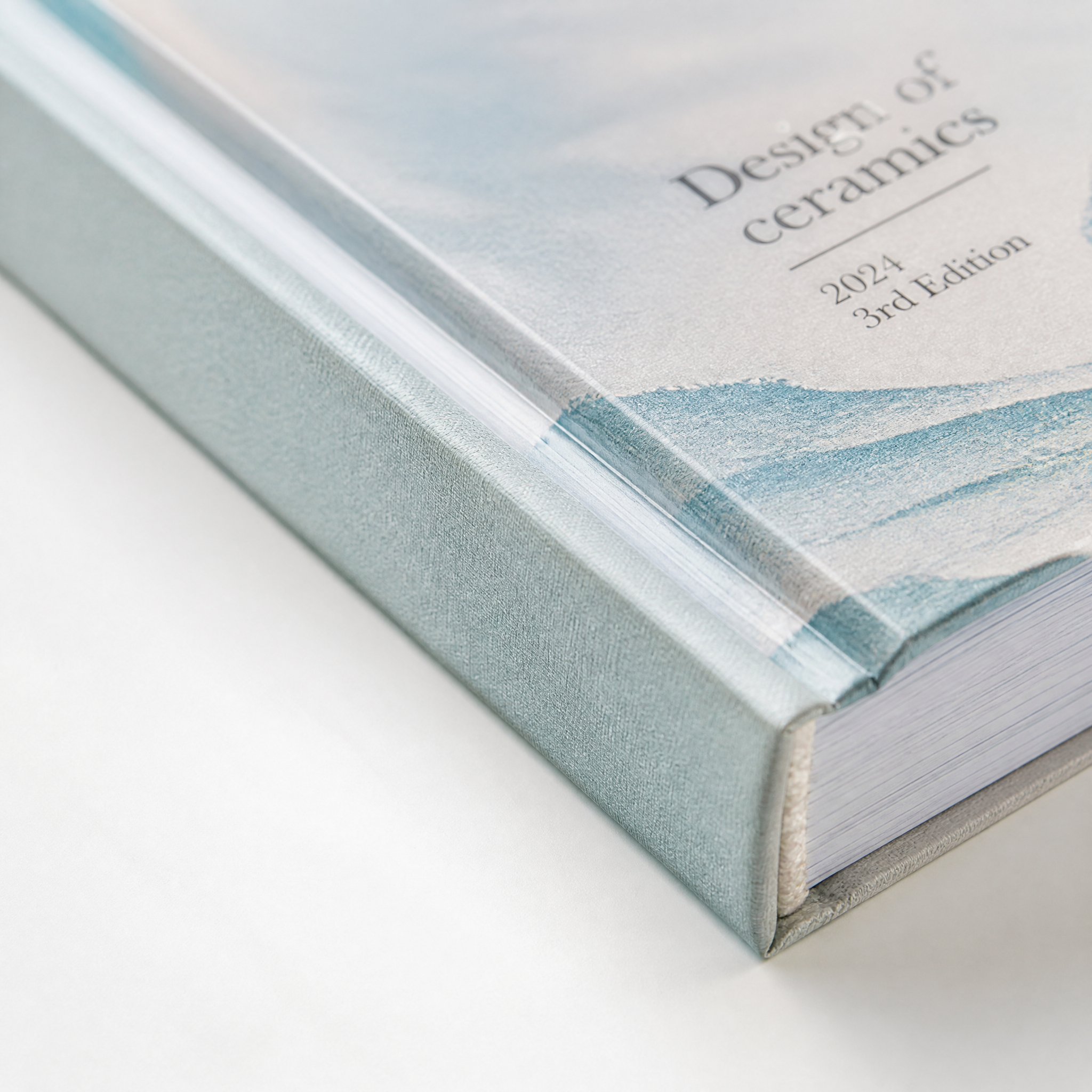
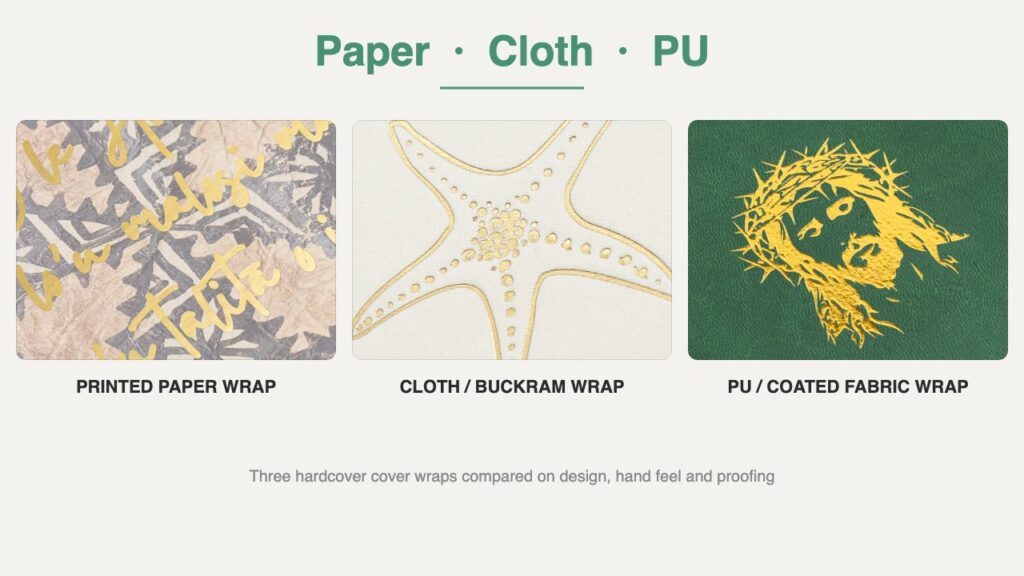
The wrap is what holds that joint. Our file setup guide sets the hardcover wrap-around allowance at 15 para 20 mm, folded past the board edge into the turn-in. O cover materials page lists the substrates that carry that wrap.
Hinges, Joints and Grooves
The groove between board and spine is the joint. It gives the cover somewhere to fold, and it keeps the board from rubbing the cloth away at the shoulder. The file setup guide scores hinge grooves at 8 para 10 mm on a casebound spread.
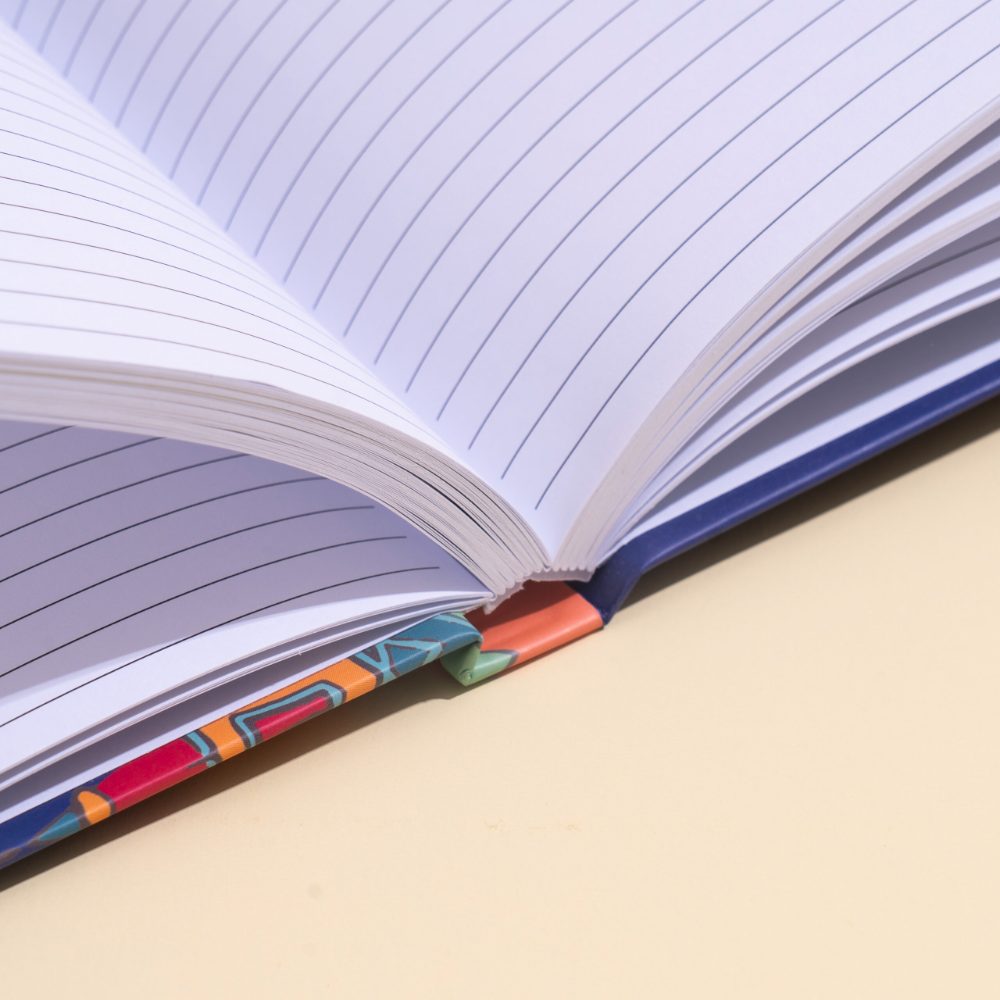
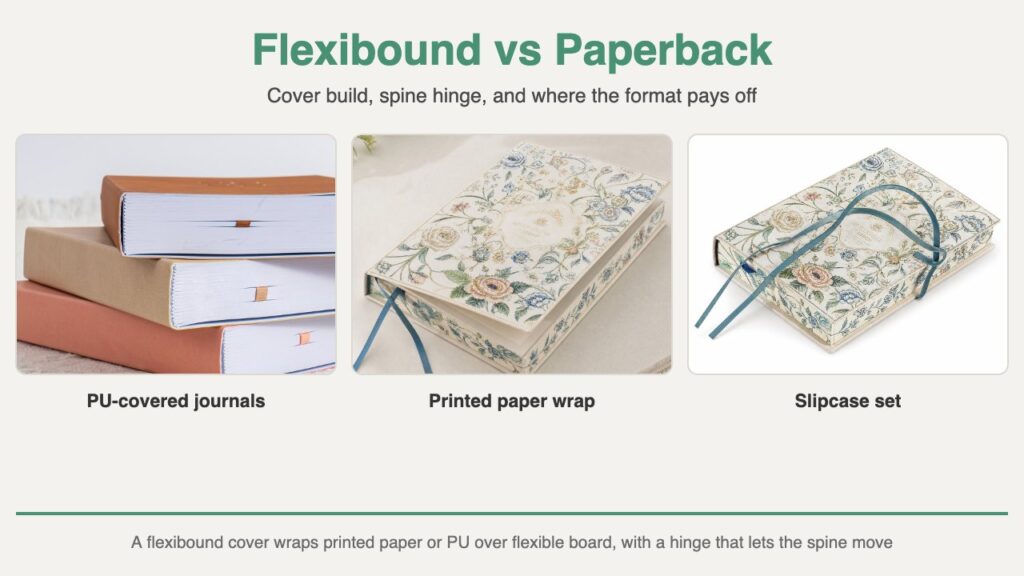
A softer cover solves the same problem another way. A flexibound case has no groove to score, so the hinge is formed by the material itself. Our flexibound guide covers that structure, its page band, and where it sits between paperback and casebound.
Headbands, Tailbands and Endpapers
A headband is a small woven band stitched at the head and tail of the spine. It closes the gap between block and board, and it steadies the top of the block against pulling. O hardcover journal page lists end sheets and headbands among the details that reinforce the binding.
Endpapers do a second job. They are the folded sheets pasted to the inside boards. Our guide asks for 140 para 180 gsm stock, supplied as a separate PDF rather than mixed into the interior file. The same accessory list carries ribbon markers, fechos elásticos, e laços de caneta.
Spine Shapes by Binding Method
Shape is an output, not a preference. The method you choose writes the back it is able to produce, and the table below reads the shapes straight off our binding page.
| Binding family | Back structure | Spine face | Published page band |
|---|---|---|---|
| Hardcover casebound | Boards of 2.0 para 3.0 mm greyboard, wrapped | Square or round | 32 para 800+ |
| PUR perfect bound | Milled block edge on reactive polyurethane glue | Plano, rectangular | 48 para 600+ |
| EVA perfect bound | Milled block edge on hot-melt adhesive | Plano, rectangular | 48 para 400 |
| Saddle stitched | Folded signatures held by wires at the fold | A fold, not a panel | 8 para 64 |
| Children’s board book | Spreads mounted back to back, corners rounded | Wrapped board | 10 para 36 |
| Wire-O or double loop | Punched sheets threaded on a twin loop coil | No spine panel | 16 para 400+ |
| Specialty lay-flat | Hinged adhesive between facing spreads | No visible spine | 24 para 200 |
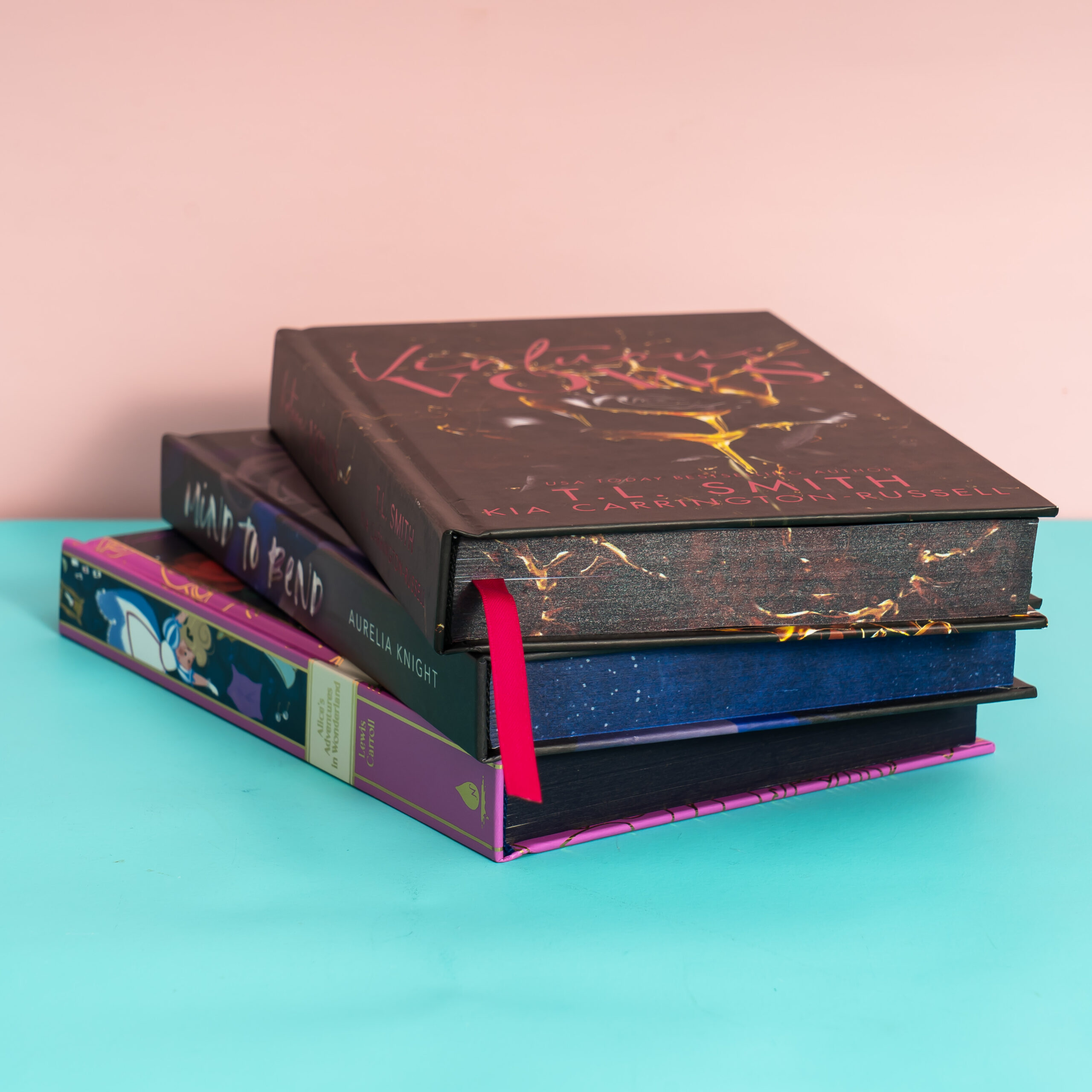
A square spine keeps the boards flush with the joint, so the face stays flat end to end. That flat face is why the shape suits foil, Gravação, and printed type. Our hardcover category states the shape choice plainly: square spines suit thinner cases under 25 mm, and round spines carry thick fiction and heavy art titles.
The full comparison, including how each shape interacts with painted edges, is on our round versus square guide. Read that piece before you fix a shape, and treat this one as the structural background it assumes.
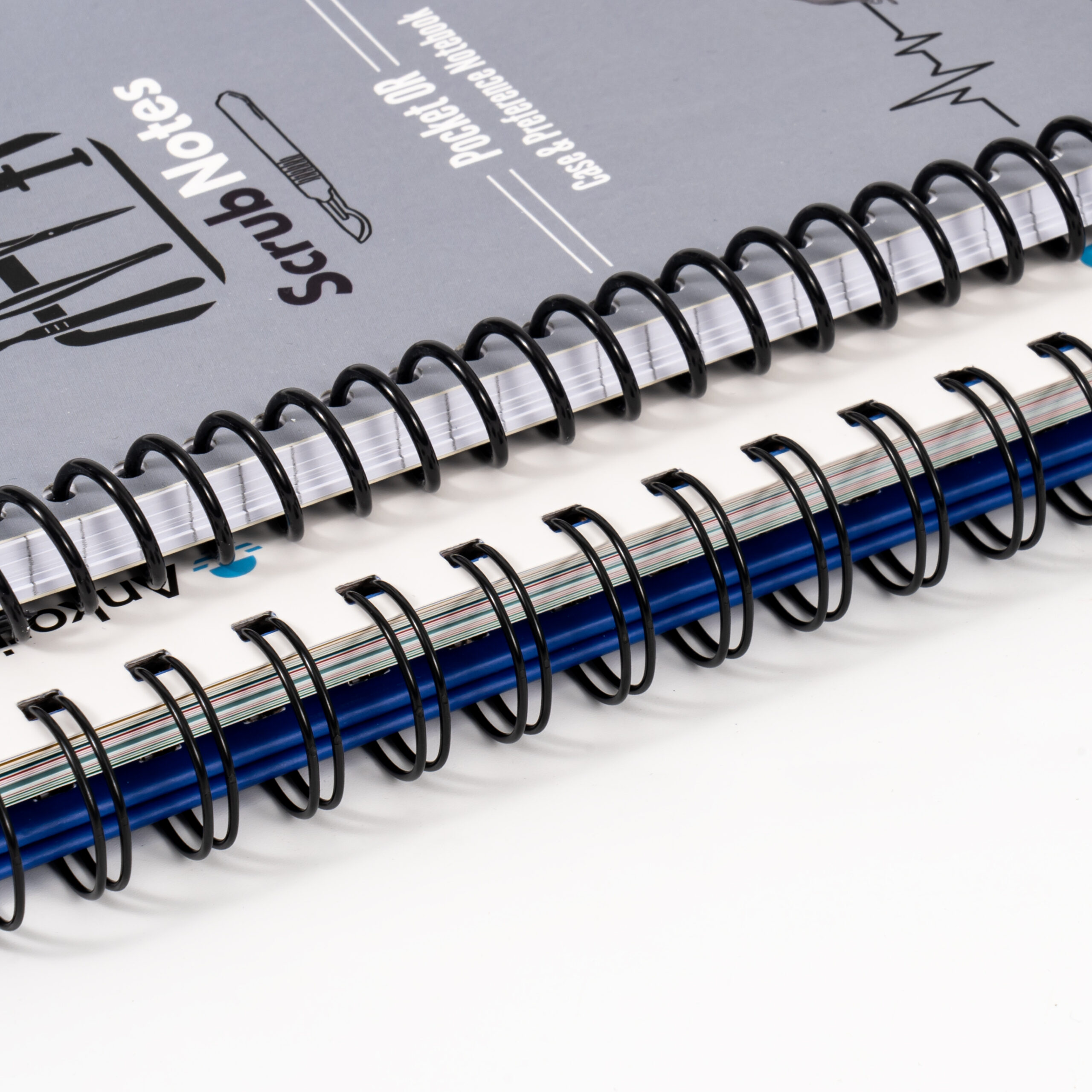
A coiled back has no spine at all. The wire carries the sheets, and the cover edge stays straight and unsupported. That is a feature in a planner that must fold double, and a problem on a shelf where nothing can be read. Our spiral bound category covers the formats that suit it.
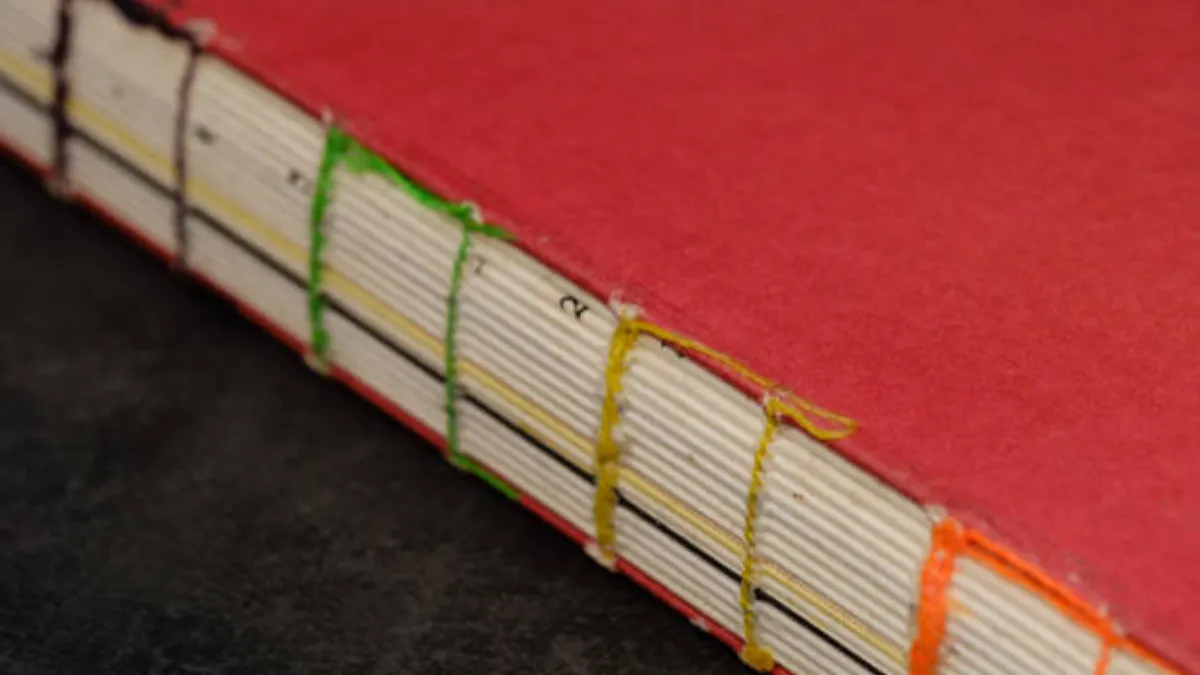
An exposed back turns the structure into the decoration. Thread is stitched through drilled holes near the joint, so the sewing is the ornament. Our binding guide lists stab work at around 80 pages and warns that it does not open flat, which makes it a boutique notebook choice rather than a novel one.
How to Calculate Spine Width
Our file setup guide publishes the formula the prepress team runs. The interior page count is halved to give the number of physical leaves. That leaf count is multiplied by the caliper of the chosen sheet. Espessura da placa, wrap allowance, and a small adhesive allowance are added last.
On a paperback, the board term becomes the cover sheet caliper twice.
On a hardcover, add the 0.3 mm wrap allowance shown on the guide.
Caliper is the real thickness of one sheet, measured in microns or millimetres. It is not weight, and the two do not track each other. O paper thickness guide explains why a cotton sheet feels thicker than a coated one at the same gram weight.
| Stock family | Peso de base | Published caliper | |
|---|---|---|---|
| Coated gloss | 100 GSM | 0.080 mm | |
| Coated gloss | 128 GSM | 0.102 mm | |
| Coated gloss | 157 GSM | 0.133 mm | |
| Coated gloss | 200 GSM | 0.171 mm | |
| Coated matte | 100 GSM | 0.087 mm | |
| Coated matte | 128 GSM | 0.114 mm | |
| Coated matte | 157 GSM | 0.146 mm | |
| Offset uncoated | 80 GSM | 0.109 mm | |
| Offset uncoated | 100 GSM | 0.118 mm | |
| Offset uncoated | 120 GSM | 0.140 mm | |
| Cream bulky, 1.8 times bulk | 80 GSM | 0.148 mm | |
| Cream bulky, 1.8 times bulk | 100 GSM | 0.162 mm |
Those figures come from the caliper matrix on the file setup guide. Read them as the values we calculate with, not as industry constants. A bulky cream sheet and a coated sheet of the same weight can differ by double.
| Greyboard weight | Finished thickness | Where the guide places it |
|---|---|---|
| 935 GSM | 1.5 mm | Compact trade titles and poetry under 150 páginas |
| 1200 GSM | 2.0 mm, padrão | Trade hardcover and 5.5 by 8.5 inch picture books |
| 1350 GSM | 2.5 mm, pesado | Art books and 8.5 by 11 inch coffee table catalogs |
| 1500 GSM | 3.0 mm, deluxe | Collector editions and slipcased volumes |
Now run the arithmetic on a real job. UM 100 page brand book on 100 gsm matte coated stock gives 50 leaves, e 50 times 0.087 mm is 4.35 mm. The cover is two 250 gsm sheets at 0.265 mm each, which adds 0.53 mm. The published allowance of 0.01 mm brings the total to 4.89 mm.
The same block at 200 pages doubles the paper term to 8.70 mm and lands at 9.24 mm. No 320 pages on 100 gsm offset, the paper term is 18.88 mm. Add 2.0 mm board on each side, o 0.3 mm wrap, e 0.01 mm, and a casebound spine measures 23.19 mm.
Those totals are only as good as the caliper behind them, which is why the guide asks for the exact paper before it issues a dieline.
Minimum Spine Width by Binding
A spine has to be wide enough to exist. Below the floor set for each method, the structure cannot hold glue or carry a hinge. The limits below are the ones published on our binding page.
| Vinculativo | Page band | Minimum spine | Comportamento de abertura |
|---|---|---|---|
| Capa dura, Smith costurado | 32 para 800+ | 6.0 mm | Near flat |
| PUR perfect bound | 48 para 600+ | 3.0 mm | Moderado |
| Standard EVA perfect | 48 para 400 | 3.0 mm | Duro |
| Saddle stitched | 8 para 64 | Not applicable, dobrado | Fully flat |
| Children’s board book | 10 para 36 | 8.0 mm | Fully flat |
| Wire-O or double loop | 16 para 400+ | Not applicable, coiled | Full turnover |
| Specialty lay-flat | 24 para 200 | 4.0 mm | 180 degree panoramic |
Put the formula and the floor together and a short list of facts follows. On 100 gsm matte coated stock, a perfect bound block needs 29 leaves before the spine clears 3.0 mm. That is 58 páginas, and the guide asks for a multiple of two, so 58 is a valid count.
O 48 page entry in the table above reaches only 2.62 mm on that stock. It sits under its own floor, which is why thin paperbacks often need a heavier sheet or a higher count. On 100 gsm offset, um 32 page casebound block clears 6.0 mm at 6.20 mm, so the two numbers agree.
Both figures assume the calipers in the table above. The binding floor is fixed, and the paper is the variable you control.
Setting Up the Spine Panel
A cover is not three pages. It is one flat spread, and the file setup guide writes the sequence out. The hardcover spread reads: turn-in, contracapa, hinge, coluna, hinge, front cover, turn-in.
| Panel on the spread | Size on the guide | What it does |
|---|---|---|
| Entrega, each side | 15 mm | Folds inside the board and hides the wrap |
| Wrap-around allowance | 15 para 20 mm | Carries the cover material over the board edge |
| Hinge groove, each side | 8 para 10 mm | Gives the case somewhere to fold |
| Spine panel | Calculated width plus board | Carries title, author and publisher mark |
| Front and back panels | Trim plus 3 mm overhang | Covers the board on a casebound book |
| Abas, optional | 70 para 100 mm | French flap on paperback or jacket flap |
Two files travel with the cover rather than inside it. Endpapers go as a separate PDF on 140 para 180 gsm stock. The interior goes as single consecutive pages, never as facing spreads, because prepress arranges those pages into signatures on its own.
Pagination rules follow the method. Folded work must total a multiple of four, so 16, 20, ou 24 páginas, and PUR glued work asks for a multiple of two. Keep the blank pages you intended, since deleting them inverts odd and even leaves.
Inside the text block, the gutter is the spine’s neighbour. The guide asks for a 10 para 15 mm inner margin on perfect bound and casebound work, e 6 para 8 mm on saddle stitched booklets to absorb creep. Type that runs close to the fold disappears into the hinge on a thick block.
One caution belongs here. The guide states that a cover spread cannot be derived from trim size alone, since thickness moves with stock, count, and method. Engineering confirms the working dieline once specifications are fixed, and a bespoke CAD template takes 12 para 24 horas.
Finishing Rules for the Spine Face
A spine is the narrowest decorated surface on most books, so it carries the tightest limits. The minimum line weights below are the ones published on our finishing options page.
| Terminar | Minimum line weight | Spine rule |
|---|---|---|
| Estampagem a quente | 0.25 mm | Hold 10 mm clear of the hinge score |
| Spot UV varnish | 0.50 mm | Needs a matte laminated base |
| Blind debossing | 0.30 mm | Relief only, no ink layer |
| Gravação | 0.40 mm | Solid vector contours, no gradients |
| Sprayed edges | 300 DPI artwork | Applied to the block, before casing |
Type size has its own floor. The file setup guide sets body copy at 6 pt minimum, e 7 pt for reversed type on a dark ground. Foil lettering needs 8 pt or larger. UM 4 mm spine cannot carry much more than a short title at that size.
Clearance matters more than size. The same guide asks that foil, Spot UV, and embossing sit 8 para 10 mm away from the hinge groove and every fold crease. A stamp that crosses the score line lands on a surface that moves, and it will read as a registration fault.
Edge work is a separate decision with its own trade-offs, e nosso guide to sprayed and gilded edges sets those out.
What Prepress Checks and What You Check
The line between factory review and editorial review is where most delays start. Our file setup guide draws it explicitly, and the split is worth reading before a file is sent.
| The factory verifies | The client audits |
|---|---|
| Sangrar, trim and safe margins | Ortografia, grammar and wording |
| Effective resolution and colour mode | Direitos autorais da imagem, ISBN and barcode |
| Spine width against the formula | Layout composition and design |
| Special finish separation layers | Final text approval before sign-off |
| Dieline template confirmation | Trim size and page band |
Files arrive as PDF/X-4, published on that guide as the ISO 15930-7 format our workflow prefers. O PDF/X-4 reference explains what that standard keeps inside the file, including live transparency and embedded colour profiles.
Structural checking is a physical act. The guide’s fourth proof tier is a constructed dummy, described there as the mock-up used to examine spine thickness, rigidez da placa, and opening behaviour. A spine that reads well on screen can still be too thin for the foil you planned. Our proof and sample page lists what each tier includes.
Choosing a Spine Structure by Scenario
The table below starts from the job rather than the structure. Page bands and thickness results are calculated on the stocks named in the earlier tables, so treat them as planning figures.
| Job | Structure to ask for | Spine result on the named stock |
|---|---|---|
| Corporate report, 60 pages on 80 gsm offset | Saddle stitched | Nenhum, folded and stapled |
| Brand magazine, 100 pages on 100 gsm matte | PUR perfect bound | Flat panel near 9 mm |
| Novel, 300 pages on 80 gsm cream bulky | Section sewn softcover | Flat panel near 23 mm |
| Coffee table book, 200 pages on 200 gsm gloss | Casebound, square back | Wide panel, foil ready |
| Cookbook, 120 páginas | Wire-O on a 12 mm gutter | Nenhum, coiled and full turnover |
| Gift edition, 250 pages on 120 gsm offset | Casebound, round back | Curved strip, narrow printed area |
| School library edition, 150 páginas | Tartaruga, glued and sewn | Rounded and reinforced |
Two of those rows need a second look. A cookbook on a coil cannot carry a shelf title, so plan for a front cover that reads from the side. A round backed gift edition has a curved face, so the foil sits on an arc rather than on a flat panel.
For a paperback line, o paperback category shows the flat panel formats we build most often. For a quarterly title, o magazine category covers the glued spines in that band.
Spine Widths Confirmed Before Tooling
Considerações Finais
A spine comes down to three decisions. The method builds the backbone. The stock and count set the width. The panel and its clearances decide what can be printed on the face.
Fix them in that order and the shape question answers itself. O binding page holds the limits, e nosso contact page takes a brief with your trim size and page count attached.
Perguntas frequentes
What is the thinnest spine you can produce?
It depends on the method. Our binding page sets 3.0 mm for perfect bound work, 6.0 mm for a Smyth sewn case, e 8.0 mm for a board book. Folded and coiled work has no spine panel at all, so no floor applies. On 100 gsm matte stock, a glued block needs 58 pages before it clears 3.0 mm.
How do I calculate spine width?
Halve the page count to get the number of leaves, then multiply by the paper caliper. Add twice the board thickness, the wrap allowance, and the small adhesive figure from the formula. UM 320 page block on 100 gsm offset with 2.0 mm board works out at 23.19 mm.
Is a round spine stronger?
Not on its own. The sewing and the adhesive carry the load, and the shape only spreads stress across a wider arc. Our round versus square guide puts that benefit on thick blocks rather than thin ones.
Can I print on a very narrow spine?
Foil needs a stroke of at least 0.25 mm and type of 8 pt or more. At the 6.0 mm floor set for a sewn case, a short title is usually all the panel will take. The guide also asks that you hold every finish 8 para 10 mm away from the hinge groove.
Do exposed bindings open flat?
Coptic and exposed sewing do, because nothing glues the block into a case. Stab binding does not, since thread passes through the covers and locks them against the block. Our binding guide lists that limit for stab work alongside its page range.