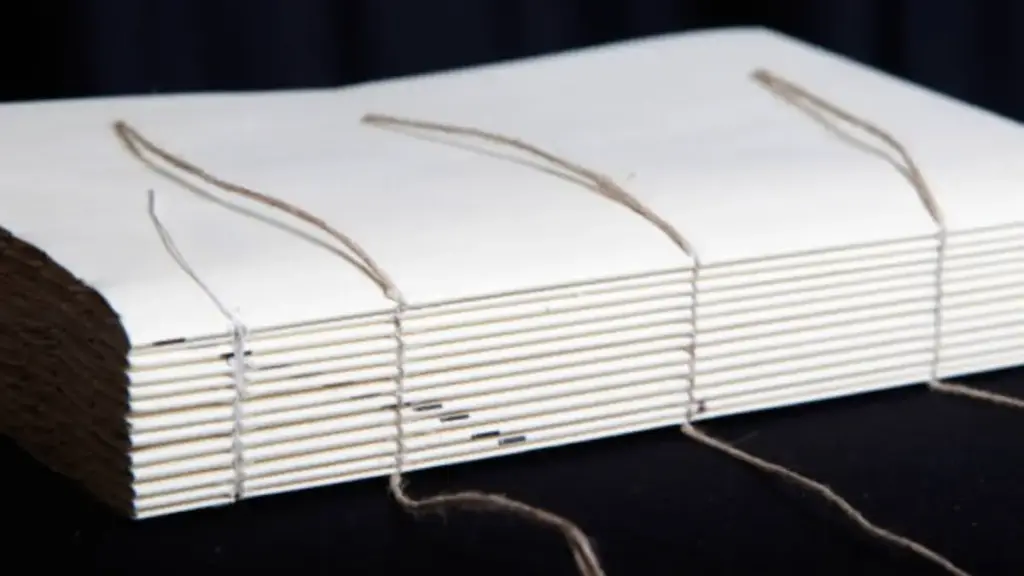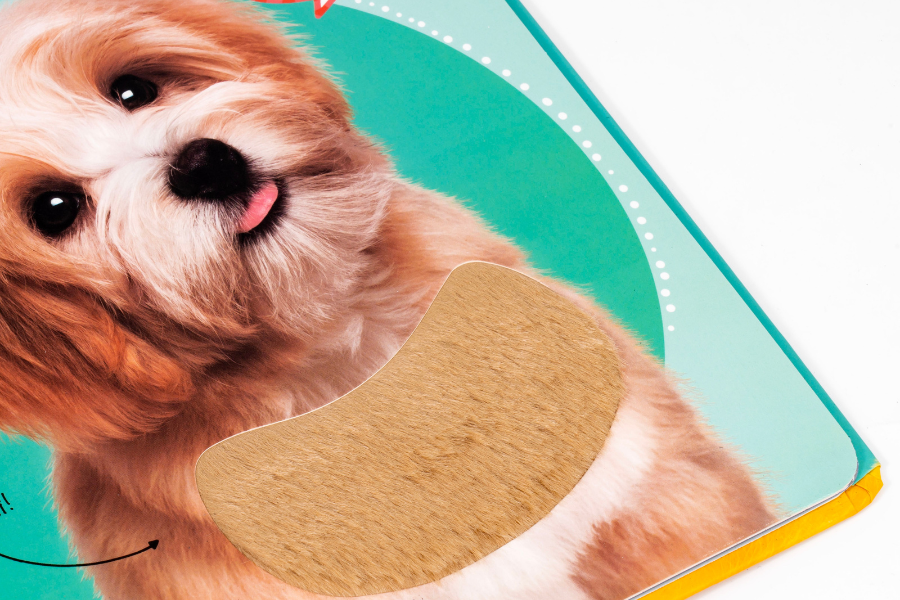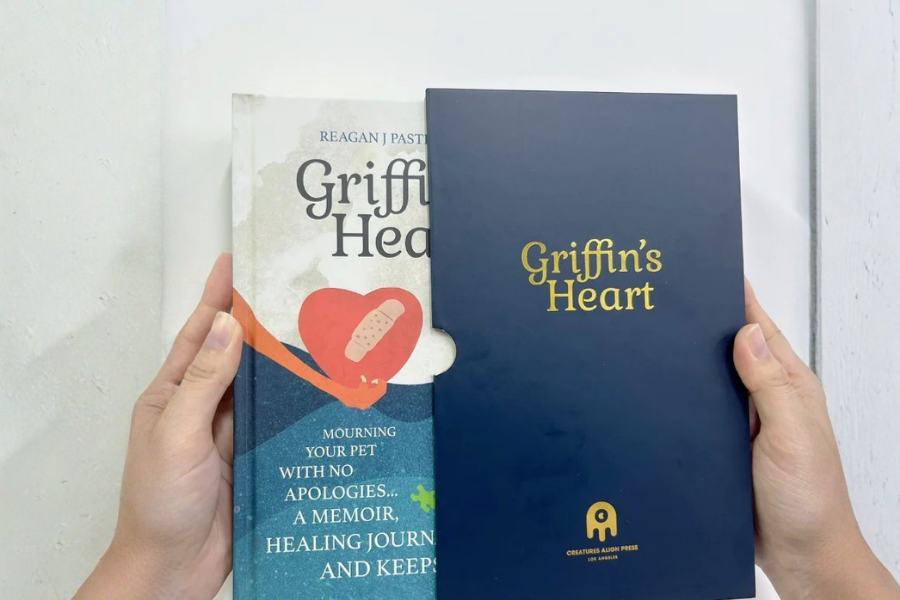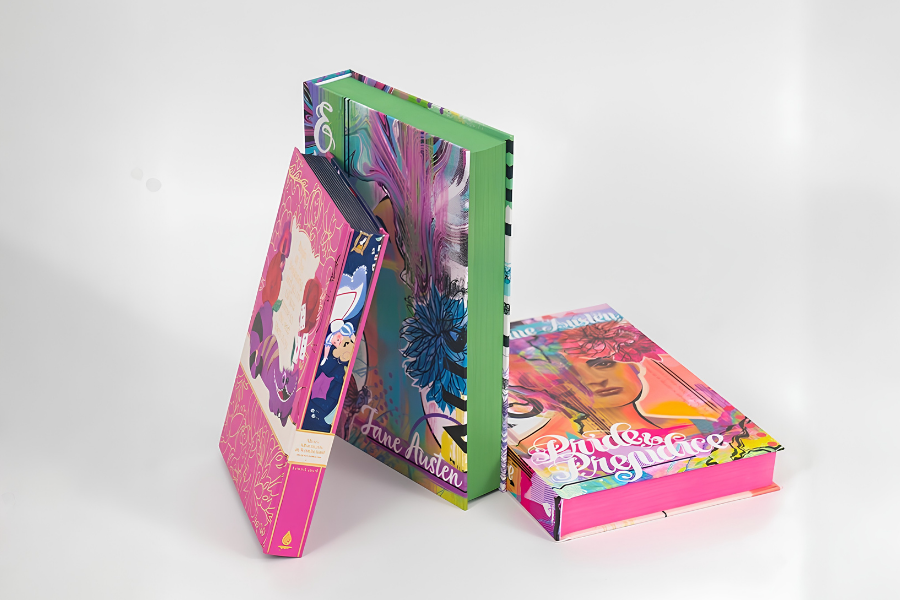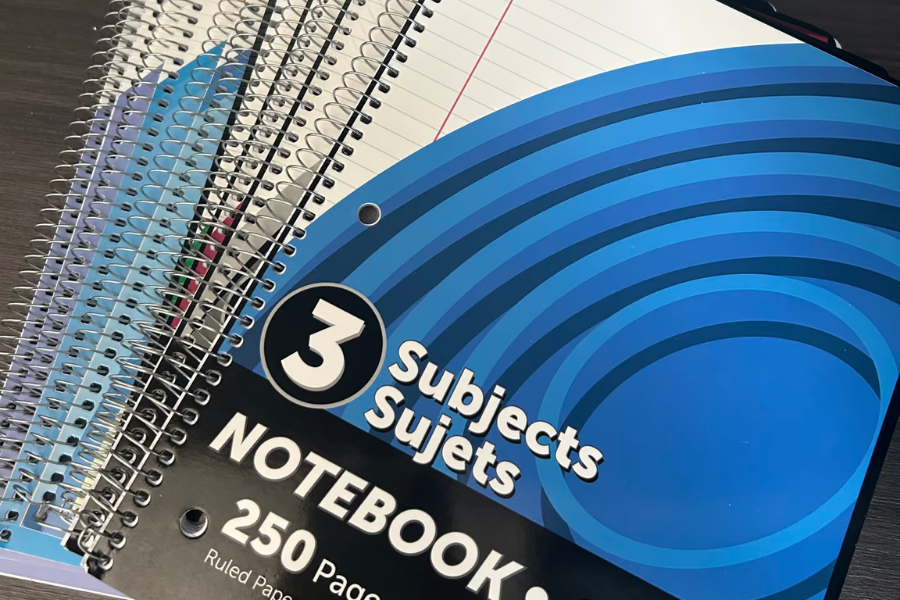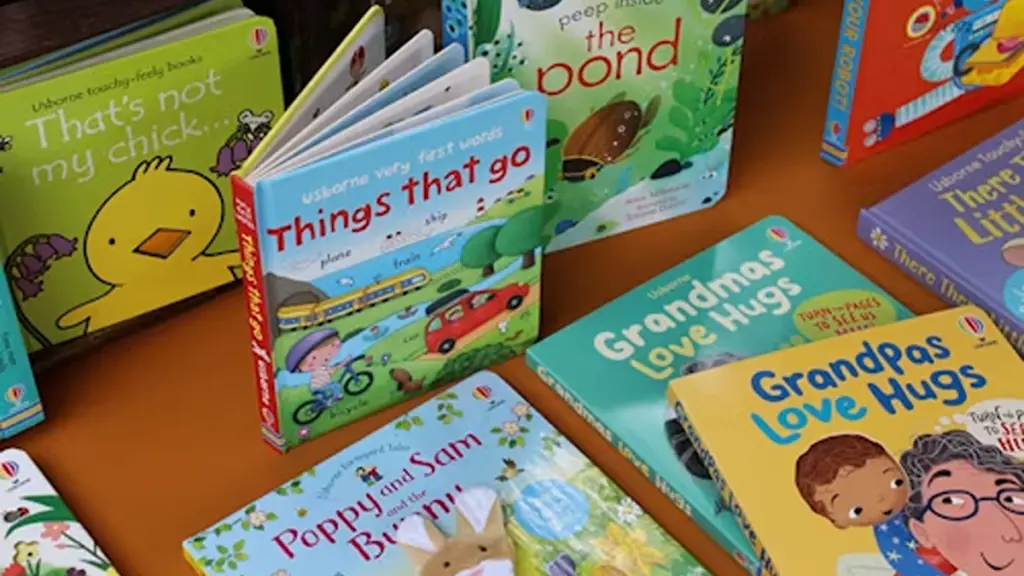


«J'ai acheté un livre qui ressemblait au mien – même genre, nombre de pages similaire, même étagère chez Barnes & Noble. Mais côte à côte, quelque chose ne va pas. Le mien avait l’air presque fait maison. Pourquoi ce phénomène se produit? Le problème n’était pas l’histoire ou la conception de la couverture rigide. C'était la dimension du livre relié.
Lorsqu'il est placé à côté de livres reliés traditionnellement publiés, de nombreux livres indépendants étaient immédiatement différents. Les proportions semblaient gênantes. La colonne vertébrale n'était pas bien assise. Certaines tailles de garnitures d'occasion rarement vues en librairie, faire ressortir le livre dans le mauvais sens.
Et c’est la réalité de l’édition cartonnée: Les lecteurs jugent le livre avant de le lire.
La dimension, épaisseur, et les proportions d'une couverture rigide affectent instantanément son aspect professionnel sur une étagère.. Même un livre magnifiquement conçu peut sembler déplacé si les dimensions sont incorrectes..
Dans ce guide, nous décomposons tout ce que vous devez savoir livre relié dimensions, des formats de couverture rigide standard à une formule de calcul de couverture étape par étape, ainsi qu'une méthode fiable pour estimer l'épaisseur du dos avant l'impression.
Tableau de référence rapide: Tailles standard des couvertures rigides
Vous trouverez ci-dessous les tailles de garniture les plus courantes (la taille du bloc de livre fini). Ces dimensions vous aideront à communiquer clairement avec n’importe quel imprimeur professionnel.
| Type de livre à couverture rigide | Taille de garniture (pouces) | Taille de garniture (MM) | Cas d'utilisation typiques |
| Relié | 6″ × 9″ | 152 × 229 | Romans, mémoires, livres d'affaires |
| Compact / Livre relié | 5.5″ × 8.5″ | 140 × 216 | Livres cadeaux au format de poche, poésie, et des petits livres de dévotion |
| US Letter Relié | 8.5″ × 11″ | 216 × 280 | Manuels, manuels, rapports |
| A5 Relié | 5.8″ × 8.3″ | 148 × 210 | Revues, planificateurs, cahiers |
| B5 Relié | 6.9″ × 9.8″ | 176 × 250 | Manuels, guides techniques |
| Couverture rigide BD | 6.625″ × 10.25″ | 168 × 260 | Romans graphiques, bandes dessinées |
| Couverture rigide de poche | 4.25″ × 6.87″ | 108 × 175 | Romans de poche, livres de voyage |
| Royal Relié | 6.14″ × 9.21″ | 156 × 234 | Livres académiques et non-fictionnels |
| Livre pour enfants carré | 8″ × 8″ | 203 × 203 | Livres d'images pour enfants |
| Paysages Relié | 10″ × 8″ | 254 × 203 | Livres de photographie et d'art |
Si vous ciblez le marché américain, 6″×9″ est de loin le choix le plus populaire pour la fiction et la non-fiction en général.. Pour les marchés britanniques et européens, Royal et Demy restent de sérieux prétendants.
Comment les dimensions des livres reliés sont calculées
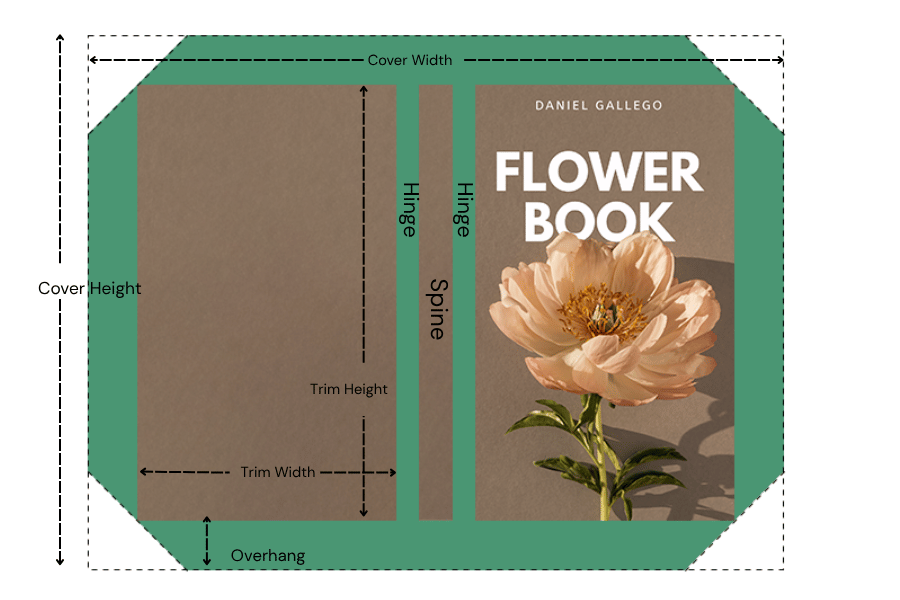
Lors de l'impression d'un livre relié, la taille des garnitures à elle seule ne suffit pas à créer la disposition finale de la couverture. Il faut calculer: Largeur du dos, Taille de coupe, Surplomb, et taille du couvercle du boîtier. Ces mesures fonctionnent ensemble pour déterminer les dimensions complètes du boîtier à couverture rigide..
| Dimension | Description | Exemple (6Garniture ″×9″, 0.7" colonne vertébrale) |
| Taille de garniture(bloc de livre) | La largeur et la hauteur des pages après reliure et rognage. C'est ce que voit le lecteur lorsque le livre est fermé, hors la couverture. | 6″ × 9″ |
| Taille du couvercle du boîtier | Les dimensions extérieures de l'étui rigide (conseil + matériau de revêtement). Il est toujours plus grand que la taille de coupe pour protéger les pages. | ≈ 6,25″ × 9,25″ |
| Surplomb | La quantité dans laquelle la pochette rigide s'étend au-delà des pages rognées de chaque côté. | ≈ 0.125″ par côté |
| Largeur du dos | L’épaisseur de la colonne vertébrale du livre, déterminé par le nombre de pages et l'épaisseur du papier. | ≈ 6,25″ × 9,25″ |
Dimensions du livre relié et taille de la garniture
Avant de concevoir votre œuvre d’art à couverture rigide, il est important de calculer correctement les dimensions complètes de la housse. Cela garantit la colonne vertébrale, envelopper, et les éléments de couverture s'alignent correctement pendant l'impression et la reliure. Vous trouverez ci-dessous les formules standard utilisées par les imprimeurs pour déterminer les mesures finales de la couverture rigide..
- Largeur du couvercle du boîtier = (Largeur de coupe × 2) + Largeur du dos + (Surplomb gauche + Surplomb droit)
- Hauteur du couvercle du boîtier = hauteur de garniture + (Surplomb supérieur + Surplomb inférieur)
La taille du surplomb augmente généralement à mesure que le livre devient plus épais.. Les livres à couverture rigide plus grands nécessitent une extension de boîtier plus large pour mieux protéger les pages intérieures et maintenir des proportions équilibrées sur l'étagère..
En guise de ligne directrice générale:
- Livres reliés sous 400 les pages utilisent généralement un surplomb d'environ 0,125″ (3 MM) de chaque côté ouvert.
- Livres entre 400 et 800 les pages nécessitent souvent un surplomb légèrement plus grand d'environ 0,1875″ (4.5 MM).
- Couvertures rigides très épaisses 800 les pages peuvent utiliser un surplomb de 0,25″ (6 MM) ou plus, en fonction de la structure de la reliure et de l'épaisseur du carton.
Parce que la construction de la colonne vertébrale, type de papier, et le style de reliure peuvent tous affecter les dimensions finales du boîtier, il est toujours recommandé de confirmer les spécifications exactes du porte-à-faux avec votre imprimante avant le début de la production..
Exemple (Commerce américain 6″×9″, 300 pages)
Supposons:
- Taille de coupe: 6″ de large × 9″ de haut
- Largeur du dos (estimé): 0.7" (voir la rubrique 4 pour le calcul)
- Surplomb: 0.125″ de chaque côté
Largeur du couvercle du boîtier
= (6″ × 2) + 0.7" + 0.125" + 0.125"
= 12″ + 0.7" + 0.25"
= 12,95″
Hauteur du couvercle du boîtier
= 9″ + 0.125" + 0.125"
= 9,25″
La taille finale de votre coque est donc de 12,95″ de large × 9,25″ de haut..
C'est la dimension que vous devez utiliser pour la taille de coupe de votre pochette.(avant d'ajouter du fond perdu).
Recommandations sur les surplombs des couvertures rigides
La quantité de surplomb de la couverture rigide augmente généralement à mesure que le livre devient plus épais. Les livres plus grands et plus lourds nécessitent souvent une extension de boîtier légèrement plus large pour améliorer la durabilité., protéger les bords de la page, et maintenir des proportions équilibrées.
Comme ligne directrice générale de production:
| Épaisseur du livre (pages) | Porte-à-faux recommandé |
| Jusqu'à 400 pages | Environ 0,125″ (3 MM) |
| 400–800pages | Environ 0,1875″ (4.5 MM) |
| Sur 800 pages | Environ 0,25″ (6 MM), en fonction de la structure de liaison |
Les dimensions réelles du porte-à-faux peuvent varier en fonction du style de reliure rigide., épaisseur du panneau, et normes de production d'imprimantes.
Comment la largeur du dos affecte les dimensions du livre relié
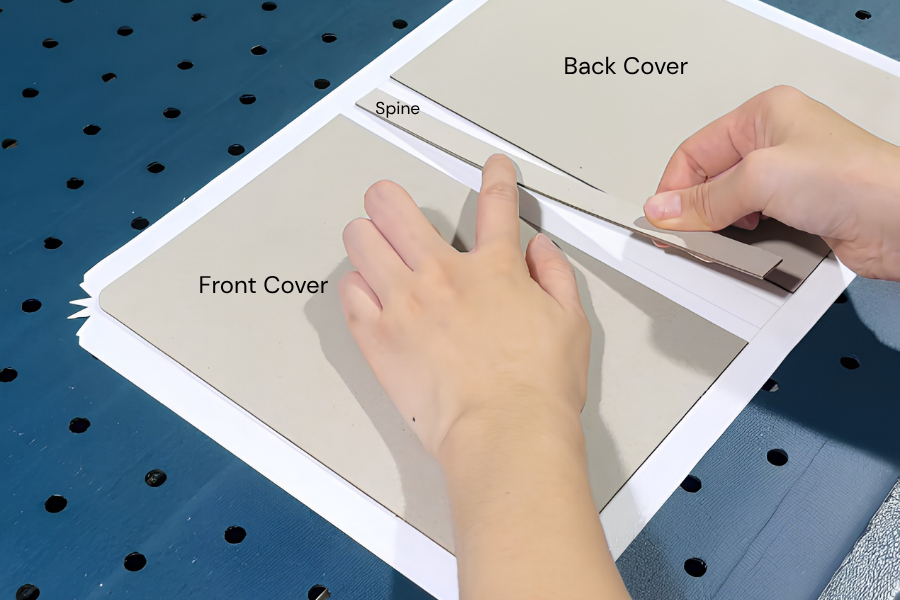
Estimation épaisseur du dos la précision est essentielle pour le format d'une couverture rigide, surtout si le dos comprend du texte ou un graphique. Puisque vous n’aurez pas de bloc de livre imprimé avant la conception de la couverture, utilisez la méthode suivante.
- Épaisseur de la colonne vertébrale (MM) = (Nombre total de pages ÷ 2) × Épaisseur du papier (mm par feuille)
Tableau de référence de l'épaisseur du papier
| Type de papier | GSM | Épaisseur par feuille (MM) | Épaisseur par feuille (pouces) |
| Papier couché mat/brillant | 80 | 0.10 | 0.0040 |
| Offset non couché (prime) Papier | 100 | 0.12 | 0.0047 |
| Papier couché mat/brillant | 128 | 0.11 | 0.0043 |
| Papier couché mat/brillant | 157 | 0.14 | 0.0055 |
| Papier enduit mat/brillant | 200 | 0.18 | 0.0071 |
Exemple de calcul
Scénario:
- 300 pages
- 80 papier non couché g/m² (0.10 mm par feuille)
Épaisseur du dos = (300 ÷ 2) × 0.10 mm = 150 × 0.10 = 15,0 mm(environ. 0.59")
Comment les styles de reliure affectent la taille du livre relié?
Différents styles de reliure rigide peuvent légèrement modifier les dimensions finales de la couverture..
- Les couvertures rigides à dos carré utilisent directement la formule de calcul standard.
- Les couvertures rigides à dos arrondi nécessitent généralement un dos légèrement plus large pour tenir compte de la forme incurvée..
- Les jaquettes sont imprimées légèrement plus grandes que la couverture rigide pour permettre l'emballage et le pliage autour des planches..
Parce que la structure de liaison affecte les mesures finales, il est toujours préférable de confirmer le modèle de couverture exact avec votre imprimeur avant de finaliser l'illustration.
De vrais livres à couverture rigide’J'ai imprimé
Pas seulement des calculs : de vrais livres, dimensions réelles, de vrais résultats. Vous trouverez ci-dessous quelques titres reliés que nous avons fabriqués pour les éditeurs, auteurs indépendants, et des marques en Amérique du Nord et en Europe.
Alice’s Aventures au pays des merveilles
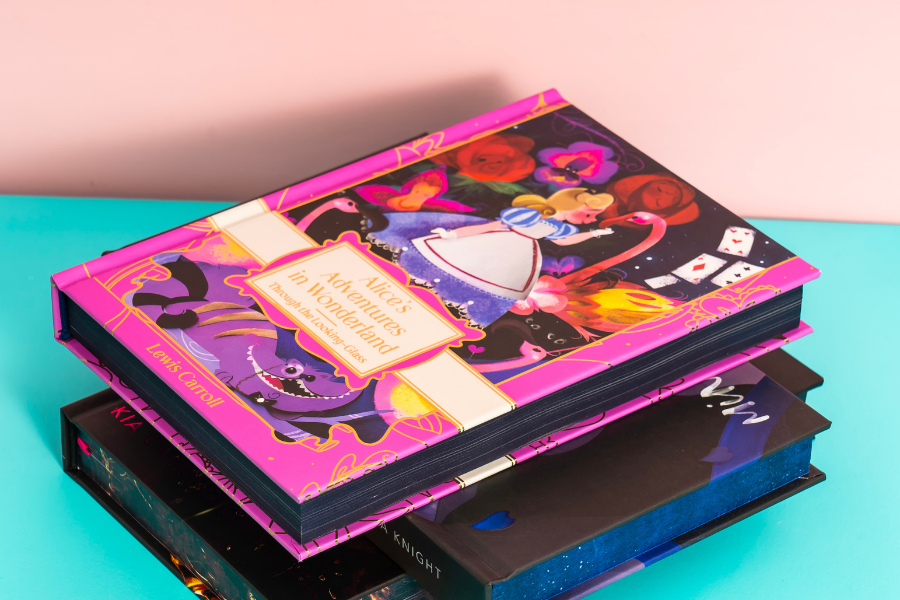
L'exemple ci-dessus présente un livre relié grand format conçu pour une présentation visuelle haut de gamme.. Basé sur les exigences du client, cette version’Les spécifications sont les suivantes:
- Taille finie: 8 pouces × 10 pouces
- Obligatoire: Couverture rigide (dos carré)
- Largeur estimée de la colonne vertébrale: 20 MM
- Style de couverture: Couverture en carton gris avec superposition de papier imprimé
- Finition de surface: Stratification mate, impression en tons directs
- Style de page intérieure: Impression de bordure noire/bords de page sombres
Ce format de livre relié est couramment utilisé pour:
- Enfants’les livres d'images
- Collectionneur’éditions
- Livres cadeaux haut de gamme
- Publications d'art et de fantaisie
La plus grande taille des livres à couverture rigide les rend plus frappants sur les étagères., attirer les enfants’attention, tandis que le dos carré épais donne au livre un aspect plus haut de gamme, sensation d'édition traditionnelle, améliorant sa valeur d'affichage sur les étagères ou les comptoirs de vente au détail.
Apprendre mes parties du corps avec Gygy
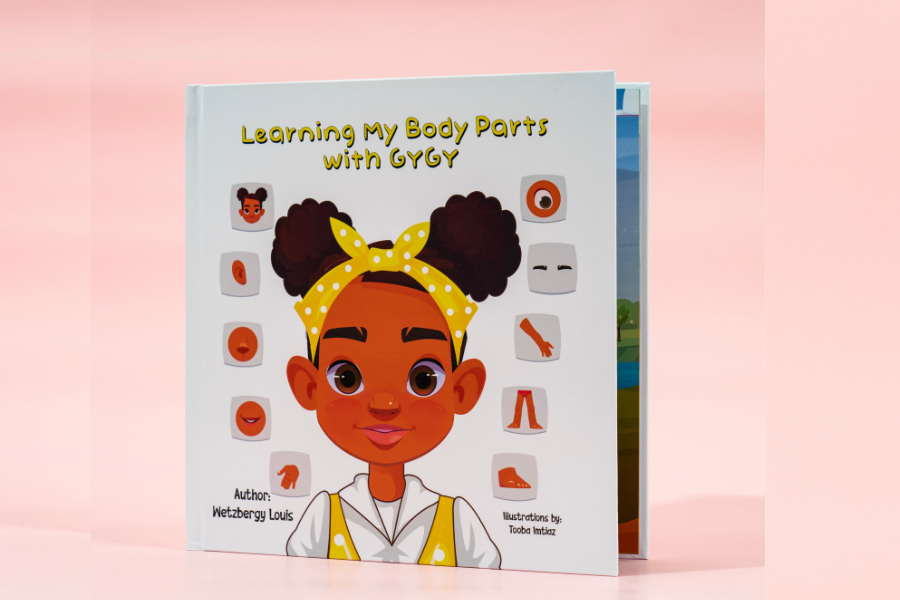
Basé sur les proportions, ce livre utilise un format vertical pour enfants. Les spécifications de ce livre relié sont les suivantes:
- Taille de garniture: 8.5″ × 11″
- Type de reliure: Couverture rigide cartonnée avec dos carré
- Matériau de couverture: Papier d'art imprimé monté sur carton gris
- Finition: Stratification mate pour un rendu doux, surface résistante
- Épaisseur du panneau: Carton rigide de poids moyen pour une durabilité adaptée aux enfants
Ce format est couramment utilisé pour les livres éducatifs pour enfants car il crée un meilleur équilibre entre la lisibilité, espace d'illustration, et interaction avec les pages. Pour les livres reliés pour enfants, Une taille de garniture plus grande permet:
- Des illustrations plus grandes et une typographie plus claire
- Des mises en page plus confortables pour les jeunes lecteurs
- Meilleure visibilité pendant la lecture en classe ou parent-enfant
- Attrait plus fort en rayon dans les librairies et sur les marchés éducatifs
Vous pouvez également remarquer les proportions relativement larges de la couverture avant et les planches épaisses à couverture rigide., ce qui aide le livre à se sentir durable et de qualité supérieure tout en protégeant les pages intérieures de la flexion ou des dommages. C'est pourquoi les éditeurs utilisent généralement des formats de couverture rigide plus grands pour les livres d'images., livres éducatifs, et des titres d'apprentissage interactifs comme celui-ci.
Pensées finales
Parce que chaque projet est différent, nous recommandons aux utilisateurs de calculer la taille du livre relié en fonction du nombre de pages, épaisseur du papier, méthode de liaison, et l'utilisation prévue sur le marché avant le début de la production.
Si vous planifiez un projet personnalisé à couverture rigide et avez besoin d'aide pour déterminer la bonne taille de découpe, largeur du dos, ou mise en page de couverture, notre équipe peut vous aider à fournir des recommandations de production et des modèles de couverture rigide prêts à imprimer pour votre projet.