

Let’s talk about composition book. Composition books are everywhere in school supply lists, bookstore shelves, and classrooms. Yet many people still ask a simple question: what exactly is a composition book, and why is it still so widely used today? If you have ever used a black-and-white marbled notebook for writing assignments, class notes, or lab work, you have already used one.
This guide answers those questions in a clear, practical way. You will learn what a composition book is, how it is structured, how it compares to other notebook types, and how to choose the right option for school, издательский, or bulk printing projects.
What Is a Composition Notebook?
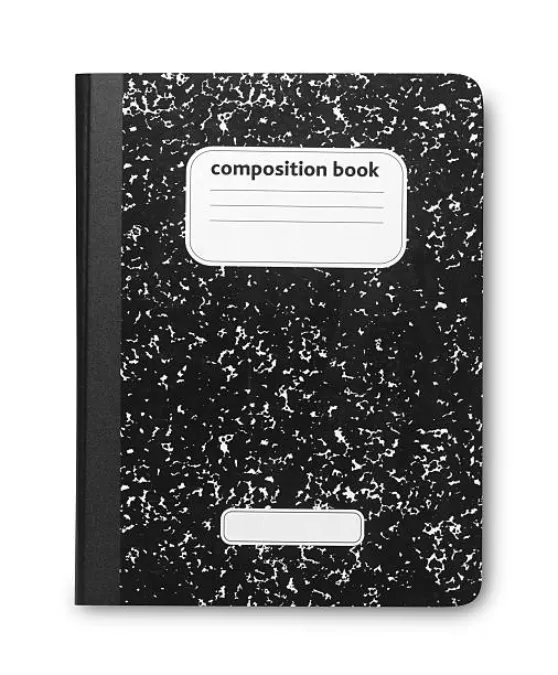
A composition notebook, also commonly called a composition book, is a bound notebook with pages sewn together rather than held by spiral wire or loose binding. It is traditionally used for writing assignments, note-taking, and academic work, especially in schools.
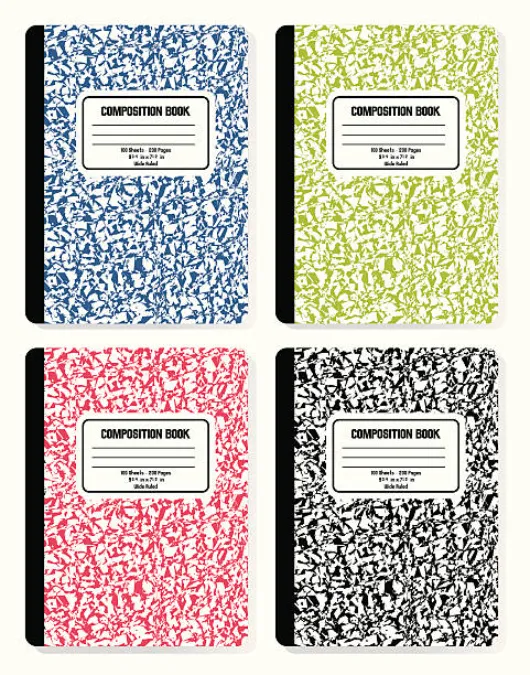
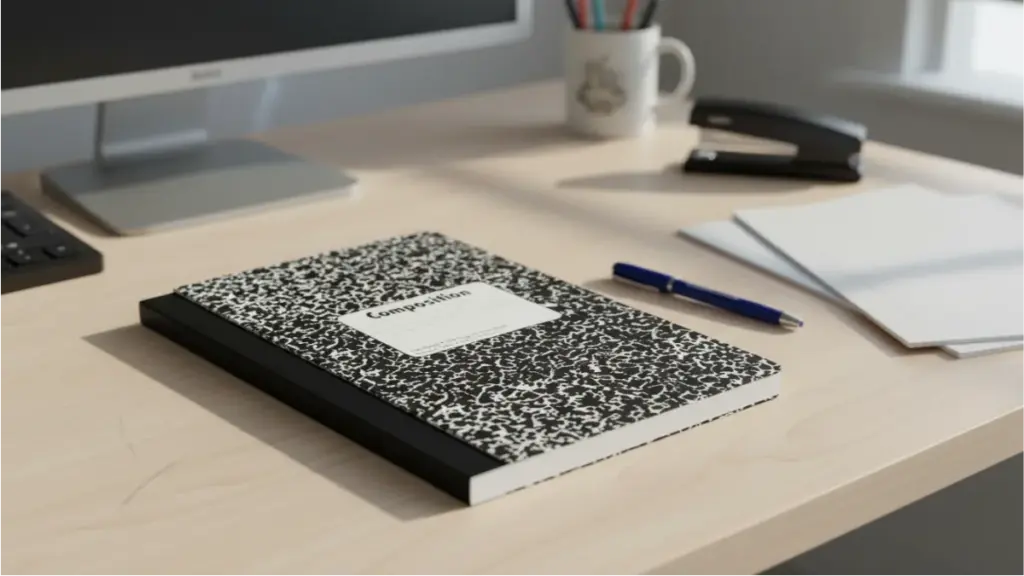
Most people recognize composition notebooks by their classic black-and-white marbled cover, often referred to as a marble composition notebook. This marbled design has become a standard in schools, making the notebook easy to identify and resistant to visible wear from daily use.
In everyday usage, the terms composition book and composition notebook are interchangeable. В Соединенных Штатах, both refer to the same product category, while in other regions similar products may be called exercise books или copybooks.
Why Students and Teachers Still Love Composition Notebooks
Despite the rise of tablets, laptops, and digital note-taking tools, composition notebooks remain a classroom staple. Their popularity is not based on nostalgia alone.
For students, composition notebooks offer a distraction-free writing surface. There are no notifications, batteries, or screens—just paper and pen. This simplicity supports handwriting practice, idea development, and focused learning.
Teachers value composition books for their consistency and control. Every student uses the same format, page order stays intact, and work can be reviewed chronologically. For subjects like language arts, science labs, and math exercises, this structure is especially useful.
From a practical standpoint, composition notebooks are also cost-effective, easy to distribute in bulk, and sturdy enough to last an entire school year.
History and Origins of the Composition Notebook
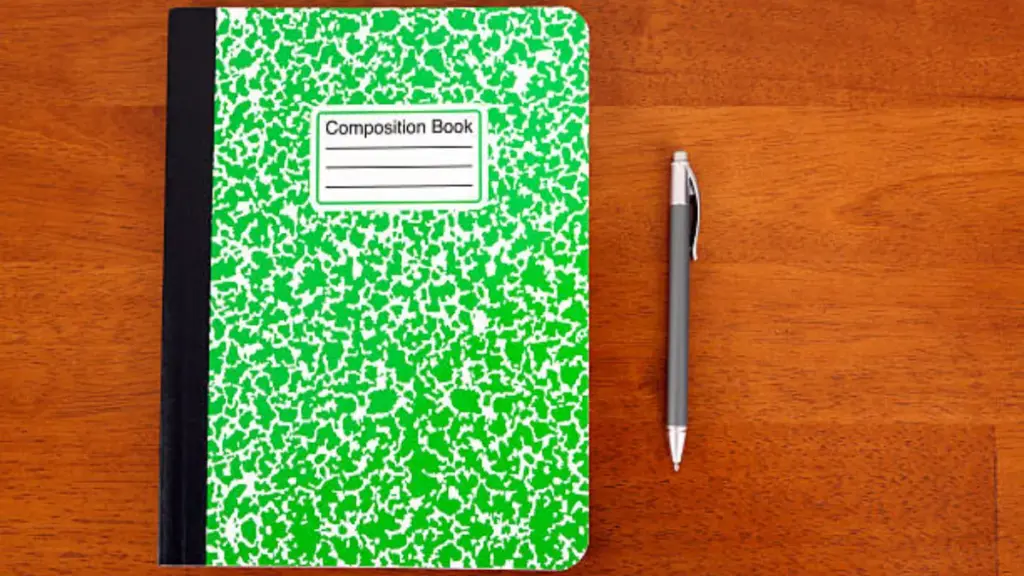
The composition notebook has a history that spans centuries. Its roots trace back to traditional marbling techniques developed in Asia, including Suminagashi in Japan and early paper marbling in China. These decorative papers later spread to Europe, where they were used in bookbinding to create durable, patterned covers.
By the 19th century, mass-produced marbled paper became accessible for notebooks in Europe and eventually the United States. In the late 1800s and early 1900s, American manufacturers began producing stitched, bound notebooks for students, standardizing the marble pattern for practicality: it helped hide dirt and wear while making notebooks instantly recognizable. This design gradually became the template for what we now call the marble composition notebook.
The classic marble composition notebook we recognize today emerged organically from centuries of decorative paper making, binding innovations, and market adoption in educational settings, ultimately becoming one of the most enduring and recognizable notebook forms in print culture.
Key Features of a Classic Composition Notebook
While composition notebooks may vary slightly by brand or market, most share a set of defining features:
- Sewn binding that holds folded page signatures together
- Soft or semi-rigid paperboard cover, often laminated for protection
- Fixed page count, typically ranging from 80 к 200 страницы
- Ruled interior pages, most commonly college ruled or wide ruled
- Reference pages printed inside the front or back cover in some editions
Many modern composition notebooks also include practical details like class schedules, reference charts, or margins to help students organize their notes. Others feature specialized layouts such as graph pages, dual rulings, or primary handwriting lines for younger students.
What Are Composition Books Used For?
Composition books are versatile tools used across many environments, not just classrooms.
In education, they are commonly used for:
- Writing assignments and essays
- Science lab notes and observations
- Math problem-solving practice
- Homework and daily journals
Outside of schools, composition notebooks are also used for:
- Personal journaling and creative writing
- Sketching and idea development
- Meeting notes and project tracking
- Training manuals or internal documentation
Because of their stable structure and professional appearance, composition books are often chosen for long-term record keeping, especially when pages need to remain intact and organized.
Standard Sizes, Layouts, and Rulings of Composition Books
Most composition notebooks follow standardized formats, particularly in the U.S. market.
| Размер (дюймы) | Common International Size (A/B series) | Typical Page Count | Ruling Type | Typical Use / Audience | Notes |
|---|---|---|---|---|---|
| 7.5 × 9.75 | B5 | 100–200 | College ruled / Wide ruled | Standard US school notebook | Fits most backpacks and desks |
| 6 × 9 | Б6 | 80–120 | College ruled / Wide ruled | Portable notebook for students or journals | Slightly smaller, easy to carry |
| 8 × 10 | A4 | 100–200 | College ruled / Wide ruled | Classroom use, general note-taking | Offers more writing space than standard size |
| 9 × 11 | Б4 | 120–200 | College ruled / Graph ruled | Math, science, or technical notes | Slightly larger for diagrams and sketches |
| 5 × 7 | A6 | 60–100 | Wide ruled / Blank | Personal journal or small project notebook | Pocket-size or travel-friendly |
Common sizes
The most typical size is approximately 7.5 × 9.75 дюймы, which fits easily into backpacks and desks while providing enough writing space.
Interior layouts
- College ruled: Narrow line spacing, preferred by older students and adults
- Wide ruled: Wider spacing, suitable for younger students
- Graph or quad ruled: Used for math, science, and technical subjects
- Blank pages: Chosen for sketching or creative work
Paper specifications
Interior paper weight usually ranges from 50–70 GSM depending on the market and price point, while covers are made from thicker board stock with optional lamination.
How Are Composition Books Made?
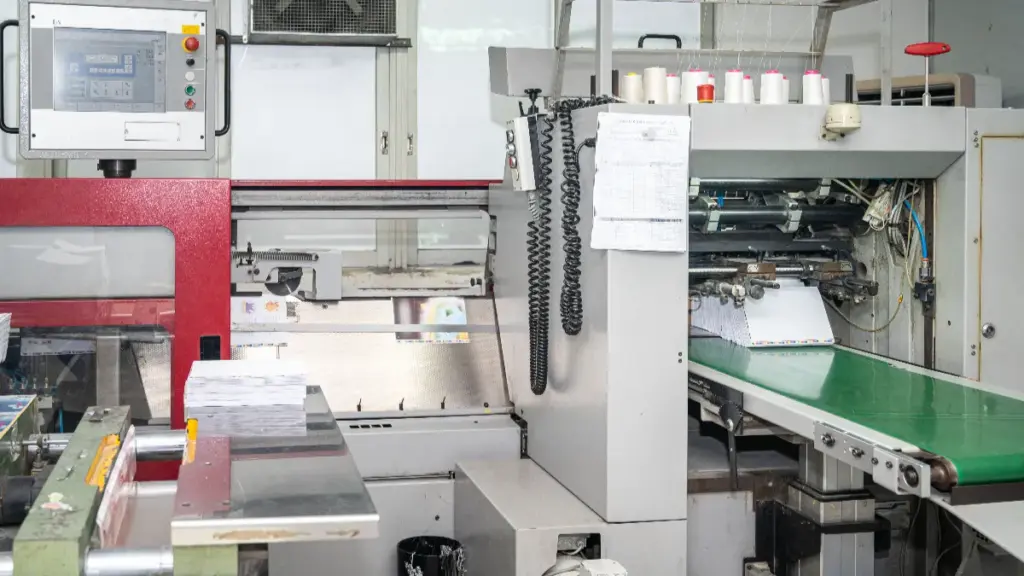
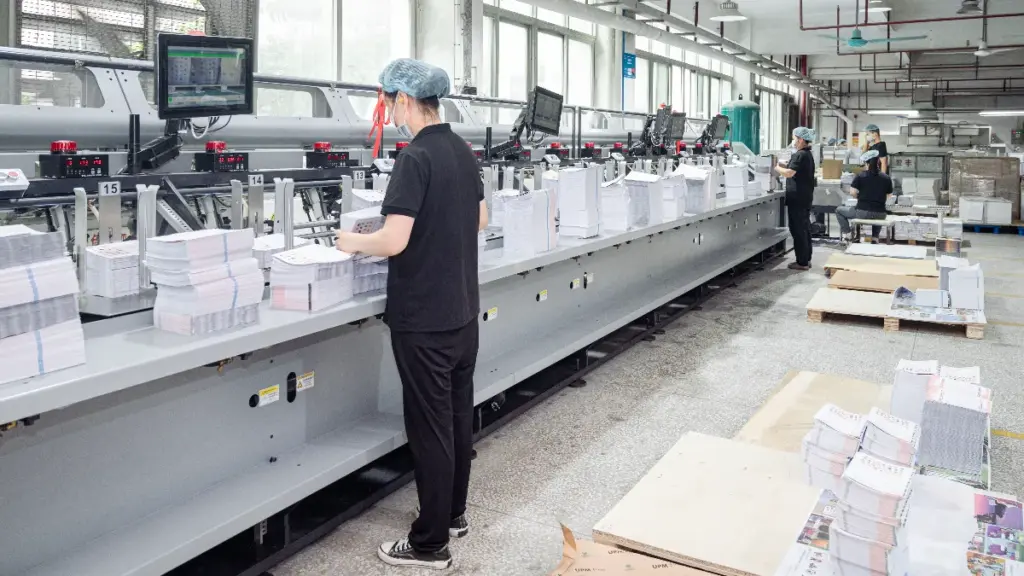
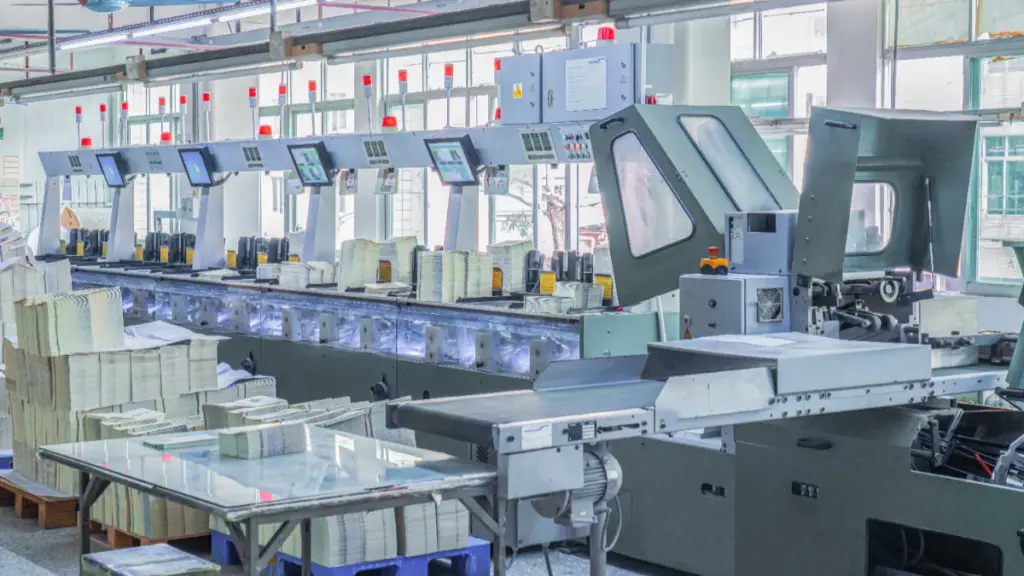
С точки зрения производства, a composition book is a carefully engineered product designed to balance cost, долговечность, and writing comfort. В Синьи печать, production typically starts with selecting the right paper stock—often woodfree offset or FSC-сертифицированная бумага with an opacity and smoothness that minimize ink bleed‑through.
The general process includes:
- Printing the interiors: Large sheets are printed with ruled, grid, or custom designs using offset presses for consistent color and line quality.
- Folding and collating: Printed sheets are folded into signatures and gathered into the correct sequence and page count.
- Sewn or adhesive binding: Signatures are sewn together or glued at the spine, creating a strong, flexible block that opens smoothly without pages loosening.
- Cover production: Covers are printed, laminated (if needed), and die‑cut—often with the trademark marbled pattern or custom brand artwork.
- Casing‑in and trimming: The book block is attached to the cover, then trimmed on all sides for a clean, uniform finish.

With nearly three decades of experience, Xinyi integrates high‑precision prepress, offset printing, and automated binding lines to handle large‑volume composition notebook orders while maintaining tight tolerances in registration, binding strength, and trimming.ant for export markets where durability and compliance standards are higher.
Composition Book vs. Other Notebooks (Спираль, Journal, Exercise Book)
When choosing between a composition notebook and other notebook types, it helps to understand the structural differences.
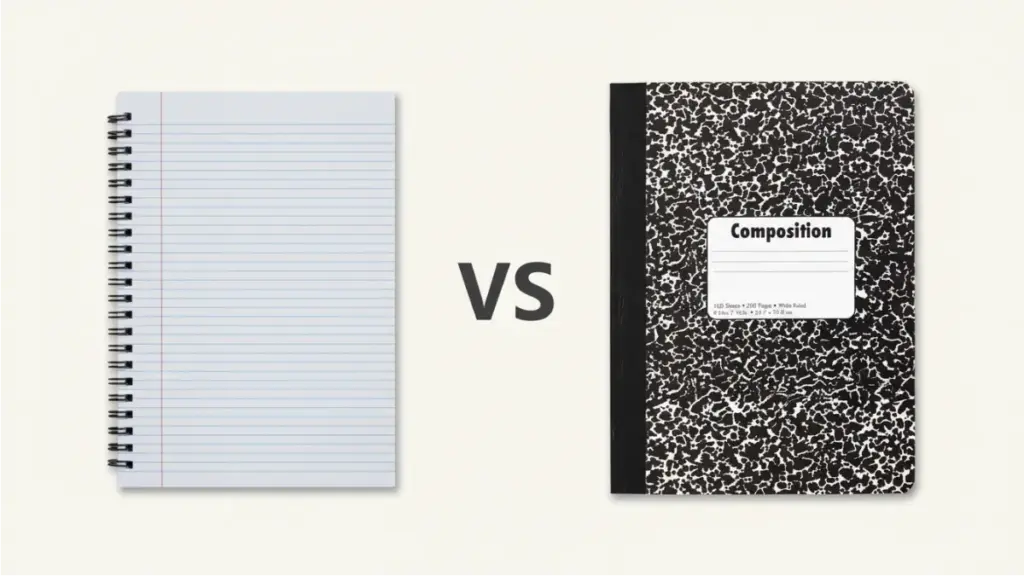
Composition book vs. spiral notebook:
Composition books use sewn or tape binding, so pages are secure and cannot be easily torn out, making them ideal for lab notebooks and exams.
Spiral notebooks use metal or plastic coils that allow the notebook to lie completely flat or fold back, but pages tear out more easily and coils can bend in backpacks.
Composition book vs. journal:
A “journal” is more of a use case than a binding type; many journals use case binding, ring binding, или идеальный переплет.
A composition notebook can serve as a journal, but it usually has a more utilitarian look and standard school‑style ruling.
Composition book vs. exercise book:
Exercise books (common in Europe and many school systems) are typically thinner, staple‑bound booklets with fewer pages.
Composition books are thicker, with more pages and stronger bindings, designed for long‑term or semester‑long use.
For institutions and brands, these differences also affect cost, lifespan, and user perception, which is why choosing the right notebook type is a strategic decision—not just a design detail.
How to Choose the Right Composition Book for Your Project

Selecting the best composition notebook starts with clarifying who will use it and how. Consider these key factors:
- Audience and grade level: Younger students benefit from wide‑ruled or primary composition formats, while older students and professionals prefer college‑ruled or grid layouts.
- Durability requirements: For heavy daily use, opt for sewn binding, thicker cover boards, and slightly heavier interior paper to prevent ghosting and wear.
- Branding and design: Decide whether you need standard marbled covers or fully customized artwork, logos, and color palettes for your school, NGO, or brand campaign.
- Sustainability goals: Choose FSC‑certified paper, soy‑based or low‑VOC inks, and eco‑friendly finishing options to align with environmental standards and CSR commitments.
Как professional book and notebook printing manufacturer, Xinyi can guide you through these choices—recommending suitable paper weights, bindings, and finishes that match your budget, timeline, and user experience goals.
Why Partner With a Professional Composition Book Printing Manufacturer
Producing high-quality composition books at scale requires more than basic printing capability. It demands experience with educational standards, binding techniques, and international logistics.
As a professional printing manufacturer, Гуанчжоу Синьи Печана Ко., ООО. supports global clients with:
- Stable, large-scale production capacity of producing up to 5 million books per month
- Custom composition book printing solutions
- Certified quality management systems
- Export-oriented packaging and delivery support
Whether you need classic school composition books, custom branded composition notebooks, or premium journal‑style compositions for retail, a manufacturer with nearly 30 years of printing experience and a strong export focus like us can help you create a product that feels good in the hand, performs well on the desk, and stands out on the shelf.
Свяжитесь с нами сегодня to discuss your composition book project and get a tailored quote from our experienced team.