

Your paperback cover is the first point of contact between your product and the market. Beyond basic protection, it functions as a critical conversion tool, especially in retail and e-commerce environments where readers typically make a decision within 3–5 seconds of seeing a cover.
In highly saturated categories, production data shows that books with enhanced cover finishes (such as lamination, UV, or foil stamping) can achieve 15–30% higher engagement rates compared to standard uncoated covers. The reason is simple: finish directly influences perceived value, tactile experience, and brand positioning.
However, not all finishes serve the same purpose. Gloss lamination improves color vibrancy and moisture resistance, while matte finishes offer a more premium, subdued aesthetic. Specialty options like holographic or embossed effects can further differentiate your product—but also impact cost, lead time, and scalability.
Below, we break down 8 essential paperback cover finishes, helping you evaluate each option based on visual impact, durability, and production efficiency, so you can make a commercially sound decision for your next print run.
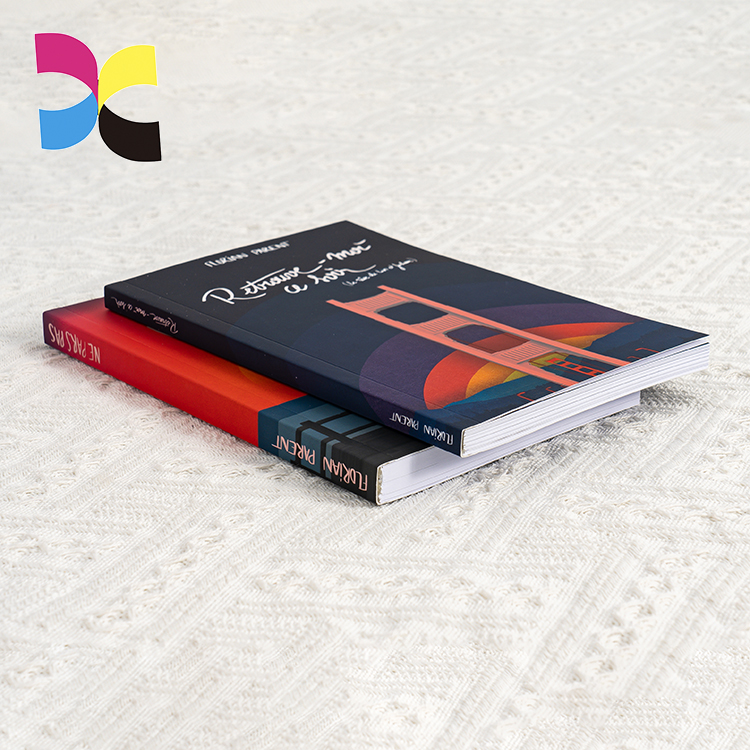
Quick Glance Comparison Table: Paperback Cover Finishes
| Cover Finish | Effect | Relative cost level |
| Gloss lamination | Everyday durability + shine | Low |
| Matte lamination + Spot UV on title | A soft, elegant feel | Medium |
| Pantone Spot Color | Your logo to stay perfectly on-brand | Medium |
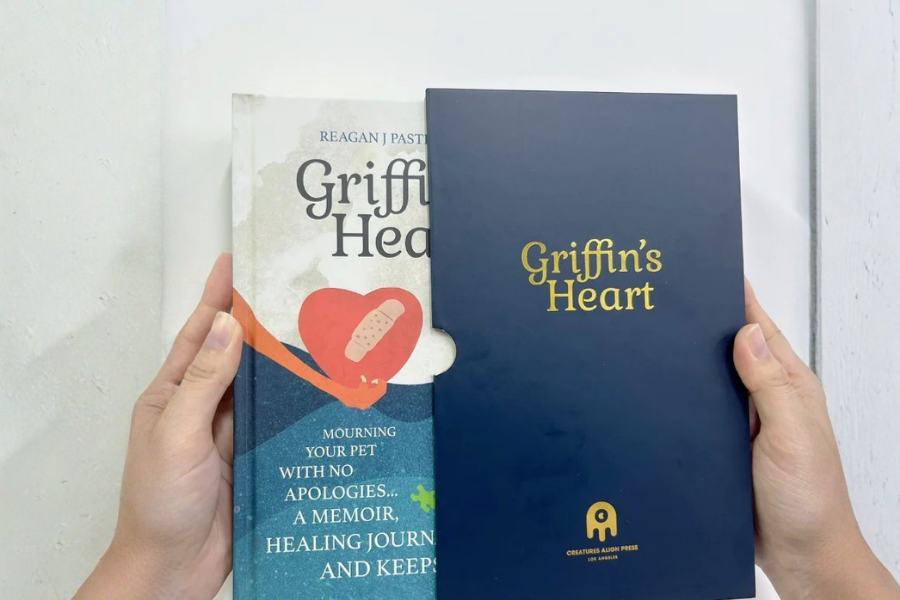
| Embossing or Foil Stamping | A tactile, luxurious title | High |
| Holographic Foil or Finish | A dramatic, light-catching effect | High |
| Colored or Printed Edges | A surprise element (closed book) | Medium–High |
Gloss Varnish vs. Lamination (Matte / Gloss / Soft Touch)
Before moving into specialty finishes, it’s essential to understand the two most widely used protective layers in paperback production: varnish and lamination. While both enhance appearance, their performance in durability and user experience differs significantly.
| Type | Appearance | Durability | Best For |
| Gloss Varnish | Shiny, reflective | Low–Medium | Short-run projects, cost-sensitive jobs |
| Gloss Lamination | High shine, smooth | High (water-resistant) | Cookbooks, children’s books, photo-heavy titles |
| Matte Lamination | Non-reflective, elegant | High (scratch-resistant) | Literary fiction, corporate publications |
| Soft-Touch Lamination | Velvety, rubber-like | High | Premium editions, gift books |
If your book is expected to circulate frequently—whether in retail, libraries, or events—lamination isn’t just an upgrade, it’s the safer long-term choice. From a production standpoint, lamination provides a 40–60% increase in surface durability compared to standard varnish, particularly in resistance to moisture, abrasion, and repeated handling. This is why over 70% of commercially distributed paperbacks now use some form of lamination as a baseline finish.
Varnish, on the other hand, remains a practical option for short lifecycle products or projects where cost control is the priority—but it tends to show wear (scuffing, edge fading) after limited use.
CMYK Printing
Full-color CMYK printing remains the industry baseline for modern paperback covers. By combining four process inks(Cyan, Magenta, Yellow, and Black). It can reproduce over 16 million color variations, making it highly versatile for most commercial designs.
- Best for: Illustrated covers, photography, complex gradients, and color-rich layouts where visual depth and accuracy matter.
- Limitations: Standard CMYK cannot accurately reproduce neon, fluorescent, or metallic effects. These typically require spot colors or specialty finishes such as foil or UV.
- Cost efficiency: CMYK is generally the most economical option for full-color production, especially in offset printing, where it accounts for 80–90% of paperback cover jobs due to its scalability and consistency.
If your cover relies on detailed imagery or layered color transitions, CMYK isn’t just a starting point. It’s the default production standard that balances quality, efficiency, and cost.
Pantone Printing
The Pantone Matching System (PMS) uses pre-mixed, standardized inks to deliver a single, exact color, unlike CMYK, which builds color through overlapping dots of four inks. This makes Pantone the go-to solution when color precision and brand consistency are non-negotiable.
Advantages:
- Delivers 95–98% color consistency across different print runs and production batches
- Enables effects CMYK cannot achieve, including metallic and fluorescent tones
- Produces sharper edges and cleaner typography, especially for small text and logos
Best for: Brand-critical elements such as logos, spine titles, or minimalist designs using 2–3 solid colors, where even slight color deviation would be noticeable.
Cost consideration: Pantone typically adds 10–20% to printing costs compared to standard CMYK, due to additional plate setup and ink handling. However, for brands that rely on visual identity, this investment often translates into stronger shelf recognition and consistency across global markets.
In practice, many publishers—especially in self-publishing and branded series—use Pantone selectively (e.g., spine text or logo areas) to ensure key elements stand out clearly, even from a distance of 1–2 meters on a crowded shelf.
Spot UV / Full UV Coating
UV coating is a liquid finish applied to the printed surface and instantly cured using ultraviolet light, forming a hardened, high-gloss layer. It can be used as full UV, which means covering the entire surface, or spot UV, where only selected elements are enhanced.
- Look & feel: High-gloss with optional tactile elevation (10–30 microns thickness) when applied more heavily, creating a subtle raised effect you can both see and feel.
- Best for: Adding visual contrast, which is most commonly a glossy highlight on a matte-laminated background. This combination is widely used in commercial publishing because it increases perceived quality without overwhelming the design.
- Durability: UV coating offers excellent surface protection, with up to 2–3× higher resistance to scuffing and fingerprints compared to uncoated stock. It also helps maintain color vibrancy over time.
- Production note: Spot UV performs best on coated papers or laminated surfaces, where adhesion and gloss clarity are optimized. In fact, over 60% of premium paperback covers that use UV opt for a matte + spot UV pairing to create that clean, high-contrast, “touch-me” effect.
In short, UV isn’t just decoration. It’s a strategic way to guide the reader’s eye and make key elements quietly stand out.
Embossing & Debossing
These techniques enhance a cover by physically reshaping the surface, rather than adding ink or coating—making them particularly effective for tactile-driven design.
| Effect | Tactile Feel | Best Applications |
| Embossing | Raised, touchable | Titles, logos, symbolic graphics (e.g., a raised moon on a fantasy cover) |
| Debossing | Indented, sculpted | Minimalist designs, borders, author signatures |
From a production perspective, these techniques typically create a depth of 0.2–0.5 mm, which is enough to be clearly felt by hand without compromising structural integrity. Studies in packaging and print design show that tactile finishes like embossing can increase perceived product value by 20–30%, particularly in premium or gift-oriented categories.
They perform best on thicker stocks (250–350 gsm), especially uncoated paper or matte-laminated covers, where the contrast between light and shadow enhances visibility. Around 40% of high-end paperback editions incorporate embossing or debossing as part of their finishing strategy.
In short, if you want your cover to do more than just look good—if you want readers to actually feel it—these techniques deliver a subtle but powerful upgrade.
Foil Stamping (Gold / Silver / Holographic Foil)
Foil stamping applies a thin layer of metallic or pigmented foil onto the cover using heat and pressure, creating a highly reflective, premium finish that standard inks simply can’t replicate. High-foil reflects light dynamically, increasing shelf visibility by up to 25–40% in retail environments, especially under spot lighting.
- Common foils: Gold, silver, rose gold, copper, holographic, as well as solid colors like white and black. In recent years, holographic foil usage has grown by ~15–20% in genres like sci-fi and fantasy due to its eye-catching effect.
- Best for: Key focal elements such as titles, author names, logos, and decorative accents—areas where you want immediate attention without overloading the design.
- Compatibility: Performs reliably on both gloss and matte laminated surfaces, with matte backgrounds often providing stronger contrast and a more premium look.
Foil stamping typically adds 10–25% to finishing costs, depending on area coverage and complexity, but even a small application can significantly elevate perceived value. In practice, many publishers use foil selectively. Just one well-placed foil element can turn a standard paperback into something that feels like a collector’s piece.
Edge Printing / Colored Edges
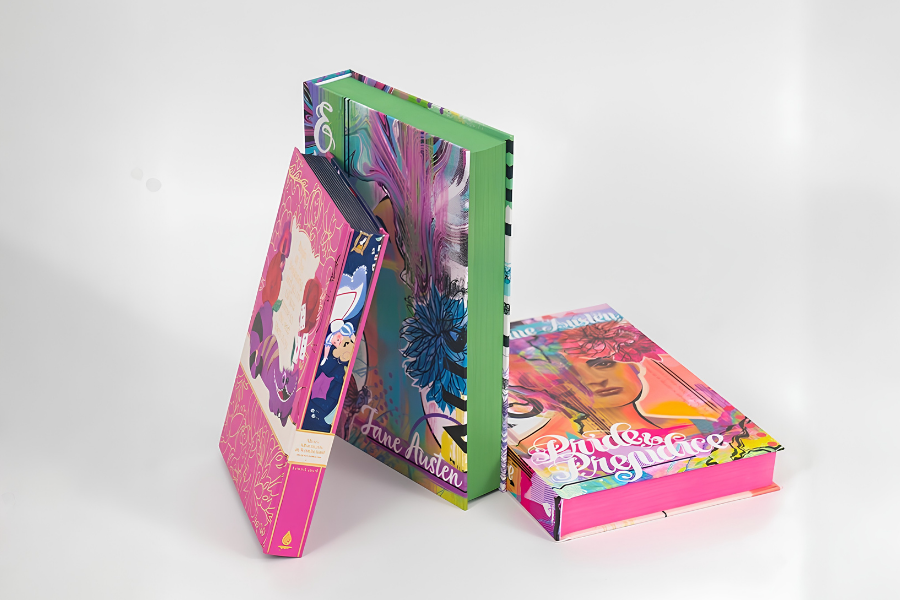
While not technically on the front cover, edge printing transforms the book’s side profile and adds a “wow” factor when the book is closed. Edge printing adds production time and cost, but it makes your book instantly Instagrammable.
- Solid edge coloring: One uniform color (e.g., black, red, blue) – adds contrast and hides shelf wear.
- Printed edges: Full images or patterns on the page edges – stunning for art books, journals, and collectors’ editions.
- Best for: Poetry books, gift books, special releases, and any title aiming for a premium unboxing experience.
Special Effects: Holographic / Textured Finishes
For those who want to push boundaries, special-effect finishes are the ultimate differentiator.
- Holographic finish: A rainbow, shifting effect – perfect for sci-fi, fantasy, or children’s books. Often achieved with holographic foil or laminate.
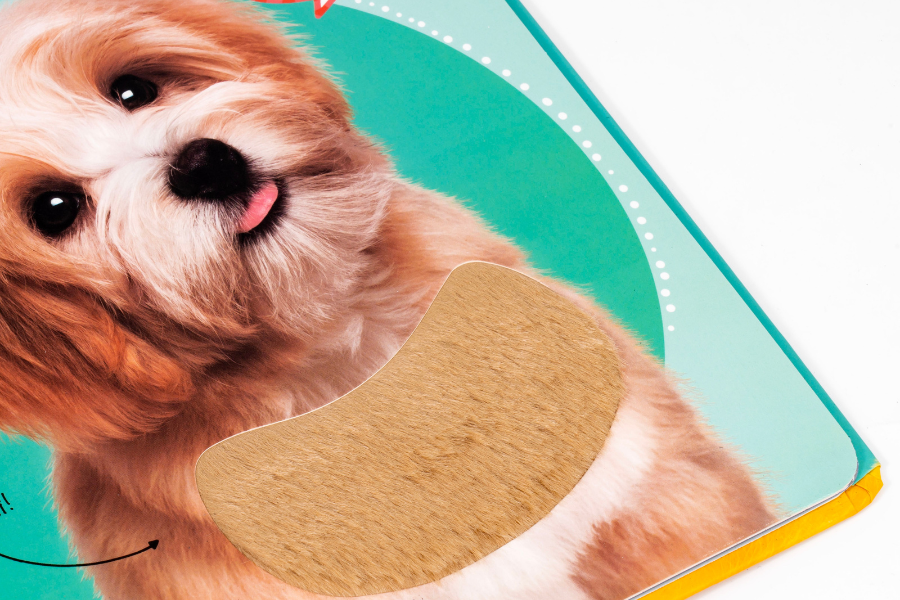
- Textured finishes: Includes linen, leather-like, or sandpaper textures. These are created by embossing or using special laminates.
- Durability: Varies by material, but most are surprisingly robust.
- Warning: These effects are the most expensive and usually require a minimum print run. They are best for limited editions or high-budget projects.
Printing Paperbacks with Xinyi Printing
Whether you choose a simple matte lamination or an elaborate foil-stamped, embossed design, each finish sends a message about your book’s quality and genre.
For most self-publishers and small presses, a combination of matte lamination + spot UV on the title offers the best balance of cost, durability, and aesthetics. For premium or collectible editions, don’t hesitate to explore foil stamping or edge printing.
Need help deciding? Request printed samples from Xinyi Printing to see and touch the finishes in person is the only way to be sure.