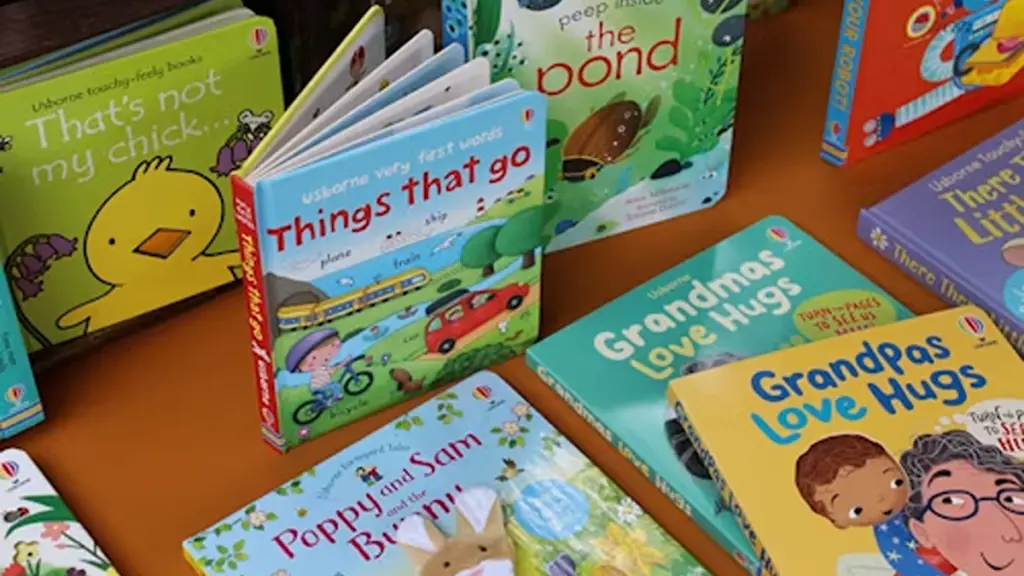


Ton livre de poche la couverture est le premier point de contact entre votre produit et le marché. Au-delà de la protection de base, it functions as a critical conversion tool, en particulier dans les environnements de vente au détail et de commerce électronique où les lecteurs prennent généralement une décision dans les 3 à 5 secondes après avoir vu une couverture.
In highly saturated categories, les données de production montrent que les livres avec des finitions de couverture améliorées (comme le laminage, UV, ou estampage à la feuille) peut atteindre des taux d'engagement 15 à 30 % plus élevés par rapport aux couvertures standard non couchées. La raison est simple: finish directly influences perceived value, expérience tactile, et positionnement de la marque.
Cependant, not all finishes serve the same purpose. La stratification brillante améliore l'éclat des couleurs et la résistance à l'humidité, while matte finishes offer a more premium, esthétique sobre. Les options spécialisées telles que les effets holographiques ou en relief peuvent différencier davantage votre produit, mais également avoir un impact sur les coûts., délai de mise en œuvre, et évolutivité.
Ci-dessous, nous nous effondrons 8 finitions essentielles de la couverture de poche, vous aidant à évaluer chaque option en fonction de son impact visuel, durabilité, et l'efficacité de la production, afin que vous puissiez prendre une décision commercialement judicieuse pour votre prochain tirage.
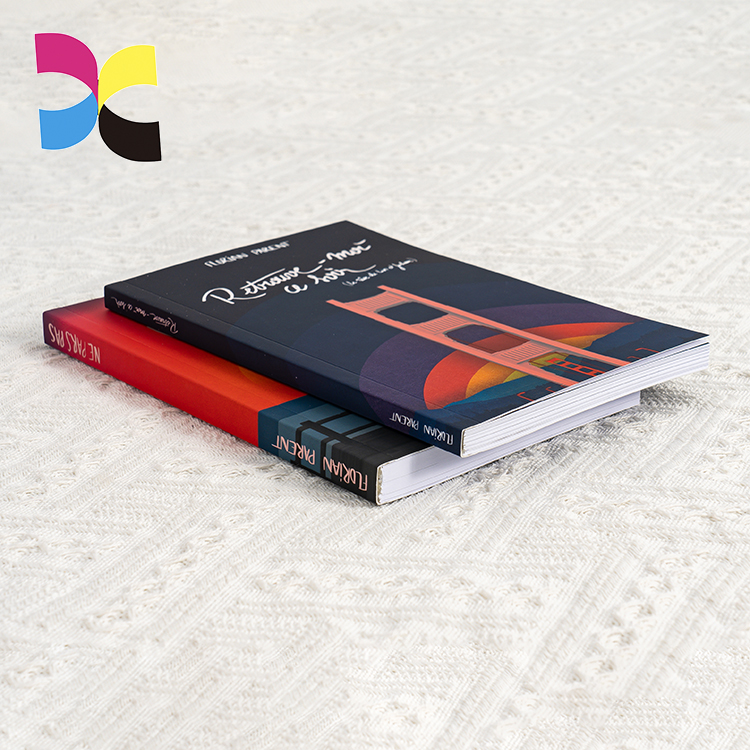
Tableau de comparaison rapide: Finitions de la couverture du livre broché
| Finition du couvercle | Effet | Niveau de coût relatif |
| Stratification brillante | Durabilité au quotidien + briller | Faible |
| Stratification mate + Spot UV sur le titre | Un doux, sensation d'élégance | Moyen |
| Couleur d'accompagnement Pantone | Votre logo pour rester parfaitement fidèle à votre marque | Moyen |
| Gaufrage ou estampage | Un tactile, titre luxueux | Haut |
| Feuille ou finition holographique | Un drame, effet captant la lumière | Haut |
| Bords colorés ou imprimés | Un élément de surprise (livre fermé) | Moyen à élevé |
Vernis Brillant vs. Laminage (Mat / Brillant / Toucher doux)
Avant de passer aux finitions spécialisées, il est essentiel de comprendre les deux couches de protection les plus utilisées dans la production de livres de poche: vernis et stratification. While both enhance appearance, leurs performances en termes de durabilité et d'expérience utilisateur diffèrent considérablement.
| Taper | Apparence | Durabilité | Idéal pour |
| Vernis Brillant | Brillant, réfléchissant | Faible à moyen | Projets à court terme, emplois sensibles aux coûts |
| Stratification brillante | Haute brillance, lisse | Haut (résistant à l'eau) | Livres de cuisine, livres pour enfants, titres riches en photos |
| Stratification mate | Non réfléchissant, élégant | Haut (résistant aux rayures) | Fiction littéraire, publications d'entreprise |
| Plastification douce au toucher | Velouté, semblable à du caoutchouc | Haut | Éditions premium, carneaux |
Si votre livre est censé circuler fréquemment, que ce soit dans le commerce de détail, bibliothèques, or events—lamination isn’t just an upgrade, it’s the safer long-term choice. Du point de vue de la production, le laminage offre une augmentation de 40 à 60 % de la durabilité de la surface par rapport au vernis standard, particularly in resistance to moisture, abrasion, et manipulations répétées. C'est pourquoi plus 70% des livres de poche distribués dans le commerce utilisent désormais une forme de plastification comme finition de base.
Vernis, d'autre part, reste une option pratique pour les produits à cycle de vie court ou les projets où le contrôle des coûts est la priorité, mais elle a tendance à montrer des signes d'usure. (éraflure, décoloration des bords) après une utilisation limitée.
Impression CMJN
L'impression CMJN en couleur reste la référence de l'industrie pour les couvertures de poche modernes. By combining four process inks(Cyan, Magenta, Jaune, et noir). Il peut se reproduire sur 16 millions de variations de couleurs, ce qui le rend très polyvalent pour la plupart des conceptions commerciales.
- Idéal pour: Couvertures illustrées, photographie, dégradés complexes, et des mises en page riches en couleurs où la profondeur visuelle et la précision comptent.
- Limites: Standard CMYK cannot accurately reproduce neon, fluorescent, ou effets métalliques. Ceux-ci nécessitent généralement des tons directs ou des finitions spécialisées telles que le papier d'aluminium ou les UV..
- Rentabilité: Le CMJN est généralement l'option la plus économique pour la production en couleur., surtout en impression offset, où il représente 80 à 90 % des travaux de couverture de poche en raison de son évolutivité et de sa cohérence.
Si votre couverture repose sur des images détaillées ou des transitions de couleurs superposées, Le CMJN n'est pas qu'un point de départ. C'est la norme de production par défaut qui équilibre la qualité, efficacité, et le coût.
Impression Pantone
Le système de correspondance Pantone (SPM) utilise du pré-mélangé, encres standardisées pour fournir un seul, couleur exacte, contrairement au CMJN, qui crée la couleur grâce à des points superposés de quatre encres. Cela fait de Pantone la solution incontournable lorsque la précision des couleurs et la cohérence de la marque ne sont pas négociables..
Avantages:
- Offre une cohérence des couleurs de 95 à 98 % sur différents tirages d'impression et lots de production
- Active les effets que CMJN ne peut pas obtenir, y compris les tons métalliques et fluorescents
- Produit des bords plus nets et une typographie plus propre, surtout pour les petits textes et logos
Idéal pour: Éléments critiques pour la marque tels que les logos, titres au dos, ou des designs minimalistes utilisant 2 à 3 couleurs unies, où même une légère déviation de couleur serait perceptible.
Considération des coûts: Pantone ajoute généralement 10 à 20 % aux coûts d'impression par rapport au CMJN standard, en raison de la configuration supplémentaire des plaques et de la gestion de l'encre. Cependant, pour les marques qui misent sur l'identité visuelle, cet investissement se traduit souvent par une plus grande reconnaissance en rayon et une plus grande cohérence sur les marchés mondiaux.
En pratique, de nombreux éditeurs, en particulier dans les séries d'auto-édition et de marque, utilisent Pantone de manière sélective (Par exemple, zones de texte ou de logo au dos) pour garantir que les éléments clés ressortent clairement, même à une distance de 1 à 2 mètres sur une étagère bondée.
Spot UV / Revêtement UV complet
Le revêtement UV est une finition liquide appliquée sur la surface imprimée et durcie instantanément à l'aide de la lumière ultraviolette., formant un durci, couche brillante. Il peut être utilisé comme full UV, ce qui signifie couvrir toute la surface, ou spot UV, où seuls les éléments sélectionnés sont améliorés.
- Regarder & sentir: Brillant avec élévation tactile en option (10–30 microns d'épaisseur) lorsqu'il est appliqué plus fortement, créant un subtil effet de relief que vous pouvez à la fois voir et ressentir.
- Idéal pour: Ajout de contraste visuel, qui est le plus souvent un reflet brillant sur un fond laminé mat. Cette combinaison est largement utilisée dans l'édition commerciale car elle augmente la qualité perçue sans surcharger la conception..
- Durabilité: Le revêtement UV offre une excellente protection de surface, avec une résistance jusqu'à 2 à 3 fois supérieure aux éraflures et aux empreintes digitales par rapport au papier non couché. Il aide également à maintenir l’éclat des couleurs au fil du temps..
- Note de fabrication: Spot UV fonctionne mieux sur les papiers couchés ou les surfaces laminées, où l'adhérence et la clarté du brillant sont optimisées. En fait, sur 60% des couvertures de poche haut de gamme utilisant les UV optent pour un mat + appariement UV ponctuel pour créer ce propre, contraste élevé, effet « touche-moi ».
En bref, Les UV ne sont pas que de la décoration. C’est un moyen stratégique de guider le regard du lecteur et de faire ressortir discrètement les éléments clés.
Relâchement & Dégradant
Ces techniques améliorent une couverture en remodelant physiquement la surface, plutôt que d'ajouter de l'encre ou du revêtement, ce qui les rend particulièrement efficaces pour la conception tactile.
| Effet | Sensation tactile | Meilleures applications |
| Relâchement | Soulevé, touchable | Titres, logos, graphiques symboliques (Par exemple, une lune levée sur une couverture fantastique) |
| Dégradant | Dentelé, sculpté | Dessins minimalistes, frontières, signature de l'auteur |
Du point de vue de la production, ces techniques créent généralement une profondeur de 0,2 à 0,5 mm, ce qui est suffisant pour être clairement ressenti à la main sans compromettre l'intégrité structurelle. Des études sur l'emballage et la conception d'impression montrent que les finitions tactiles comme le gaufrage peuvent augmenter la valeur perçue du produit de 20 à 30 %, en particulier dans les catégories premium ou orientées cadeaux.
Ils fonctionnent mieux sur des stocks plus épais (250–350 g/m²), en particulier du papier non couché ou des couvertures plastifiées mates, où le contraste entre la lumière et l'ombre améliore la visibilité. Autour 40% des éditions de poche haut de gamme intègrent le gaufrage ou le débossage dans le cadre de leur stratégie de finition.
En bref, si vous voulez que votre couverture fasse plus que simplement paraître belle, si vous voulez que les lecteurs sentir - ces techniques offrent une mise à niveau subtile mais puissante.
Estampage à la feuille (Or / Argent / Feuille holographique)
L'estampage à la feuille applique une fine couche de feuille métallique ou pigmentée sur la couverture en utilisant la chaleur et la pression., créant un environnement hautement réfléchissant, finition haut de gamme que les encres standards ne peuvent tout simplement pas reproduire. La feuille haute réfléchit la lumière de manière dynamique, augmentant la visibilité des étagères jusqu'à 25 à 40 % dans les environnements de vente au détail, surtout sous un éclairage ponctuel.
- Feuilles communes: Or, argent, or rose, cuivre, holographique, ainsi que des couleurs unies comme le blanc et le noir. Au cours des dernières années, L'utilisation des feuilles holographiques a augmenté d'environ 15 à 20 % dans des genres comme la science-fiction et la fantasy en raison de son effet accrocheur..
- Idéal pour: Éléments centraux clés tels que les titres, noms d'auteurs, logos, et des accents décoratifs : des zones sur lesquelles vous souhaitez une attention immédiate sans surcharger le design.
- Compatibilité: Fonctionne de manière fiable sur les surfaces laminées brillantes et mates, avec des arrière-plans mats offrant souvent un contraste plus fort et un look plus haut de gamme.
L'estampage à la feuille ajoute généralement 10 à 25 % aux coûts de finition, en fonction de la couverture de la zone et de la complexité, mais même une petite application peut augmenter considérablement la valeur perçue. En pratique, de nombreux éditeurs utilisent le papier aluminium de manière sélective. Un seul élément en aluminium bien placé peut transformer un livre de poche standard en quelque chose qui ressemble à une pièce de collection..
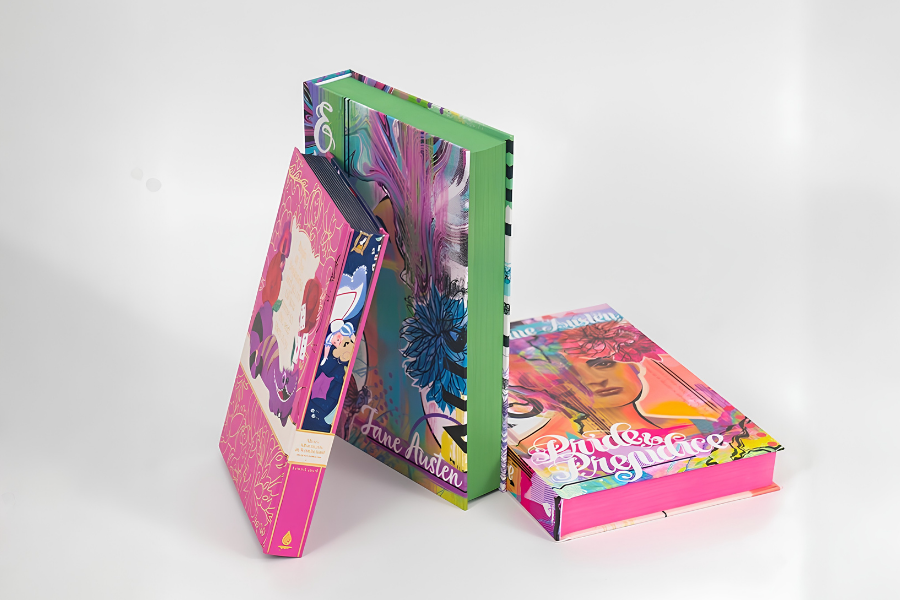
Impression sur les bords / Bords colorés
Bien que ce ne soit pas techniquement sur le devant couverture, l'impression sur les bords transforme le profil latéral du livre et ajoute un facteur « wow » lorsque le livre est fermé. L'impression sur les bords augmente le temps et les coûts de production, mais cela rend votre livre instantanément instagrammable.
- Coloration des bords solides: Une couleur uniforme (Par exemple, noir, rouge, bleu) – ajoute du contraste et masque l’usure des étagères.
- Bords imprimés: Images complètes ou motifs sur les bords de la page – superbes pour les livres d'art, revues, et éditions collectors.
- Idéal pour: Livres de poésie, carneaux, versions spéciales, et tout titre visant une expérience de déballage premium.
Effets spéciaux: Holographique / Finitions texturées
Pour ceux qui veulent repousser les limites, les finitions à effets spéciaux sont le différenciateur ultime.
- Finition holographique: Un arc-en-ciel, effet de décalage – parfait pour la science-fiction, fantaisie, ou des livres pour enfants. Souvent réalisé avec une feuille holographique ou un stratifié.
- Finitions texturées: Comprend le linge, semblable au cuir, ou des textures de papier de verre. Ceux-ci sont créés par gaufrage ou en utilisant des stratifiés spéciaux.
- Durabilité: Varie selon le matériau, mais la plupart sont étonnamment robustes.
- Avertissement: Ces effets sont les plus coûteux et nécessitent généralement un tirage minimum.. Ils conviennent mieux aux éditions limitées ou aux projets à gros budget.
Impression de livres brochés avec Xinyi Printing
Que vous choisissiez une simple stratification mate ou une feuille complexe estampée, motif en relief, chaque finition envoie un message sur la qualité et le genre de votre livre.
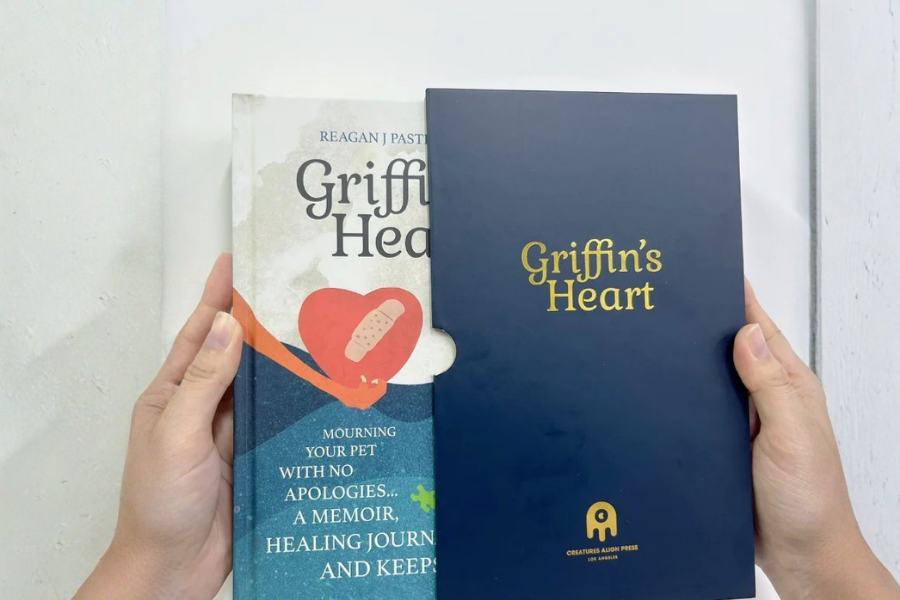
Pour la plupart des auto-éditeurs et des petites presses, une combinaison de stratification mate + le spot UV sur le titre offre le meilleur rapport qualité/prix, durabilité, et esthétique. Pour les éditions premium ou collector, n'hésitez pas à explorer le dorure ou l'impression des bords.
Besoin d'aide pour décider? Demander des échantillons imprimés à Xinyi Printing pour voir et toucher les finitions en personne est le seul moyen d'en être sûr..