

Os folhetos são usados em todos os tipos de cenários – instruções do produto, guias de viagem, promoções de eventos, vitrines de lojas, e mais. Porque cada caso de uso é diferente, os estilos e tamanhos dos folhetos tornaram-se cada vez mais diversos. Como um fábrica de impressão com 28 anos de experiência, vimos muitos clientes trazerem arquivos com problemas de layout, imagens grandes, ou fontes que são muito pequenas para serem lidas. Outros temem que as cores finais impressas pareçam diferentes do que esperavam.
Neste artigo, orientaremos você nos tipos mais comuns de dobradura de folhetos. Se você está planejando personalizar um folheto, este guia irá ajudá-lo a escolher a dobra certa e evitar erros comuns de design.
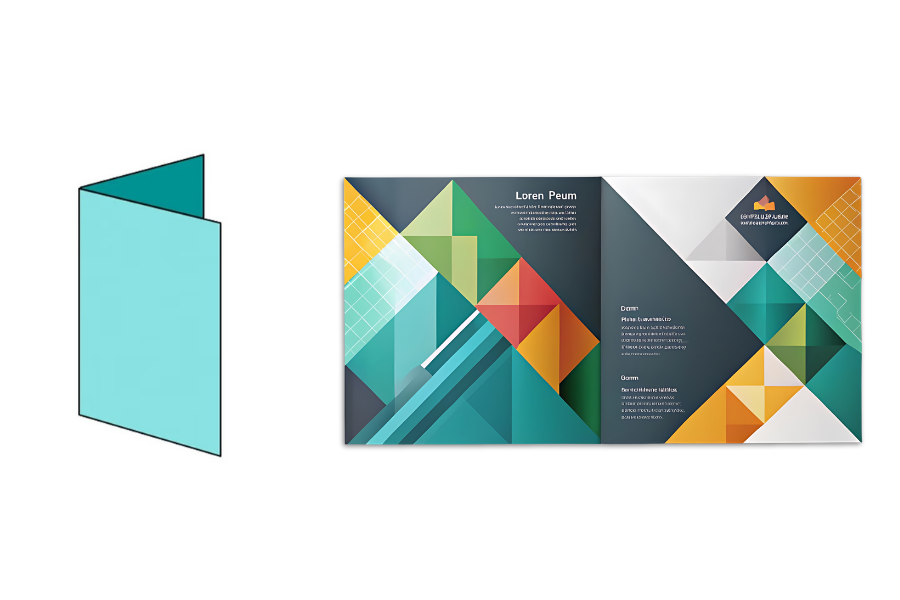
Folheto Meia Dobra
Um folheto com meia dobra é criado simplesmente dobrando uma folha impressa ao meio, oferecendo quatro painéis quando totalmente aberto. É simples, limpar, e ideal para conteúdo que não requer muitas páginas. Os tamanhos comuns incluem A3 e A4, e a direção da dobra pode ser simétrica ou assimétrica, esquerda-direita ou superior-inferior.
Este tipo de folheto é ótimo para projetos que precisam fornecer informações importantes de forma rápida e clara, especialmente materiais descartáveis, como convites, comprovantes, cupons, ou simples destaques de produtos.
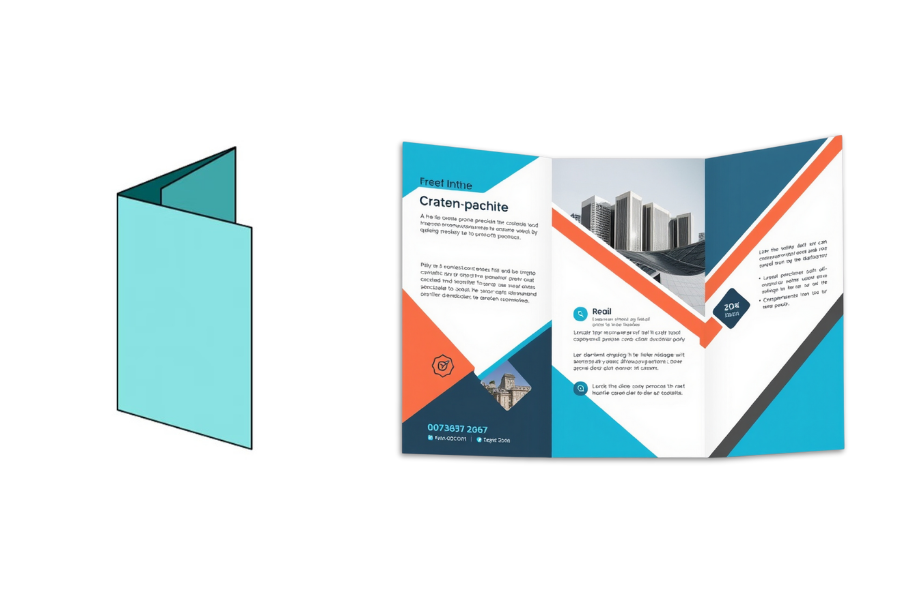
Folheto com três dobras
O estilo de brochura mais clássico do mundo dos negócios. A folha é dobrada duas vezes uniformemente, criando três painéis paralelos. Tipicamente, os painéis esquerdo e direito dobram-se para dentro, formando uma peça compacta e fácil de transportar. Quando aberto, ele se espalha como uma pequena tela, fornecendo seis painéis em ambos os lados - perfeito para estruturas, conteúdo modular.
Brochuras com três dobras são comumente feitas em A3 ou A4, dependendo da quantidade de informações. Eles são ideais para:
- Visão geral da empresa ou produto
- Apostilas para feiras
- Guias de viagem
- Manuais de instruções (eletrodomésticos, ferramentas, dispositivos)
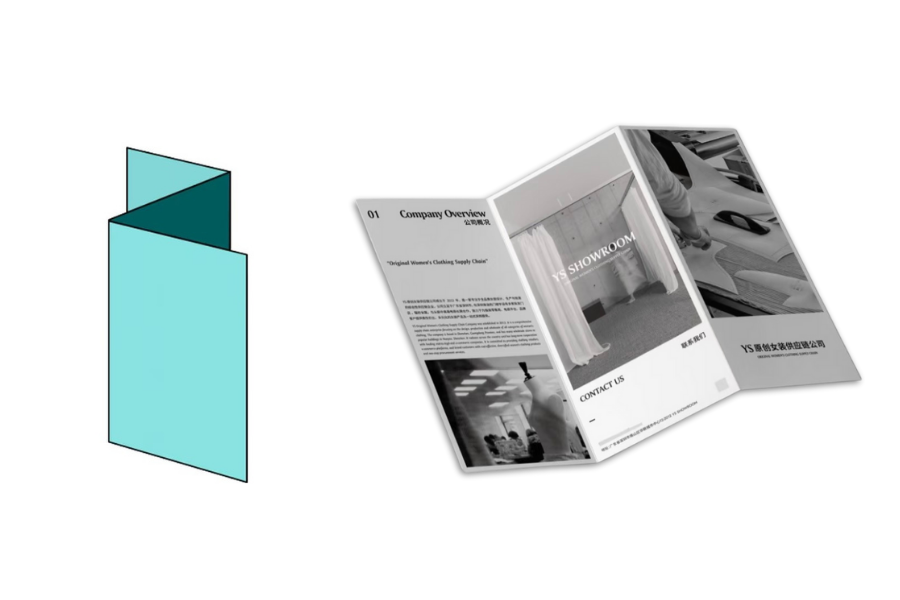
Folheto dobrado em Z
Um folheto dobrado em Z é dobrado em direções alternadas para formar um formato semelhante à letra “Z”. As linhas de dobra são contínuas e invertidas, criando um layout contínuo de vários painéis que é ótimo para narrativas lineares ou apresentações visuais panorâmicas.
Essa dobra funciona particularmente bem para conteúdo que precisa fluir em sequência, como:
- Relatórios anuais
- Catálogos de séries de produtos
- Grandes programações de eventos ou exposições
- Ilustrações de formato longo ou diagramas explodidos
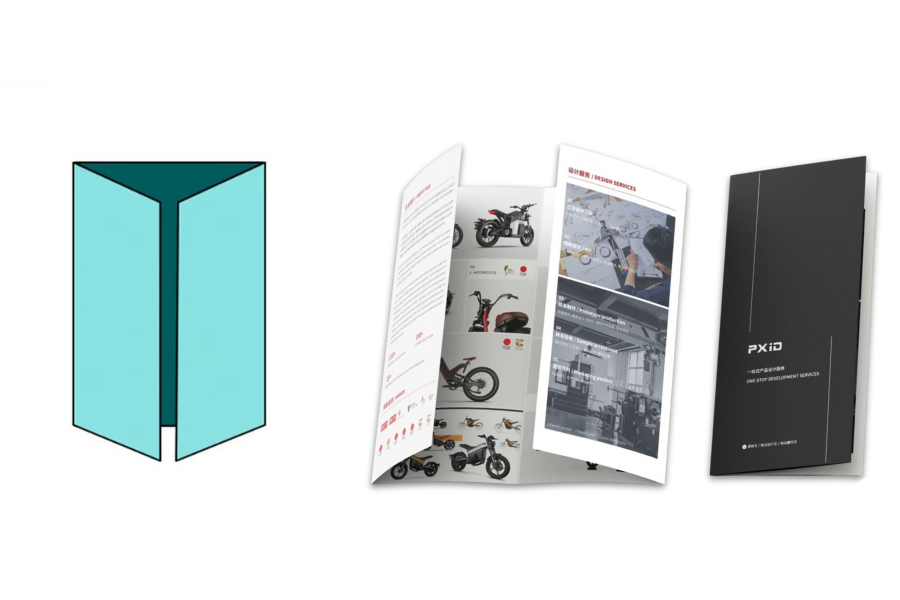
Folheto dobrável
A dobra do portão começa dobrando os lados direito e esquerdo para dentro, como fechar portas duplas. A peça inteira é então dobrada novamente. Ao ler, os usuários abrem a camada externa primeiro, em seguida, “abra as portas” para revelar o conteúdo central - criando um cenário dramático, efeito de revelação premium.
Perfeito para marcas que desejam destacar uma única mensagem central ou produto heróico, como:
- Bens de luxo (carros, joia, relógios)
- Lançamentos de produtos de alto padrão
- Exposições de arte
- Apresentações de marcas premium
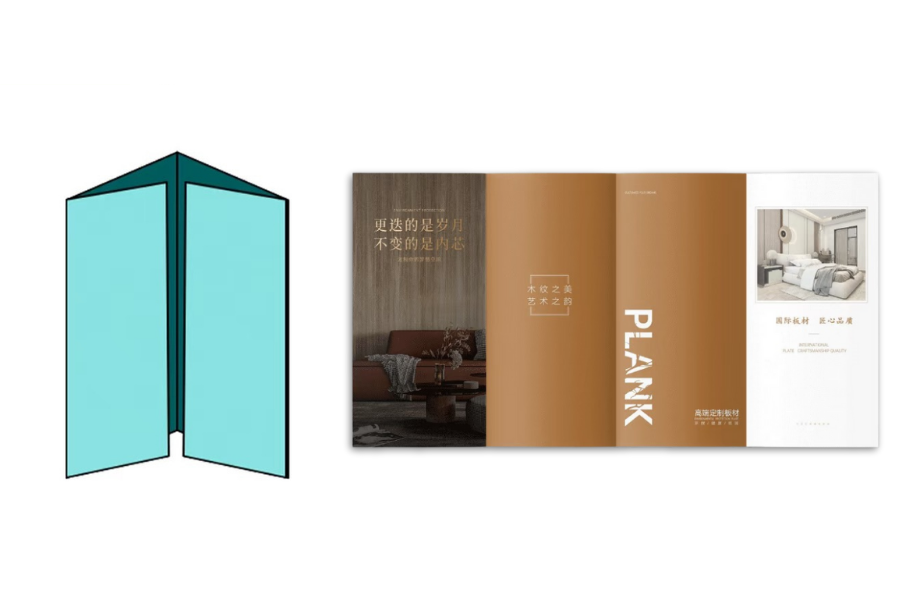
Folheto com dobra dupla
Uma dobra dupla usa duas dobras internas sucessivas, criando um “portão dentro de um portão”. Esta experiência de abertura multicamadas proporciona uma forte sensação de profundidade e cerimônia. Pode criar até oito painéis, tornando-o um favorito para materiais de marketing de qualidade premium.
Normalmente impresso em folhas A3 ou folhas grandes semelhantes, é ideal para:
- Lançamentos de luxo
- Vitrines visuais criativas
- Promoções de arte ou exposição
- Contação de histórias de marca de alta qualidade
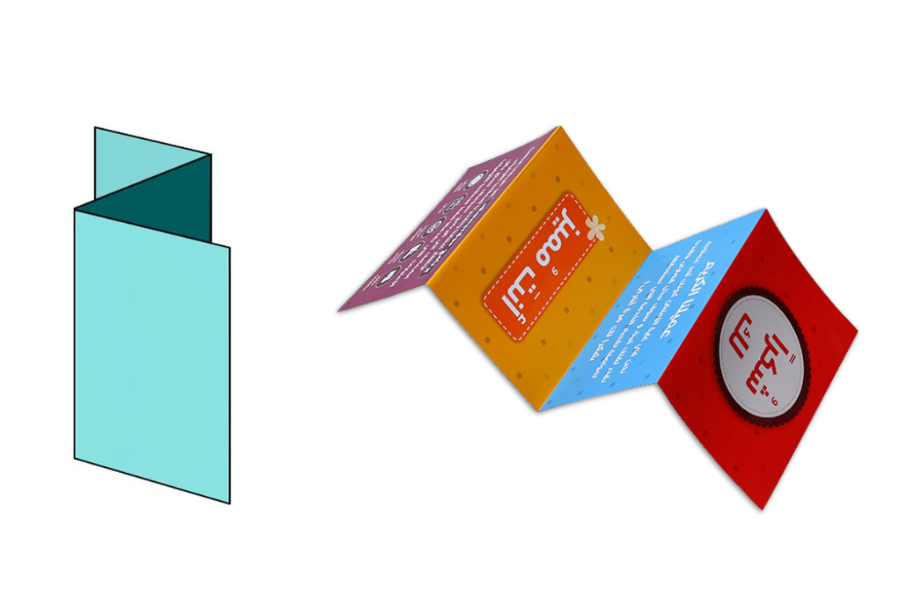
Folheto com dobra em acordeão
Assim como o nome sugere, a dobra do acordeão se expande e contrai como um leque ou acordeão. A folha é dobrada para frente e para trás em segmentos iguais, e o número de painéis pode ser aumentado conforme necessário. Quando aberto, forma um contínuo, layout extra longo sem interrupções visuais – perfeito para grandes volumes de informações lineares.
Recomendado para:
- Relatórios anuais ou cronogramas
- Catálogos de séries de produtos
- Guias de eventos ou feiras
- Restaurantes com menus extensos
Folheto com dobra francesa
Também conhecida como dobra cruzada, este tipo envolve dobrar a folha uma vez na horizontal e uma vez na vertical. Quando totalmente desdobrado, torna-se um grande pôster com quatro seções conectadas. Geralmente é no tamanho A3.
Comparado com o longo comprimento da dobra do acordeão, fluxo linear, a dobra francesa é melhor para foco central, layouts multidirecionais. É frequentemente usado para:
- Cartazes com folhetos
- Mapas
- Promoções de eventos
- Grande narrativa visual
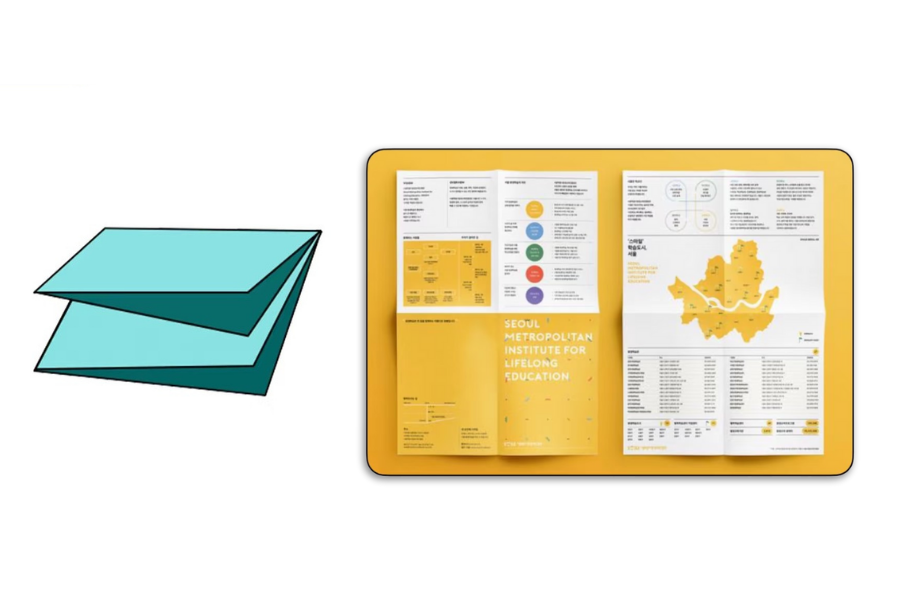
Metade + Folheto com três dobras
Esta dobra híbrida combina meia dobra com uma dobra tripla horizontal ou dobra em acordeão. Quando aberto, você verá linhas de dobra na vertical e na horizontal. A peça final dobrada é pequena, compactar, e altamente portátil, tornando-o perfeito para embalagens ou itens que exigem instruções detalhadas em um formato minúsculo.
Não há tamanho de impressão fixo; depende do seu conteúdo. Este formato é amplamente utilizado para:
- Manuais de dispositivos eletrônicos
- Inserções farmacêuticas
- Instruções compactas do produto
Tamanhos comuns de folhetos com três dobras
| Tipo de folheto | Tamanho completo (Desdobrado) | Tamanho final (Dobrado) |
| Dobra Tripla A5 | 210 × 140 mm | 70 × 140 mm |
| Dobra Tripla A4 | 285 × 210 mm | 95 × 210 mm |
| Dobra Tripla A3 | 420 × 285 mm | 140 × 285 mm |
| Dobra Tripla (3 × A5) | 420 × 210 mm | 140 × 210 mm |
| Dobra Tripla (2 × Horizontal A4) | 570 × 210 mm | 190 × 210 mm |
| Dobra Tripla (3 × A4) | 630 × 285 mm | 210 × 285 mm |
Como escolher o papel certo para sua brochura
A escolha do estoque de papel certo desempenha um papel importante na aparência do seu folheto, dobras, e, em última análise, quanto custa. Aqui estão as opções mais comuns que recomendamos aos clientes:
Papel revestido (Brilhante ou fosco)
Este é o papel mais utilizado para brochuras. Sua superfície lisa e forte desempenho de cores o tornam ideal para materiais de marketing. Os pesos populares incluem 128g, 157g, e 200g – quanto maior o peso, quanto mais espesso e premium parece.
Papel revestido fosco
Com um não reflexivo, acabamento suave, o papel fosco oferece uma aparência mais sutil e refinada. Funciona especialmente bem para marcas que buscam um tom premium ou discreto.
Papel Offset Não Revestido
Este papel absorve a tinta mais facilmente e oferece uma superfície natural ideal para escrita. É mais comumente usado para papéis timbrados e cadernos, e selecionado apenas para brochuras quando são necessárias caligrafia ou anotações.
Papel Texturizado ou Especial
Apresentando texturas únicas, cores, ou acabamentos táteis, o papel especial eleva imediatamente o valor percebido do folheto. Embora tenha um custo mais alto, é uma excelente escolha para marcas de luxo ou apresentações de alto impacto.
Como escolher um fabricante de impressão de folhetos para o folheto da sua empresa?
Escolhendo o tipo de dobra certo, caldo de papel, e o tamanho podem fazer uma diferença significativa na forma como seu folheto comunica sua mensagem e representa sua marca. Esteja você criando uma dobra simples pela metade para informações rápidas ou uma dobra premium para uma apresentação de alto impacto, um folheto bem desenhado sempre agrega valor.
Com 28 anos de experiência em impressão, nossa equipe ajudou milhares de empresas a transformar suas ideias em ideias sofisticadas, materiais de marketing profissional. Se você está planejando personalizar um folheto e precisa de orientação sobre dobras, disposição, ou especificações de impressão, estamos aqui para ajudar - basta entrar em contato, e nossos especialistas irão apoiá-lo em cada etapa do processo.