

Picture books are the children’s format where the printing spec is part of the product. A story told across double-page spreads lives or dies on color density, page-turn rhythm, and whether the binding survives being read aloud many times. A buyer makes those calls on a spec sheet, not after the first bulk run.
Unlike toddler board books, a picture book is built from paper pages. Every choice, from grammage to signature count, shows up in how the finished title reads and wears.
This guide covers the format conventions that affect production for publishers and self-publishers ordering custom picture books. It stays on the paper-page layer. Board book territory links out to pages that already cover it in depth.

What Counts As A Picture Book
A picture book combines visual and verbal narrative and is aimed at young children, roughly the 3 a 8 band. It usually runs 24 a 40 páginas, and the illustrations carry part of the story rather than decorate it after the fact. Encyclopedic references describe the format this way; see the general Wikipedia article on picture books for background.
That definition sets the production conversation. Paper pages, a sewn or glued text block, and full-color spreads put picture books in a different order from thick-laminated board titles for babies.
The board-to-picture transition is a design stage covered in our complete board book guide. If you are weighing the three toddler-shelf formats, el board book vs hardcover vs paperback article is the reference. This article stays on the paper-page spec layer.
Page Counts And The 32-Page Standard
Trade picture books are built around 32 páginas, con 24 y 40 as common neighbors. The convention is a printing artifact, not an editorial one. A sheet folded into a signature yields page counts in multiples of 4, 8, o 16, y 32 fills standard signatures cleanly for a sewn or perfect-bound block.
The usable story is smaller than the number suggests. Papel final, half-title, and imprint pages usually take 4 a 5 of the 32, so a 32-page book is around 27 a 28 story pages. That is why manuscripts are often planned on a 28-page, 14-spread grid.
The production rules, such as multiples of four and signature behavior, are laid out in our perfect binding vs saddle stitch breakdown. Board books count pages on a different logic, covered in our board book page-count guide.
Trim And Orientation Choices
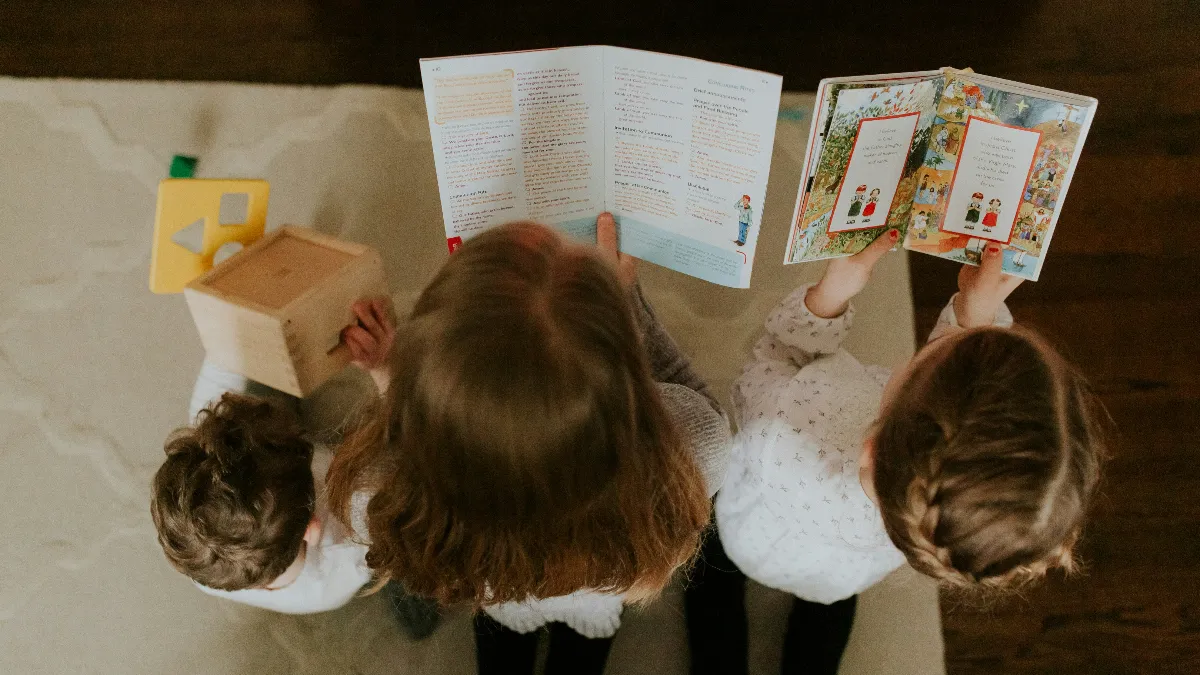
Orientation is a pacing decision. Portrait trims, como 8.5 by 11 inch and A4-adjacent sizes, suit single-image pages, lap reading, and younger listeners. The page turn reveals the next moment.
Wide horizontal trims, como 10 by 8 pulgada, support double-page spreads where art runs across the gutter. They reward cliffhanger pacing, because the eye travels left to right and the turn lands where the story wants a beat. Square trims sit in the middle and photograph well on shelves.
Three production consequences follow. Unusual trims waste more paper on standard press sheets, so a square or oversized horizontal format can quote higher than a conservative portrait trim at the same page count. Orientation decides which spread layouts are safe, because full-bleed art needs the gutter planned around the binding. And trim sets block thickness, which narrows or opens the binding options.
Size and construction at the board end are documented in our baby board book printing guide and the construction mechanics in how board books are made. This section covers paper-page picture books only.
Paper And Finishes For Color
Interior Stock For Color Spreads
Buyers often ask for one standard paper weight for children’s books. The honest factory answer is that the band depends on the handling profile and the art, not the age on the cover. For picture-book interiors, 157 a 200 gsm coated stock is the most commonly quoted range for full-color spreads.
Coated stock holds saturated color and keeps halftone detail in illustrations. It is also stiff enough that small hands can turn the page without creasing it. Lighter coated stocks around 128 gsm appear on text-forward or lower price-point titles.
Sin recubrimiento 100 a 120 gsm offset gives a softer, warmer read for storybook series with no photography. Remember that grammage measures weight, not thickness. The caliper behind that distinction is explained in our paper thickness guide.
Cover Stock, Laminación, And Ink
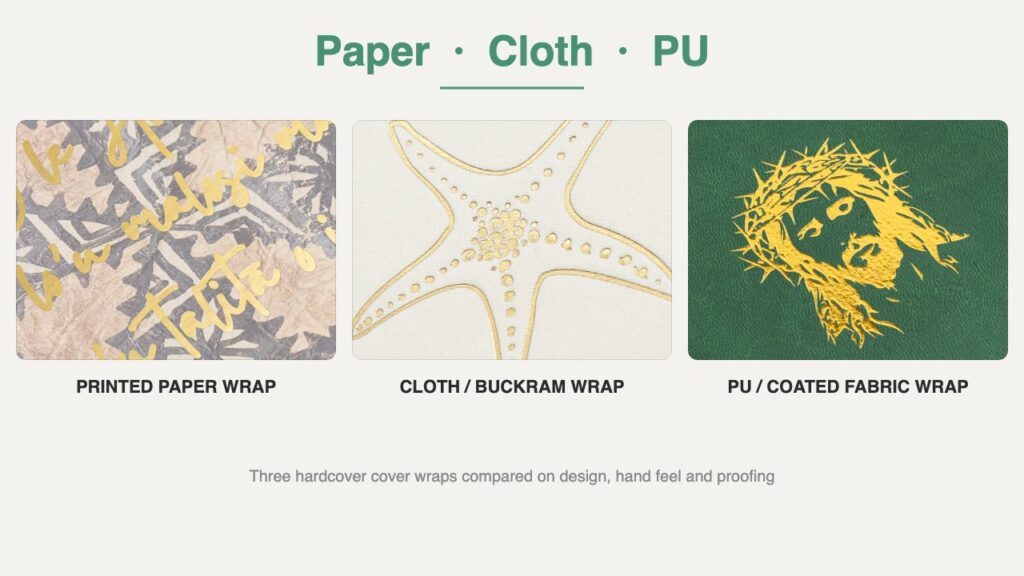
For hardcover picture books, 250 a 350 gsm board-ed stock with lamination is the usual cover zone. The finish menu, gloss or matte lamination, soft-touch film, Spot UV, and foil on the title, is catalogued in our acabados de cubierta article. Lamination earns its cost on children’s covers through scuff resistance during retail handling.
On color, process CMYK handles standard picture-book illustration. Dedicated spot colors enter when a brand character color or series identity has to match exactly, and that premium is a per-color setup decision. Approve a printed proof on your actual stock before bulk, because screen proofs flatter color density and a printed dummy is the reliable read.
Binding By Age And Use
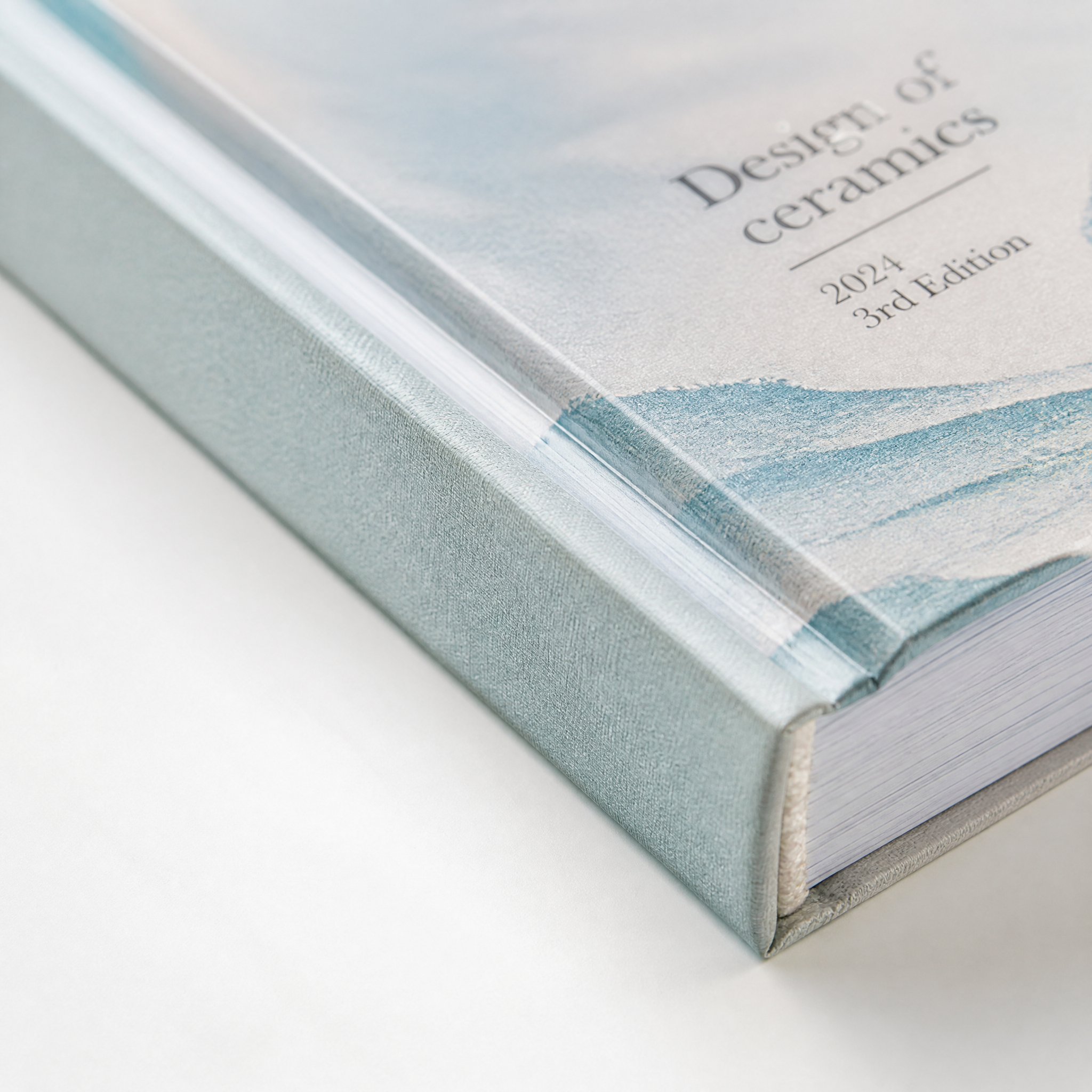
Children’s book binding sorts itself by how the book gets used, and misused. The table maps common structures for the picture-book band against age and scenario. Every durability note is conditional on materials and workmanship, so read it as a starting spec, not a promise.
| Estructura | Typical age band | Use scenario | Durability and handling (conditional) |
|---|---|---|---|
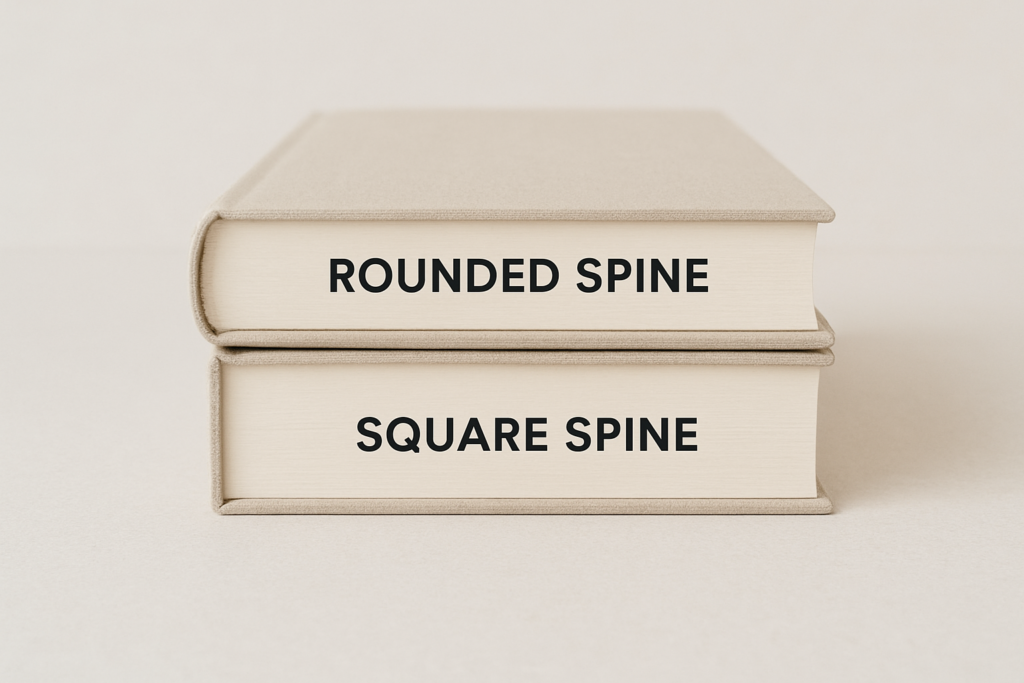
| Casebound hardcover (sewn block, boards, cloth or laminated paper over cover) | 4 a 8 | Minorista, regalo, library and school circulation | Highest abuse tolerance in the category; a sewn block spreads stress across many points instead of one glue line |
| Sewn softcover | 5 a 8 | Series sets, classroom bundles, travel editions | Softer shelf presence; opens flatter than a glued block, and the cover shows wear at the edges sooner than board |
| Perfect-bound softcover | 3 a 8 | High-volume price-point titles, carreras cortas | Most economical paper-page route at volume; spine cracking risk on thick blocks or heavy handling, so keep bulk modest |
| Spiral or wire-O | 3 a 8 | Activity and educational picture books, libro de trabajo | Lays flat and bends well, but the wire and end caps are the failure and safety points to specify carefully |
The sew-versus-glue verdict for hardcover children’s titles is settled in our sewn vs glued hardcover binding article, and this table adopts its conclusion rather than re-arguing it. For library or multi-child reuse, cosido; for a single-reader retail run at a price point, glued softcover is the workable default.
Casebound construction is the format most children’s publishers order. The standard configurations are shown on the hardcover children’s literature printing page.
One safety-adjacent spec belongs here rather than in paper. Rounded corner cuts on toddler-adjacent picture books are a die-cutting choice, agreed at the proofing stage, and they interact with how the cover wraps over the boards.
Where The Budget Goes
Three factors set the price of a picture-book run, in roughly this order of leverage. Print quantity dominates, because offset setup, plates, preparar, and imposition proofing amortizes across the run. The gap between 1,000 y 3,000 copies is steep, while the gap between 3,000 y 10,000 flattens.
Page count and trim come second, because they set paper consumption and signature waste. An offbeat trim or a 36-page count instead of 32 moves material more than most buyers expect. Finishes are third, because lamination, frustrar, and special varnishes are per-pass station costs that stay proportional.
The full cost anatomy for books of every format, including where binding sits in it, is broken down in our book printing cost guide.
How To Order And What To Agree
Minimum orders follow the same logic as the cost bands. The order floor here is 200 copias, and the quote tiers are 200, 500, 1,000, and over 1,000. Below a few hundred copies, setup occupies a large share of the per-copy cost, so short runs are quoted differently from bulk.
Binding and trim move the floor within those tiers. A casebound hardcover starts at a higher tier than a perfect-bound softcover of the same page count, because the case and boards add work. Lead time runs about 7 a 12 working days for a softcover and 10 a 18 for a hardcover, counted from a confirmed file and signed spec.
The sequence that protects a first-time publisher is fixed. Approve a white or dummy sample for structure, then a printed color proof on the chosen stock, then a pre-production copy before bulk starts. Browse the kids and children’s books category for the builds most often quoted.
El libros de aprendizaje temprano y children’s reading books lines show typical picture-age configurations to spec against.
If most of the book is activity rather than narrative, the dedicated coloring book sizes guide covers formats built around that use.
Picture Book Printing Quoted On Your Specs
Pensamientos finales
A picture book succeeds on the page, so the spec is a design tool, not just a cost line. Fix the page count to the signature math, match paper weight to how the book will be handled, and pick binding by the age band and the abuse model. Then prove every choice on a printed sample before bulk.
Keep the board-book decisions on the board-book pages, and keep this one on the paper-page picture book. That separation is what keeps a quote honest and a first print run predictable.
Preguntas frecuentes
What is the minimum picture book order?
The order floor is 200 copias, and quote tiers run 200, 500, 1,000, and over 1,000. Within those tiers, binding and trim move the number, because a casebound hardcover carries more setup than a perfect-bound softcover of the same page count.
What paper weight works for picture-book interiors?
A 157 a 200 gsm coated stock is the common range for full-color spreads, because it holds saturated color and stays stiff enough for small hands to turn. Lighter 128 gsm coated or 100 a 120 gsm uncoated offset suit text-forward or softer reads.
Are rounded corners and non-toxic inks mandatory?
Mandatory depends on the destination market, not the format. US children’s products fall under CPSIA rules on lead and tracking labels, and EN71 references apply in the EU and UK where a book is classed as a toy. Specify compliance, corner radius, and age grading per order.
Can a picture book include activity pages?
Sí, with a paper caveat. Coloring and activity spreads need heavier coated stock, 157 a 200 gsm and up, or marker bleed reaches the reverse side. Perforated or tear-out pages also change the signature plan, so agree them before imposition.
Board book or picture book by age?
Split by construction and handling profile. Board suits the mouth-and-throw stage, and paper picture books start from roughly the 3 band up. The age-step transition itself is documented in our board book guide, so this article defers to it.