


Coloring book manufacturing demands absolute precision because blurry line art and ink bleed-through immediately drain retail margins. Mismanaging file geometry or press calibration yields uneven margins and rejected batches that sit unsold on warehouse shelves.
This analysis benchmarks step-by-step production protocols against strict factory tolerances. We evaluate pre-press vector limits down to 0.25 pt line weights and material parameters for 70 to 120 gsm uncoated stock to help you secure flawless ink adhesion at scale.
Step 1: File Preparation and Pre-Press Setup
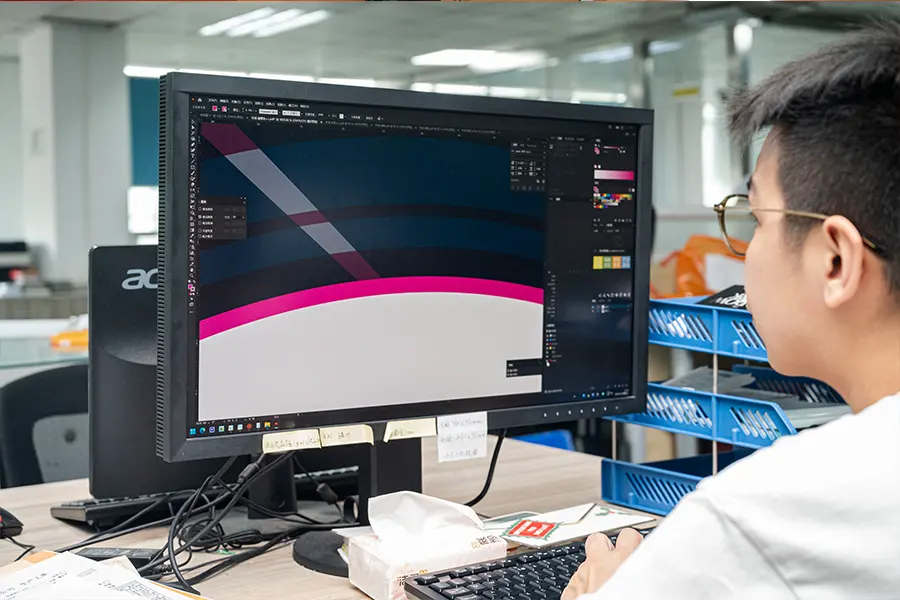
Proper file preparation prevents costly printing delays. High-resolution vector line art, exact bleeds, and CMYK cover formatting ensure your coloring book pages print sharp and clean on press.
Preparing High-Resolution Line Art for Printing
Sharp line art is the core of any professional coloring book. Blurry edges or pixelated outlines ruin the user experience and create immediate printing bottlenecks.
- Raster resolution: Set raster artwork to 300-350 ppi at 100% of the final print size. Scan hand-drawn art at 600 ppi before downsampling to maintain edge integrity.
- Vector preference: Use vector formats like AI, EPS, or SVG for logos and covers to guarantee sharp lines at any scale.
- Line weights: Apply bold, consistent line weights between 0.75 and 1.25 pt to create distinct boundaries for coloring tools.
- Contrast control: Maintain pure black lines on a white background. Strip out gray, low-contrast gradients that print fuzzy on uncoated paper.
- Digital cleanup: Clean scanned files digitally to remove stray marks, dust, and smudges. Push whites to pure white for maximum visual clarity.
Bleed, Margins, and Print-Ready File Requirements
Commercial presses demand exact geometry to align pages during the cutting and binding phases. Off-spec dimensions force operators to scale your files, which chops artwork or creates uneven white borders.
- Document dimensions: Match the layout document dimensions directly to the final trim size of the physical book.
- Bleed settings: Add a 0.125-inch (3 mm) bleed on all sides for any illustrations that stretch to the page edge.
- Safe margins: Keep critical content within a safe margin of 0.125 to 0.25 inches from the trim line. Leave a 0.75-inch clearance for spiral-bound edges.
- PDF structure: Format interior PDFs as single pages rather than spreads to guarantee correct printer imposition and numbering.
- Cover templates: Build the cover file using the printer’s exact template to calculate accurate spine widths based on page count and paper stock.
Color Mode and File Format Checks
Pre-press systems execute your color data exactly as submitted. Pushing RGB files or rich black line art to an offset press oversaturates uncoated paper and destroys line crispness.
- True black configuration: Format interior line art as single-channel 100% K (true black) to prevent ink oversaturation and blurry edges caused by registration black.
- CMYK conversion: Convert all cover images and colored elements to CMYK color mode before initiating the PDF export.
- Raster formatting: Save necessary raster elements as uncompressed TIFFs or maximum-quality JPEGs at 300 ppi.
- Font handling: Embed all active fonts in the document or convert typography to outlines to prevent automated font substitution.
- Clean export: Export the final files as Press Quality Adobe PDFs, stripping out interactive annotations, hidden layers, and unused swatches.
Step 2: Pre-Press and Plate Making (CTP Process)
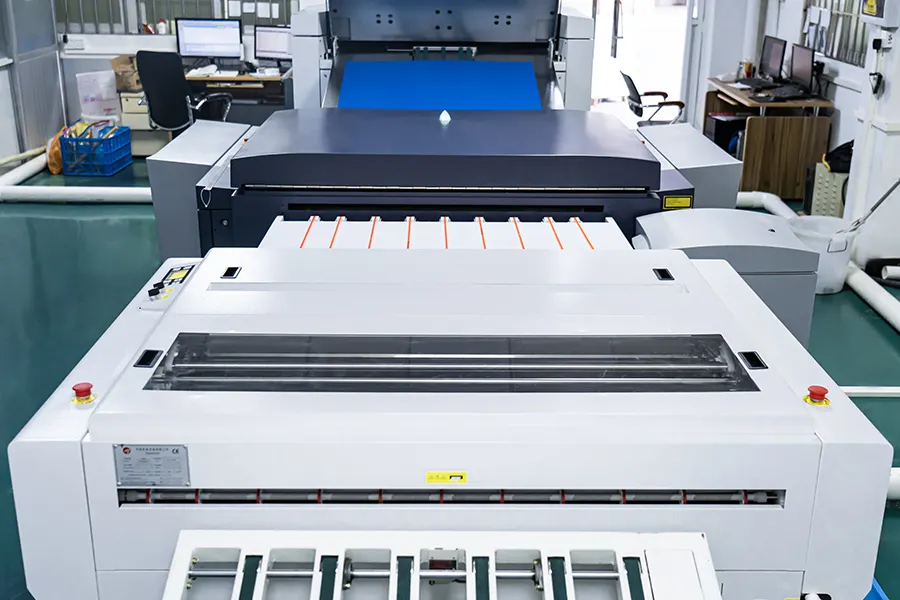
Pre-press and CTP lock in line clarity. Enforcing line weights, stripping stray colors, and generating high-resolution plates guarantees a flawless offset production run.
Converting Digital Files into Printing Plates
Translating digital artwork into physical printing plates requires strict file formatting. A single stray color or low-resolution image will compromise the entire production run.
- Format files correctly: Export artwork as PDF/X-1a or PDF/X-4. Keep outlines as vector graphics or set bitmap resolution to 600–1,200 dpi. Standard 300 dpi creates blurry edges on intricate patterns.
- Lock in black-only (K) colors: Configure all interior line art to 100% Black (K). Strip out any stray CMYK or RGB mixes to prevent registration errors and fuzzy outlines on the printing press.
- Run strict preflight checks: Run files through pre-press software to verify embedded fonts, confirm correct bleed dimensions (usually 3 mm), and catch any lines that fall below minimum thickness thresholds.
- Impose pages for the press: Arrange approved single pages into multi-page signatures (such as 16-page or 32-page layouts). Add registration marks, folding guides, and barcodes for bindery tracking.
- Execute the CTP workflow: The Raster Image Processor (RIP) renders the files at 2,400 to 3,000 dpi. The computer-to-plate device then exposes the aluminum plates and punches them for precise mechanical alignment on the press.
Ensuring Sharp and Consistent Line Output
Line clarity dictates the quality of a coloring book. Press operators and prepress technicians must control ink transfer and calibration to keep intricate details visible on uncoated stock.
- Maintain minimum line thickness: Keep line weights above 0.25 to 0.3 pt for detailed adult designs, and at least 0.4 pt for children’s books so outlines do not break or vanish during printing.
- Control dot gain on uncoated paper: Coloring books require toothy, uncoated paper that easily absorbs ink and causes lines to spread. Apply specific calibration curves in the RIP to compensate for this spread and keep edges sharp.
- Keep vector art native: Process vector graphics directly in the RIP. Do not flatten or rasterize vector lines unless technically required, as native vectors yield significantly sharper edges than converted raster images.
- Optimize press pressure and registration: Press operators carefully calibrate the pressure between the plate, blanket, and paper. Accurate pressure prevents directional blur (slur) and stops fine background details from filling in with excess ink.
- Validate with physical proofs: Review on-press proofs printed on the actual production paper. This confirms how the ink behaves on the chosen stock and guarantees intricate line visibility before initiating your full production run.
Premium Custom Coloring Book Printing Solutions
Step 3: Offset Printing Process
Offset lithography dominates high-volume coloring book manufacturing by combining low unit costs with strict ink-water balance to deliver razor-sharp lines on uncoated paper.
| Parameter | Standard Specification |
|---|---|
| Interior Plate Setup | Single-color (K-only) |
| Cover Plate Setup | 4-color (CMYK) sequence |
| Recommended Paper | 70–120 gsm uncoated stock |
| Minimum Vector Line Weight | 0.25–0.3 pt |
High-Volume Coloring Book Printing with Offset Machines
Offset lithography drives mass retail production for coloring books by transferring images from a metal plate to a rubber blanket, and finally onto the paper. This indirect transfer ensures consistent quality across runs of thousands of units while drastically reducing the variable cost per unit.
Before printing begins, prepress teams generate Computer-to-Plate (CTP) outputs mapped directly to the book’s components:
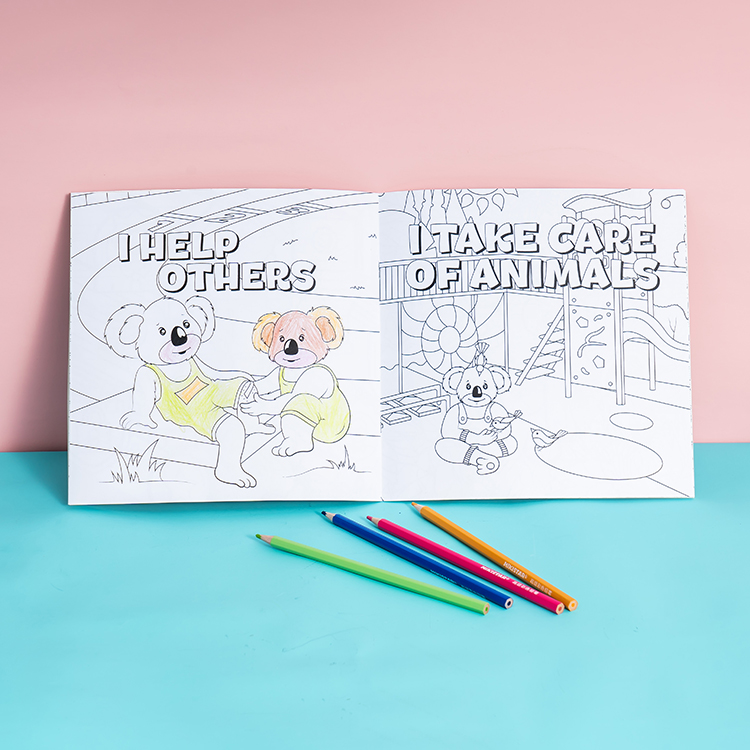
- Interior Pages: Single-color (K-only) plates to execute economical, high-contrast line art.
- Covers: 4-color (CMYK) sequences to reproduce vibrant retail packaging.
- Paper Stock: Uncoated 70 to 120 gsm sheets loaded into commercial sheetfed or web presses, specifically chosen to grip colored pencils, crayons, and markers.
While high-speed offset printing demands a significant initial setup investment, the economies of scale make it the most cost-effective method for mass retail production.
Ink Control and Line Clarity Optimization
Line clarity determines the commercial success of a coloring book. To achieve razor-sharp outlines, press operators maintain a strict ink-water balance. This equilibrium protects the non-image areas. Over-wetting washes out the artwork, while under-wetting deposits unwanted background tint on the bright white pages.
During the run, the presses apply an optimized ink film thickness. This calibrated layer keeps black outlines crisp without filling in narrow, intricate details or bleeding heavily into the porous paper fibers.
Operators rely on strict quality control metrics to maintain this standard:
- Real-Time Monitoring: Automated scanners track color bars and registration marks to guarantee exact front-to-back alignment, eliminating visual distractions on double-sided pages.
- Vector Inputs: Designers supply pure vector artwork directly to prepress.
- Line Weight Thresholds: Artwork features minimum line weights between 0.25 and 0.3 pt, ensuring delicate outlines survive plate-making and high-speed printing without breaking.
These precise controls stop ink from flooding the uncoated paper, preserving the exact line integrity approved during the pre-press phase.
Step 4: Folding, Cutting, and Signature Assembly
Folding and cutting transform flat press sheets into precise book blocks. Strict tolerances and strategic signature assembly dictate how well the final coloring book opens, lays flat, and binds.
Page Folding and Sheet Arrangement
The transition from flat printed sheets to folded signatures requires mechanical precision. We must control how the paper behaves under stress so the final product opens smoothly and retains clean margins.
- Grain direction: Align paper grain parallel to the spine to prevent cracking and improve how the book lays flat for coloring.
- Fold tolerances: Apply tight folding tolerances between ±0.5 mm and ±1.0 mm to keep page artwork centered and prevent images from shifting into the gutter.
- Creep compensation: Adjust inner page content slightly toward the spine. This ensures thick paper layers do not push outer margins off-center after the final trim.
- Configuration: Configure right-angle parallel folds to handle standard coloring book parent sheets, typically creating 8-, 16-, or 32-page sections.
Creating Signatures for Binding Efficiency
How we group folded sheets directly impacts bindery throughput and the physical durability of the coloring book. Efficient signature assembly prevents bulky spines and ensures artwork aligns flawlessly across spreads.
- Perfect-bound setups: Group folded sheets into 16-page signatures for perfect-bound books to maximize print and bindery efficiency.
- Saddle-stitched configurations: Nest 8-page to 32-page signatures for saddle-stitched books. Limit total counts to 48 pages on heavy coloring stock to prevent bulky spines.
- Spread allowances: Calculate a 2–4 mm gutter loss per side when designing double-page spreads so users can comfortably access central artwork.
- Workflow routing: Gather and stack signatures sequentially for perfect binding, or nest them for saddle stitching before transferring the book blocks to the binding line.
Step 5: Binding Methods for Coloring Books
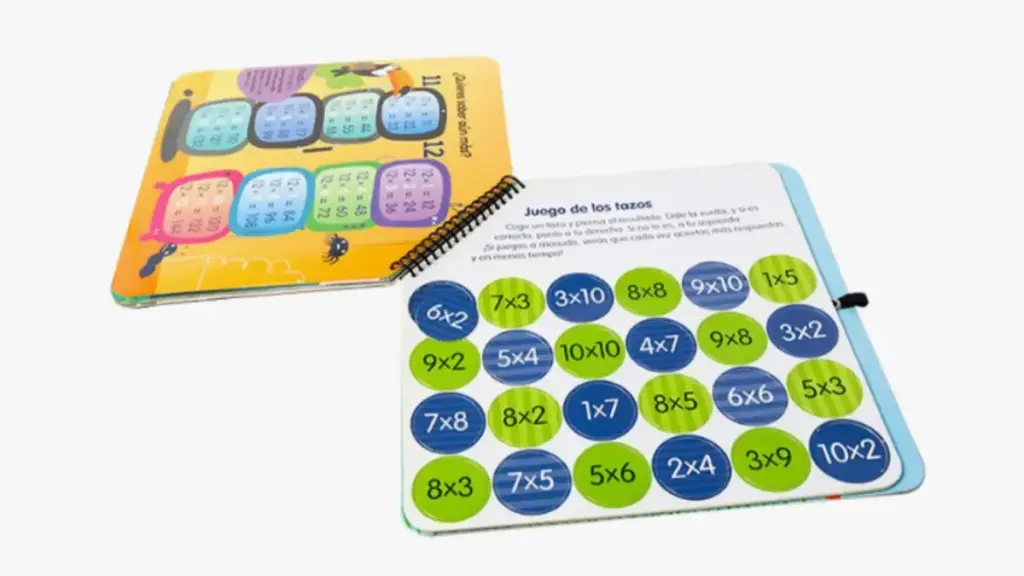
The right binding dictates durability, cost, and the end-user’s coloring experience. Match the binding method to your page count, retail goals, and target audience.
Saddle Stitch Binding (Lightweight Books)
Saddle stitch uses metal staples along a center crease to secure folded sheets. Manufacturers rely on this method to produce high-volume promotional booklets and children’s activity books at the lowest possible cost.
- Construction: Secures folded sheets along a center crease using 2 to 4 metal staples.
- Page Count Limit: Performs best for lower page counts ranging strictly between 8 and 64 total pages.
- Paper Compatibility: Pairs perfectly with 70 lb uncoated interior paper to ensure crayons and markers adhere properly.
- Cost Efficiency: Yields the lowest cost per unit, making it ideal for bulk distribution or giveaways.
- Limitation: Thicker page stacks do not fold or staple well, restricting this method to short-form books.
Perfect Binding (Thicker Coloring Books)
Perfect binding stacks individual sheets and glues them at the spine using flexible EVA or PUR adhesives. This creates a square, printable edge that fits standard retail and bookstore shelving models.
- Spine Construction: Binds individual sheets with flexible glue to form a clean, professional appearance.
- Page Capacity: Accommodates thick adult coloring books ranging from 48 to over 300 pages.
- Design Requirement: Demands generous inside margins (0.5 to 0.75 inches) to keep artwork out of the tight gutter.
- Premium Adjustments: Works best with single-sided printing and heavier 80 lb paper to block marker bleed-through.
The glued spine prevents the book from laying flat natively. You must plan your margins carefully so users do not struggle to color artwork trapped near the binding.
Spiral Binding (Lay-Flat Usage Experience)
Spiral binding completely eliminates the tight gutter by threading a continuous coil through pre-punched holes along one edge. Serious artists and craft stores favor this format because it provides an entirely unobstructed coloring surface.
- User Experience: Allows users to fold pages completely around to the back during long coloring sessions.
- Capacity: Binds a wide range of sizes spanning from 20 to over 300 pages.
- Material Choice: Plastic coils offer better durability under rough handling, while metal wire deforms easily under heavy pressure.
- Unit Economics: Carries a higher unit cost but delivers a superior product for serious artist editions and reusable dry-erase workbooks.
While it costs more to produce, spiral binding transforms the physical usability of the product. It gives colorists total access to every inch of the page without fighting the spine.
Step 6: Quality Control During Production
Rigorous quality control locks in print consistency and mechanical durability. Factories test ink adhesion, page alignment, and binding strength to prevent rejected batches and ensure usability.
Ink Consistency and Smudge Testing
Coloring books face heavy friction from pencils, markers, and erasers. If ink smears or bleeds through the paper, the product fails its primary purpose. Press operators monitor ink application continuously from the first makeready sheet to the final printed pallet.
- Sharpness Targets: Set precise targets for sharp, uniform line art and consistent black density across the entire print run.
- Optical Density: Maintain stable optical densities—typically 1.4 to 1.7 for offset black on uncoated stock—to prevent broken or fuzzy lines.
- Plate Registration: Monitor multiple-plate registration tightly, keeping misregistration under 0.2 millimeters so outlines remain clean and single-stroked.
- Smudge Testing: Run routine smudge tests, including dry-time checks, 24-hour dry rub tests, and simulated coloring with pencils or markers.
- Opacity Checks: Inspect pages for bleed-through and show-through so ink does not interfere with reverse-side illustrations during double-sided coloring.
- Rapid Corrections: Fix ink issues immediately by adjusting ink keys, switching to faster-setting formulations, or altering drying energy.
Binding Strength and Page Alignment Inspection
A coloring book endures aggressive physical handling. Users constantly flatten spreads, rotate the book, and press hard near the gutter. Weak bindings drop pages, while poor alignment ruins the visual centering of the artwork.
- Durability Testing: Test spine and binding strength routinely so pages remain intact when users flatten the book for coloring.
- Registration Checks: Verify page alignment and book-block registration to maintain uniform margins and properly centered artwork.
- Flat-Opening Performance: Evaluate flat-opening performance across all binding styles, making sure perfect-bound books open wide enough for coloring near the gutter.
- Saddle-Stitch Inspection: Inspect saddle-stitched batches for secure staple clinching, correct signature alignment, and proper creep compensation.
- Perfect-Bound Assessment: Assess perfect-bound samples for continuous glue coverage, adequate spine penetration, and passing page-pull and flex tests.
- Dimension Control: Measure trim accuracy, page skew, and collation to keep book dimensions consistent and page sequencing exact.
Step 7: Packaging and Export Preparation
Exporting coloring books requires strict weight limits, moisture control, and precise documentation to survive international transit and clear customs fast.
Protective Packaging for International Shipping
Uncoated coloring book paper absorbs moisture and scuffs easily. International shipping requires multi-layered physical protection to prevent warped spines and damaged covers during long sea or air transits.
- Unit Protection: Seal individual coloring books in clear polybags or 50-75 micron shrink-wrap to block surface dirt, repel minor moisture, and provide tamper evidence.
- Internal Stacking: Stack books flat inside master cartons and alternate head-to-foot orientations to minimize spine deformation and page warping.
- Moisture Control: Insert single-wall corrugated pads between layers and add 30-60 grams of silica gel per cubic meter to absorb humidity during transit.
- Master Cartons: Pack units into double-wall corrugated master cartons. Restrict the maximum weight to 15-20 kg to prevent drop damage and support safe manual handling.
- Palletization: Secure cartons onto ISPM-15 heat-treated wooden pallets using a brick stacking pattern. Cap the total height at 1.4 meters to maintain stability.
Carton Labeling and Logistics Coordination
Accurate labeling and clear logistical terms keep shipments moving through customs and third-party logistics centers. Any mismatch between physical cartons and electronic shipping data triggers instant chargebacks and delays.
- Carton Labels: Print durable, water-resistant labels detailing the item SKU, product description, purchase order number, total unit count, and country of origin.
- Label Placement: Place identical barcodes and shipping labels on at least two sides and the top of each master carton so logistics teams can scan them without repositioning heavy boxes.
- Incoterms: Establish precise Incoterms with international buyers to clarify who pays for main carriage, cargo insurance, and export customs clearance.
- Freight Booking: Book sea or air freight transport directly with forwarders. Share precise carton dimensions and weights to optimize container space and exact pricing.
- Export Documentation: Compile an accurate export documentation package containing the commercial invoice, comprehensive packing list, and bill of lading to clear customs without delays.
Cost Factors in Coloring Book Printing
Managing print costs requires balancing page counts, paper weights, and order quantities to match your target audience and distribution strategy.
Page Count and Paper Selection
Adding pages directly impacts your bottom line. Every extra page increases ink and paper usage while extending time on the press. Pushing the page count too high also raises binding complexity. Thicker books demand upgraded binding methods and add weight, which drives up your shipping and warehouse storage expenses.
You control these costs by matching the paper specifications to your target buyer. Uncoated paper remains the undisputed industry standard in 2026 because it provides a reliable grip for pencils and crayons while costing less than coated alternatives. Publishers optimize their margins by selecting specific paper weights based on the product tier:
- Economy kids’ books: 50-60 lb text weight for budget-friendly production.
- Premium adult books: 80-100 lb text weight to handle heavy marker ink.
Before running a full batch, always request physical samples. This step lets creators test actual coloring tools for bleed-through, smudging, and eraser friendliness to ensure you pick the right stock before committing funds.
Printing Method and Order Quantity (MOQ Impact)
Your production volume dictates the right printing technology. Digital printing works well for small runs or test marketing. It requires minimal setup investment but leaves you with a higher cost per unit. Offset lithographic printing flips this equation. It demands a significant upfront setup cost but drastically reduces the per-unit expense for medium to large production runs.
You can lower these printing costs by simplifying your file setup. Keeping interior pages restricted strictly to black line art minimizes ink expenses and simplifies the press setup. Keep full color strictly reserved for the outer covers.
Balancing your order quantity involves managing key production and financial dynamics:
- Minimum Order Quantities (MOQs): Printers enforce strict minimums for offset jobs, prompting strategic decisions between frequent small digital runs and consolidated bulk orders.
- Demand forecasting: Accurate sales projections prevent over-ordering and keep your capital from getting tied up in unsold inventory.
- Volume discounts: Ordering strategically ensures buyers hit optimal quantity breakpoints to maximize per-unit savings.
Final Thoughts
Managing coloring book production requires more than finding the cheapest printing quote. While budget facilities offer lower upfront costs, strict control over prepress formatting and offset ink calibration is the only way to safeguard your brand against blurry lines and bleeding pages. Executing these exact manufacturing standards protects your retail margins and guarantees a premium coloring experience.
Stop guessing on production quality and verify the results physically. We recommend requesting a pre-production sample to test our uncoated paper stocks and binding durability firsthand. Contact our team to lock in your OEM specifications and optimize your next commercial print run.
Frequently Asked Questions
How is a professional coloring book manufactured?
The manufacturing process moves through concept planning, artwork creation, prepress file setup, proofing, printing, binding, and final finishing. Professional factories enforce strict technical standards to guarantee a premium coloring experience. You must provide artwork at a minimum of 300 dpi, maintain precise margins, and specify high-quality uncoated paper that accepts various coloring media without smudging or bleeding.
What is the best printing method for coloring books?
The optimal printing method depends entirely on your production volume and target audience. Offset printing dominates large-scale production—typically runs of 1,000 copies or more—because it delivers superior line sharpness at a very low unit cost. Digital printing handles short runs, print-on-demand fulfillment, and market testing exceptionally well, offering fast turnaround times with zero plate setup requirements.
How long does the manufacturing process take for 1,000 books?
Production time depends directly on your chosen printer and location. A fast domestic short-run printer can output 1,000 books in 2 to 3 business days, plus shipping. A standard domestic offset printer usually requires 1.5 to 3 weeks for the same run. If you use an overseas offset facility, expect the printing and binding to take 2 to 3 weeks, followed by an additional 3 to 6 weeks for ocean freight.
Can I see a sample before bulk manufacturing starts?
Yes, requesting a sample acts as standard industry practice to mitigate production risks. Printers provide physical house samples so you can test paper textures and binding durability. You can also request printed interior proofs to verify line quality and margins, along with full pre-production samples that match your exact final specifications before you authorize the full print run.
What is the difference between offset and digital coloring book printing?
Offset printing uses custom metal plates and liquid ink. This method produces incredibly sharp lines and drastically lowers your per-unit cost on large production runs. Digital printing skips the plates and transfers digital files directly to the press using toner or inkjet technology. This makes digital highly cost-effective and flexible for small batches, rapid design iteration, and print-on-demand setups.
How do I prepare files for a professional book factory?
Factories demand files that meet strict technical guidelines. Supply your interior line art at a minimum of 300 dpi—though 600 dpi works best for fine details. Save the interior as a single print-ready PDF with all fonts fully embedded. Build your cover as a separate PDF using the printer’s specific template. The cover file must incorporate the correct trim size, the calculated spine width, and a standard 0.125-inch bleed.