

Flexibound sits between two formats most buyers already know. The cover has real body, like a casebound book, yet the spine bends and the book opens close to flat. The name suggests a special material, when it actually describes a construction. Once you can picture the wrap, the board, and the hinge, the ordering decisions get much easier.
This guide stays on that construction and on the comparison buyers ask for most: flexibound against a glued paperback. Every range and material option below comes from our own product and support pages, so each figure points at something you can ask us to build. The wider format question, covering board books and hardcovers side by side, lives in our board book vs hardcover vs paperback 참조.
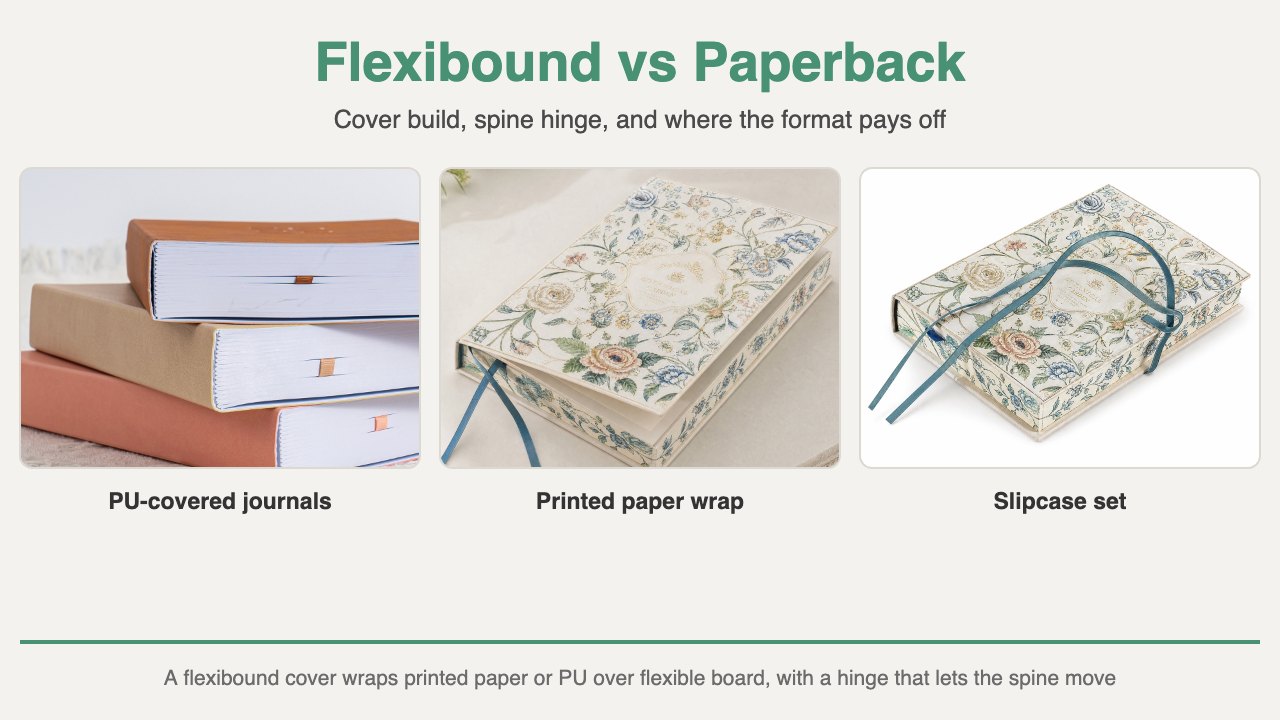
What A Flexibound Book Actually Is
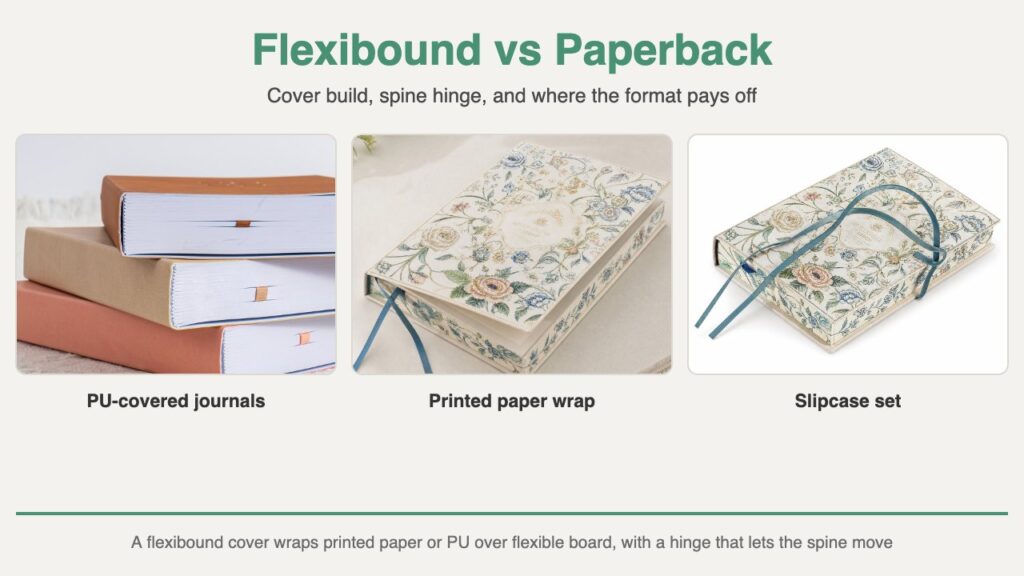
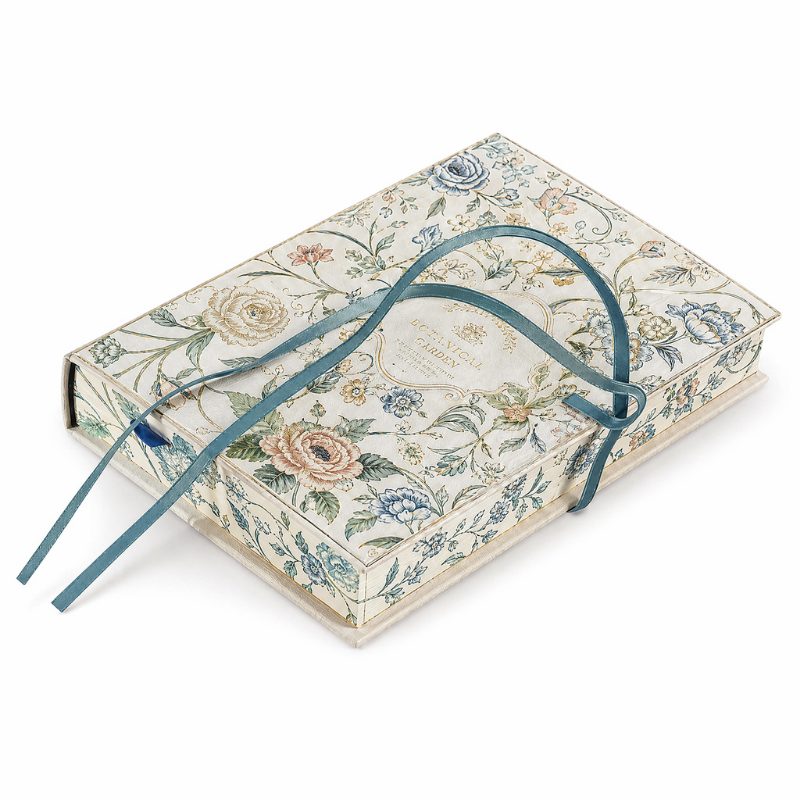
Our production pages define the format as a hybrid binding that combines the durability of a hardcover with the flexibility of a softcover. The cover is a thick, flexible piece made from laminated paperboard or a synthetic material, built without the rigid boards a casebound book uses. Our binding reference gives the buyer-facing version of the same idea: a paperback’s portability with the turned-edge look of a casebound book.
Bookbinding, at its simplest, joins grouped pages with thread or adhesive and then attaches a cover, as the bookbinding overview on Wikipedia describes. Flexibound keeps the cover half of that sentence close to a hardcover and the page-block half close to a paperback. The word “flex” refers to the hinge and the board, not to a coating that makes paper indestructible.
It is worth being clear about what the format is not. A children’s board book is a different construction, and our reference lists it at 10 에게 36 pages on 8.0 mm rigid stock. A casebound book uses the rigid greyboard described below. Flexibound borrows the turned-edge look of the second and the light handling of a softcover, without matching either one’s page limits.
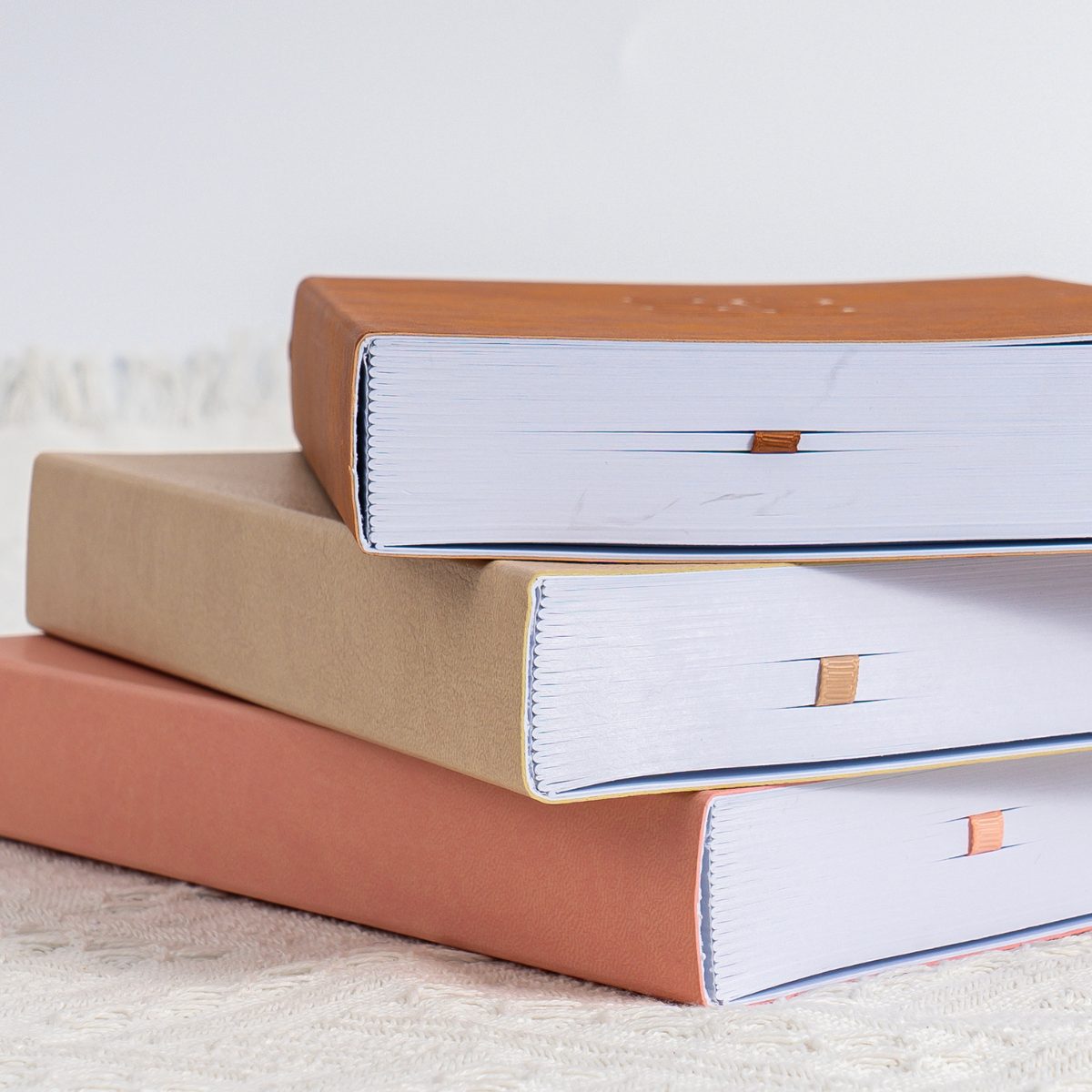
On the floor the format shows up in three places: journals and planners, mid-list novels that want shelf presence without casebound weight, and boxed sets that travel in a slipcase. Our flexibound line carries a 200-copy minimum, which keeps a first run realistic and makes a sample round cheap enough to iterate on.
How The Cover And Hinge Are Built
Three parts carry the format, and each one is where a quote can quietly drift. A request that names only the format leaves the board grade, the lamination, and the attachment method for the factory to fill in.
랩 이름 지정, the board, 마무리, and the hinge as four separate lines, and quotes from different suppliers become comparable.
The Printed Wrap Layer
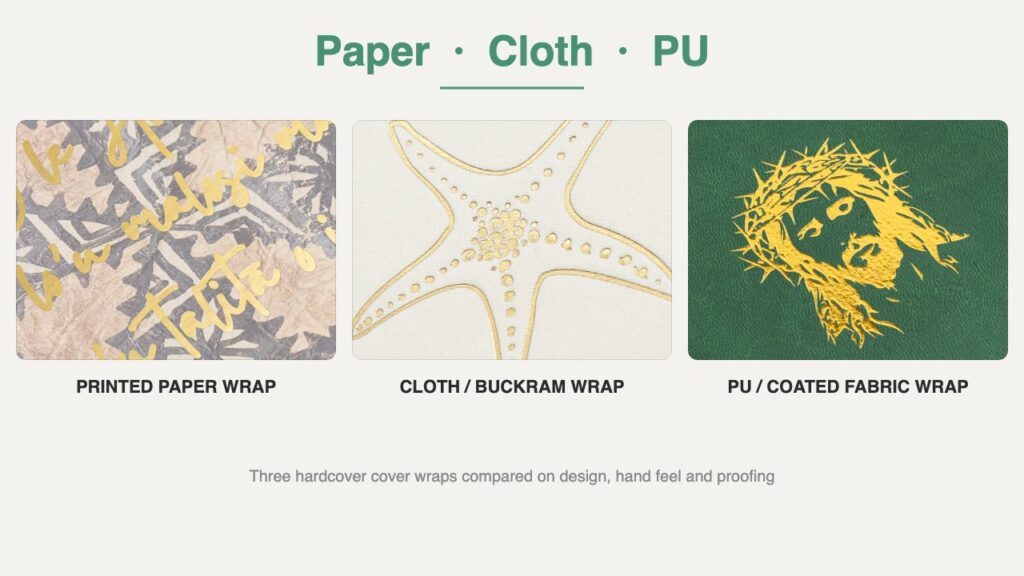
The wrap is printed art paper in 200 GSM 또는 250 GSM, or a specialty stock, glued over flexible greyboard. 소프트 터치, 매트, or gloss lamination goes on top of that wrap, and foil stamping or an embossed logo can follow. Because the artwork prints on paper before it is wrapped, the face reproduces photography and brand colour far more cleanly than a card cover of the same book would.
One unit note keeps quotes honest. Grammage gives the mass of a sheet per square metre of area, as this grammage reference explains. A heavier wrap adds body and a better printing surface, not stiffness. Stiffness comes from the board underneath, so the two belong on separate lines of a specification.
The Flexible Board
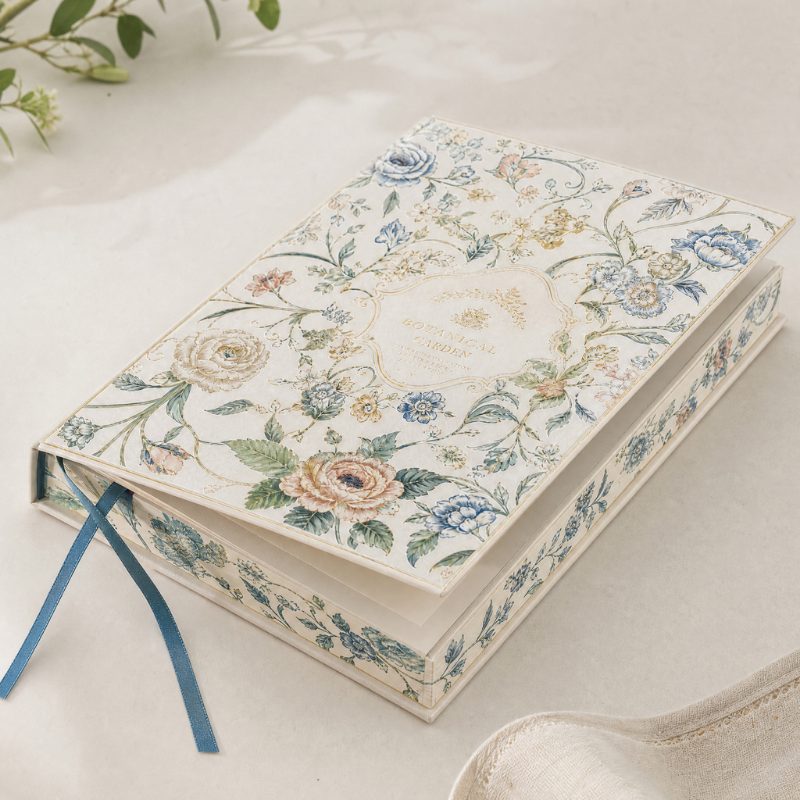
A casebound book is built on rigid greyboard. Our binding reference lists that casing at 2.0 에게 3.0 mm, with a minimum spine width of 6.0 mm. Flexibound uses a thinner, pliable greyboard that bends across the cover and then springs back. The cover keeps a flat printing face and resists fingerprints, but the book no longer fights your hands when you close it or slide it into a bag.
The Spine Hinge
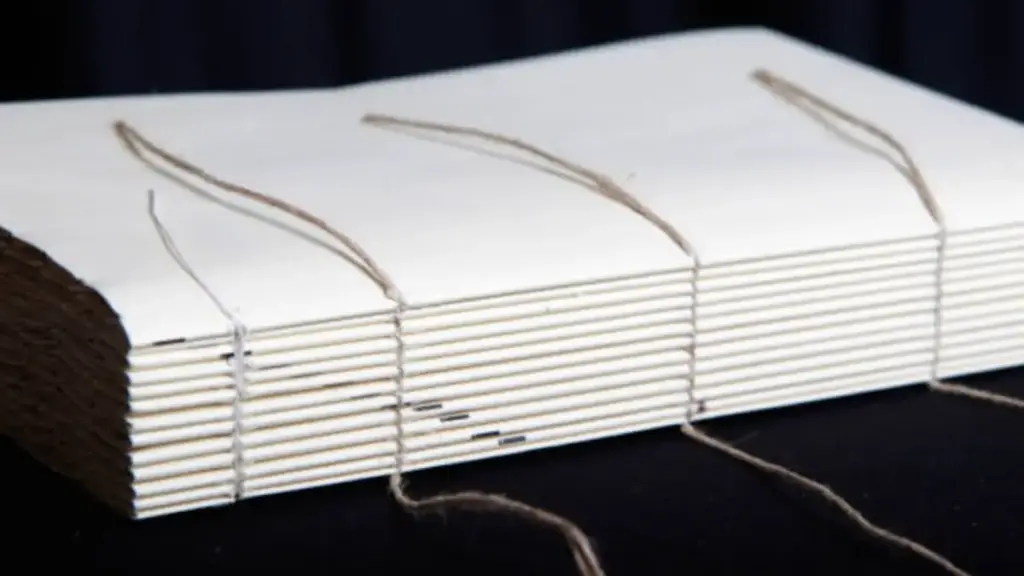
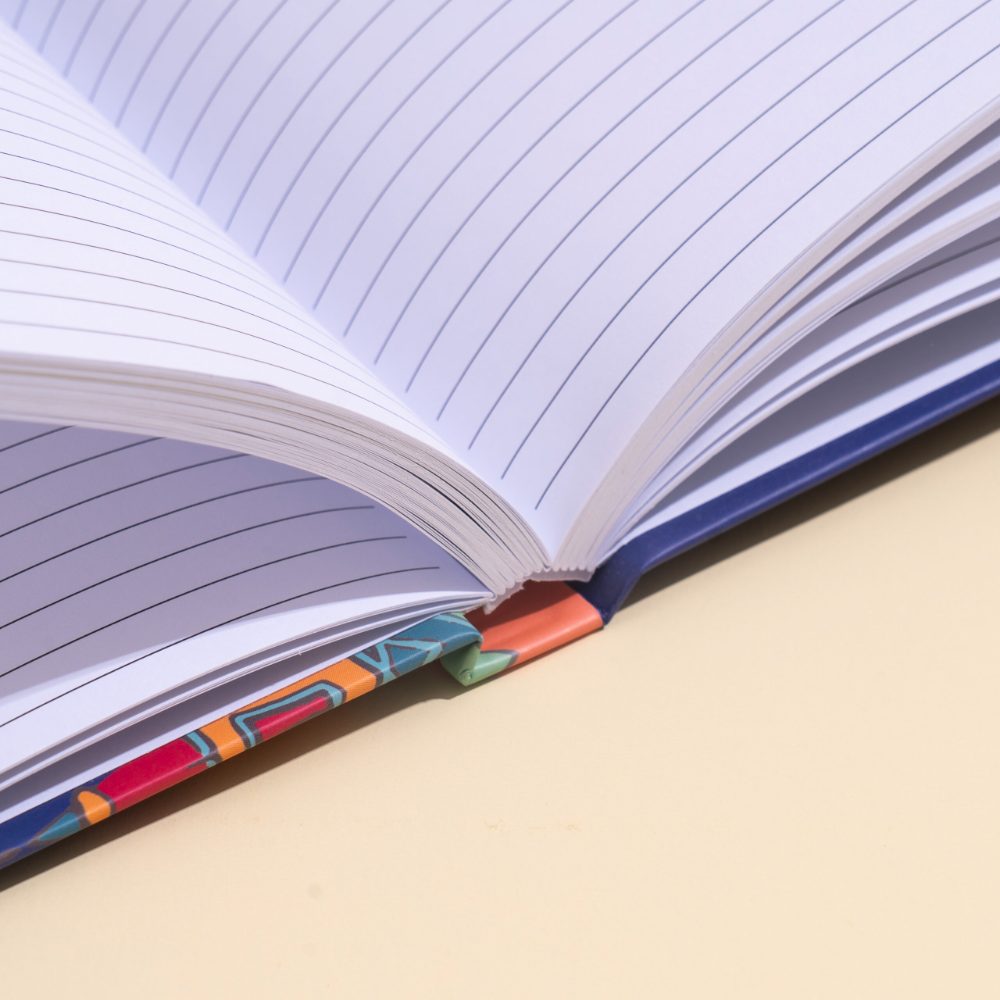
The text block is attached by section sewing or by PUR adhesive rather than by a rigid spine. Our support table rates PUR at roughly three times the pull strength of standard glue, with better temperature resistance and improved lay-flat behaviour. That attachment layer is what lets the joint flex without the cover splitting at the fold.
Spine shape is a separate decision from the hinge. 정사각형, round, and exposed spines change how the book reads on a shelf and how much room the joint needs, 그리고 우리의 book spine types walkthrough covers those shapes. The product pages list rounded corners, 리본 마커, 탄성 밴드, and pen loops as add-ons you specify alongside the hinge.
Flexibound And Paperback Side By Side
The table compares only these two formats, using the page ranges our own reference publishes. Treat the numbers as pairings rather than fixed limits, because a usable page count moves with paper caliper and with how the block is attached.
| 특징 | 플렉시바운드 | 페이퍼 백 |
|---|---|---|
| Cover build | Printed wrap or specialty stock over flexible greyboard | Single cover card with no separate backing |
| 척추 | Flexible hinge; section-sewn or PUR attached | Glued spine; standard EVA or PUR |
| Published page range | 64 에게 500 페이지 | 48 에게 400 on EVA, 48 에게 600+ on PUR |
| Lay-flat behaviour | Opens close to flat | Stiffens as the block thickens |
| Hand feel | Firm face with a pliable body | Soft to semi-stiff |
| Typical use | 저널, novel sets, boxed editions | 무역 문고판, 카탈로그, 보고서 |
Both columns come from our book binding types 참조, which is also where the flexibound range is stated. If your title sits below 48 페이지, neither format is the right starting point, and a stitched booklet usually costs less to produce.
One row in that table surprises buyers, because the paperback column carries more paper than the format name suggests. A PUR glued block reaches 600 pages and beyond in our own reference, while the flexibound range tops out at 500. What separates the two books is the cover build and the hinge, not how much paper either one can hold.
Where Flexibound Outlasts A Paperback
Three handling problems are where the extra construction pays for itself. A plain card cover solves none of them, and each one shows up during a first season of use rather than in a photograph.
- Cover body. The board resists the creasing and corner dents that a bent paperback cover keeps. A wrapped face also hides the fingerprint marks that show on a gloss card.
- Joint stress. A rigid glued spine concentrates stress at the fold, which is where paperback spines whiten and crack. A flexible hinge spreads that load along the joint instead.
- Block attachment. A section-sewn block holds its signatures together even if the outer glue line takes a knock, where a glued paperback depends on that single edge.
None of this is unconditional. Durability follows the adhesive, the text stock, and whether the block is sewn or glued. A 500-page sewn novel and a 200-page glued journal age differently even inside the same format. 우리의 비교 perfect binding and saddle stitch explains the glued-spine baseline you are measuring against.
Which Titles Fit Flexibound Best
The format earns its extra cost when a book needs a premium face, genuine flex, and repeat handling. Three categories route to it most often, and each one specifies the build differently.
| Use case | Why the format fits | What to specify |
|---|---|---|
| Novel sets and boxed editions | Shelf presence without casebound weight; matched spines read as a set | Section-sewn block, printed wrap, 무광택 라미네이션 |
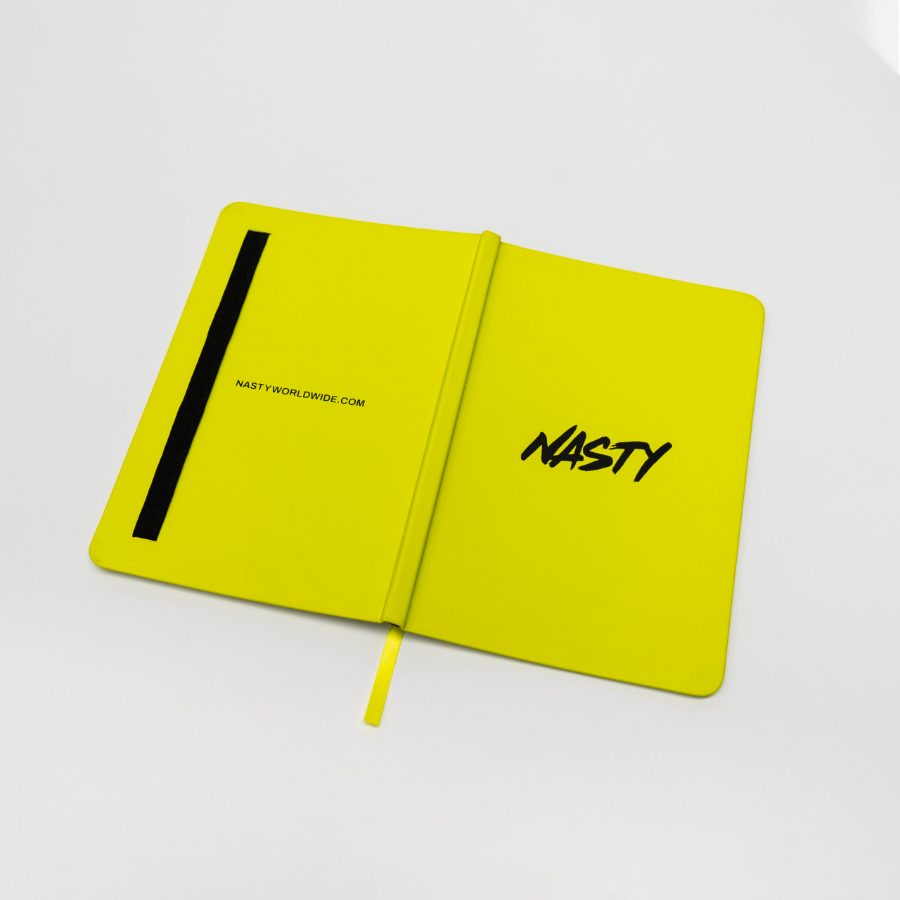
| Branded journals and planners | Face survives daily carry; a firm spine takes foil cleanly | PU or specialty wrap, foil or debossed logo, 리본 마커 |
| Keepsake and gift editions | Turned-edge look at lower weight than a case | 소프트 터치 라미네이션, 스프레이 가장자리, slipcase or bellyband |
Each of those builds starts from the same specification sheet: wrap stock, board grade, 적층, hinge method, and decoration. Our flexibound book printing page lists the cover stocks and finishing options we hold for the format.
Inner pages print on offset, 코팅되지 않았습니다, or matte art paper between 80 그리고 150 GSM, and book paper or FSC-certified eco stocks are available when a project needs them. Packaging can extend to custom slipcases or paper bellybands, which is where boxed sets usually land.
The polyurethane option is the one buyers ask for when a journal has to survive a bag. Our PU flexibound line takes a printed or debossed logo on that face, and the same soft-touch, 매트, and gloss lamination choices apply. On a novel set a printed paper wrap is usually the better call, since the artwork does the selling and the wrap reproduces it.
When Flexibound Is The Wrong Choice
The same construction that makes the format useful makes it the wrong tool in a few common cases. Naming them early saves a proofing round and a re-quote.
- Slim booklets. Our binding reference puts saddle stitching at 8 에게 64 pages and perfect binding at 48 pages and up. A boarded cover adds steps that a 60-page booklet does not need.
- Rigid shelf display. Where a straight, stiff spine is the whole point, a soft hinge can look slouchy next to casebound titles on the same facing.
- Very thin blocks. A slim text block is hard to anchor to a boarded cover without the hinge looking oversized, so raise it before the proof rather than after.
On unit economics, a flexibound copy prices above a same-page-count paperback because the cover adds a wrap, a board, and a lamination pass. It prices below a casebound book, because the casing work and the board weight are lighter. Our order tiers run 200, 500, 1,000, and over 1,000 사본, and the gap between formats narrows as setup spreads across a longer run.
Prototype samples are available before mass production to confirm material, 제본, and finish. Approve one against your own artwork and page count rather than reading a format name off a spec sheet.
Check These Items Before Approval
A flexibound sample is easy to admire and hard to criticise in the moment. These are the checks that decide whether the production run matches the sample you signed.
- Open and close it repeatedly. Watch the joint for whitening and the cover for a permanent set at the hinge.
- Lay it face down. The book should fall open near flat without the boards lifting the covers off the table.
- Inspect the turn-ins. The wrap should fold past the board edges cleanly, with no lifting corners or visible adhesive lines.
- Check the spine under your own light. Foil and debossing read differently at a trade-show angle than under an office lamp.
- Confirm the paper by name. Record the wrap gsm, the board grade, the lamination, and the attachment method on the signed sample.
- Look at the edges. A trimmed fore-edge and any sprayed edge colour show glue squeeze-out and misalignment before anything else does.
- Open it at the middle signature. The block should hold its own weight without the cover lifting away from the spine.
Flexibound Runs Built In House
최종 생각
Flexibound is a construction, not a quality label. The cover is a printed wrap over flexible board, and the hinge is what lets the spine move. Our own reference publishes a page range of 64 에게 500 pages for the format.
Specify the wrap, the board, the lamination, and the attachment separately, approve a sample against those four lines, 재인쇄할 때마다 해당 샘플을 보관하세요.. Xinyi Printing builds the format for publishers and brands, and you can start the specification from our 홈페이지.
자주 묻는 질문
Is flexibound hardcover or softcover?
It behaves like a premium softcover and opens close to flat, but the cover is built like a hardcover: a printed wrap over board. The board is thin and flexible rather than rigid, which is where the name comes from.
How many pages can it hold?
Our binding reference publishes 64 에게 500 pages for the format. Usable counts move with paper caliper and with whether the block is sewn or glued, so confirm the range against the stock you choose.
Can you foil a flexibound spine?
예. The cover face is a laminated board, so foil, 엠보싱, and debossing take cleanly on the spine and front. Journals are the usual case, because a logo needs a firm surface to read well.
Does it cost more than a paperback?
Per copy, usually yes, because the cover adds a wrap, a board, and a lamination pass. The premium shrinks as quantity grows and setup spreads across more copies, which is why our tiers start at 200 사본.
Will the cover stay flat over time?
A balanced build helps, since the wrap is glued to the board and the hinge is set with the right adhesive. Ask for a sample, keep it closed for a week, and check the cover before you approve production.