

A school yearbook is different from a standard book. Instead of one manuscript, it brings together student portraits, class lists, event photos, faculty details, and other content supplied by the school. Each section must be organized before printing begins.
Good planning affects the finished book, from page count and paper selection to binding and delivery. Schools and universities also need to check every name, photo, and page before approving production. This article covers the main yearbook sections, printing specifications, buyer checks, and how a custom yearbook printing order moves from files to finished books.
Key Takeaways
- Yearbook sections: Portraits, school activities, faculty, sponsor pages, and autograph space determine the book’s structure and page count.
- Page planning: Each section needs a page allocation. The final count must also match the printer’s imposition requirements.
- Binding choices: Hardcover suits long-term storage, while PUR softcover offers a more cost-effective option for student distribution.
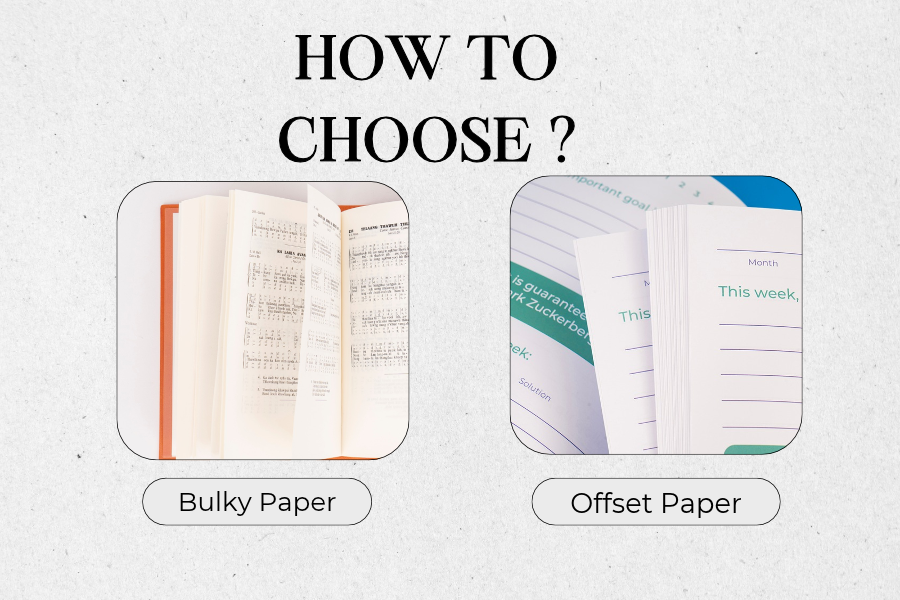
- Sélection du papier: Coated paper works well for photos, while uncoated paper provides a suitable surface for handwritten signatures.
- Production quantity: Xinyi’s standard MOQ starts at 200 copies par titre.
What Sections Should a School or University Yearbook Include?
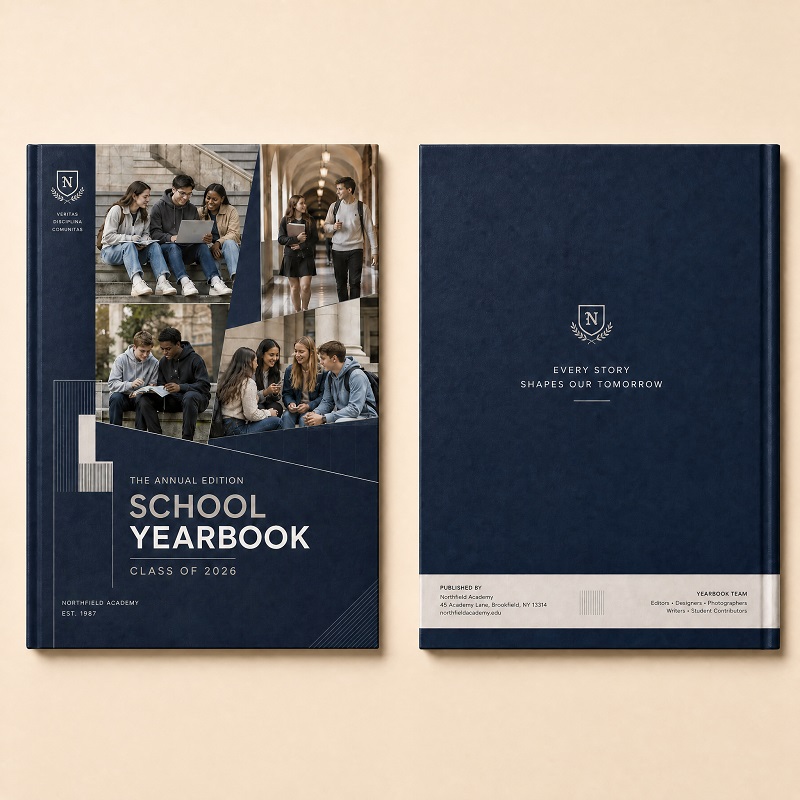
A complete school yearbook usually combines front matter, student portraits, school activities, faculty information, and closing pages. Unlike a standard book, its content comes from multiple sources, so schools need to organize these materials before layout begins.
Common sections include:
- Front matter: Title page, school year, colophon, and section dividers.
- Student portraits: Individual and class photos arranged by grade or department.
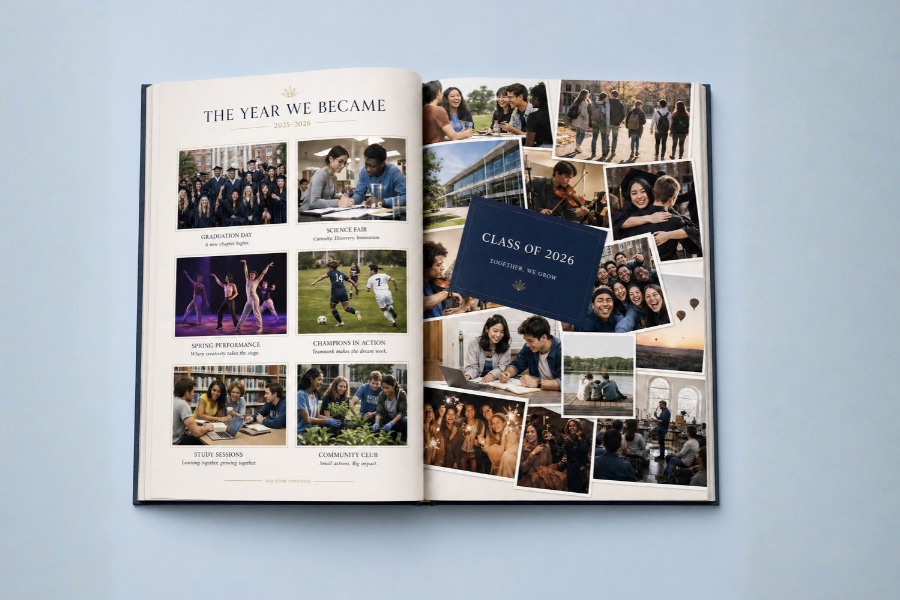
- Activities and sports: School events, clubs, competitions, trips, and student achievements.
- Faculty pages: Teacher portraits, staff names, and department information.
- Sponsor pages: Advertisements and congratulatory messages from parents or local businesses.
- Closing pages: Farewell messages, graduation highlights, and blank autograph pages.
Universities can use a similar structure, with additional sections for individual colleges, student organizations, and graduating classes.
The content also determines the printing workload. Portraits need consistent image quality, while autograph pages require paper that accepts handwritten notes. Schools should finalize the section list before requesting a quote.
How Do You Calculate a Yearbook’s Final Page Count?
Start by assigning pages to each section. Count the student portraits first, then allocate space for activities, faculty, sponsor advertisements, and front and back matter.
Universities can follow the same process by assigning page blocks to each college or department.
Par exemple, a six-grade school might plan its yearbook as follows:
| Section | What goes in | Pages | Running total |
| Front matter | Title, colophon, and divider pages | 8 | 8 |
| Grade portraits | 24 pages for each of six grades | 144 | 152 |
| Activities and sports | Event spreads, clubs, and trips | 24 | 176 |
| Faculty and sponsor ads | Staff pages and congratulation ads | 16 | 192 |
| Closing pages | Farewell notes and look-ahead spreads | 16 | 208 |
Offset printing uses folded sheets, known as signatures, rather than printing each finished page separately. The page count may therefore need adjustment to match the printer’s imposition plan. In this example, 208 pages equal 13 signatures of 16 pages each.
Paper selection also affects the finished book’s thickness and spine width. Confirm the paper type and weight with the printer before finalizing the cover layout.
What Should Schools Check Before Yearbook Printing?
Once printing starts, correcting a mistake becomes much more expensive. A careful prepress review helps schools avoid spelling errors, missing photos, and incorrect page sequences.
Before approving the final files, check the following:
- Names and spellings: Compare every student name and caption with the school’s official records.
- Photo resolution: Supply original, high-resolution images instead of screenshots or compressed social media photos.
- Page order: Confirm grade sequences, section positions, and page numbers.
- Autograph space: Make sure the book includes enough uncoated pages for students to write on.
- Cover details: Check the school name, crest, graduation year, and approved artwork.
- File setup: Confirm page dimensions, saigner, color mode, et la résolution de l'image.
Xinyi recommends print-ready PDF files in CMYK mode at 300 DPI ou supérieur, with 3mm outer bleed and important content kept at least 5mm inside the trim line. You can check the full book printing file setup requirements before submitting artwork.
Schools should also appoint one person to approve the final proof. A single point of contact helps prevent conflicting revisions from different departments.
Start Your Yearbook Quote
Which Binding Works Best for a School Yearbook?
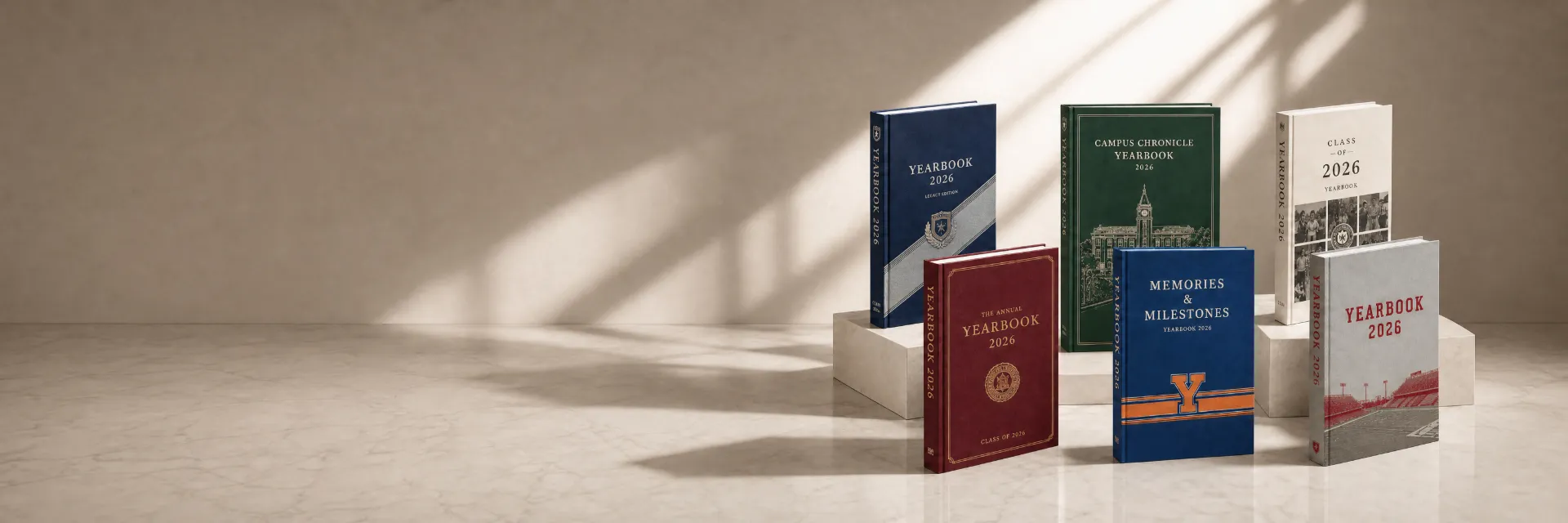
The choice between hardcover and softcover depends on how the yearbook will be used, how long it needs to last, and the available budget.
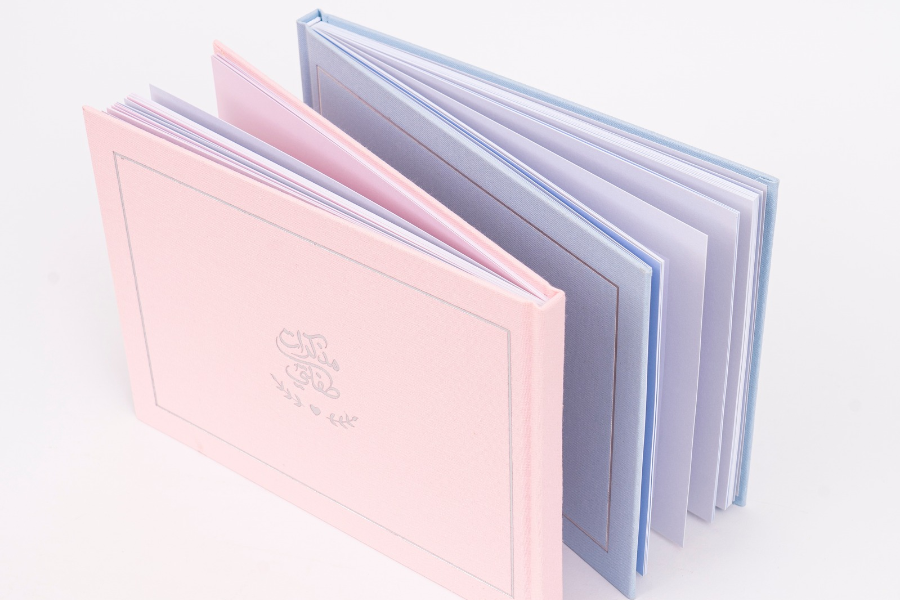
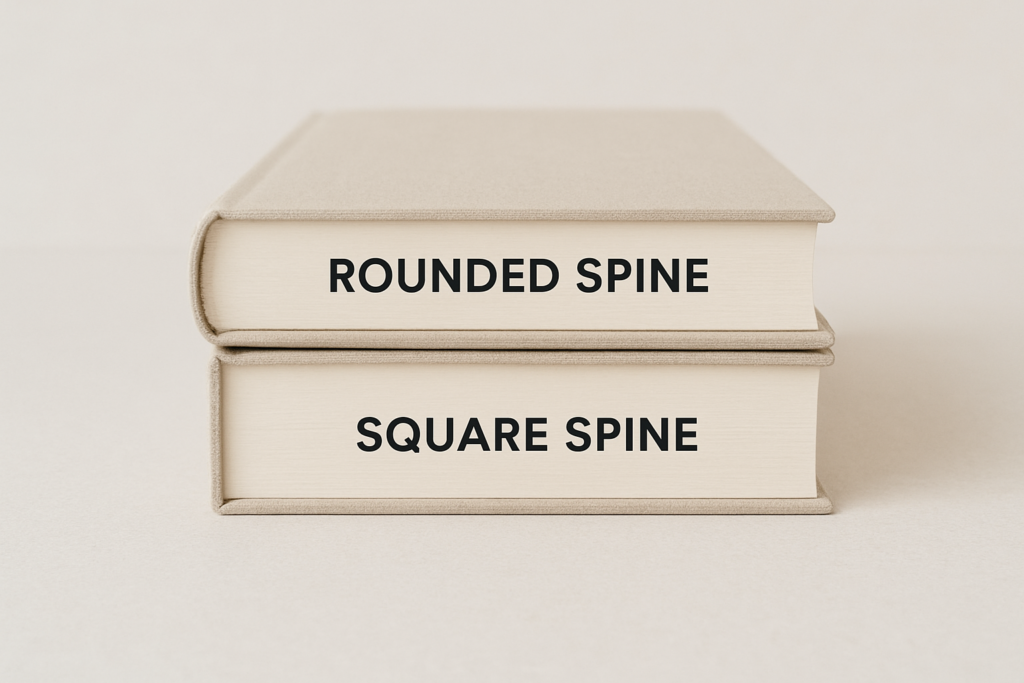
Hardcover yearbooks suit high schools, universités, and commemorative editions that students may keep for many years. Case binding provides a rigid cover, while Smyth-sewn binding joins folded sections with thread to improve the strength of the book block.
Schools can also consider foil stamping, gaufrage, and matte or gloss lamination to protect and personalize the cover.
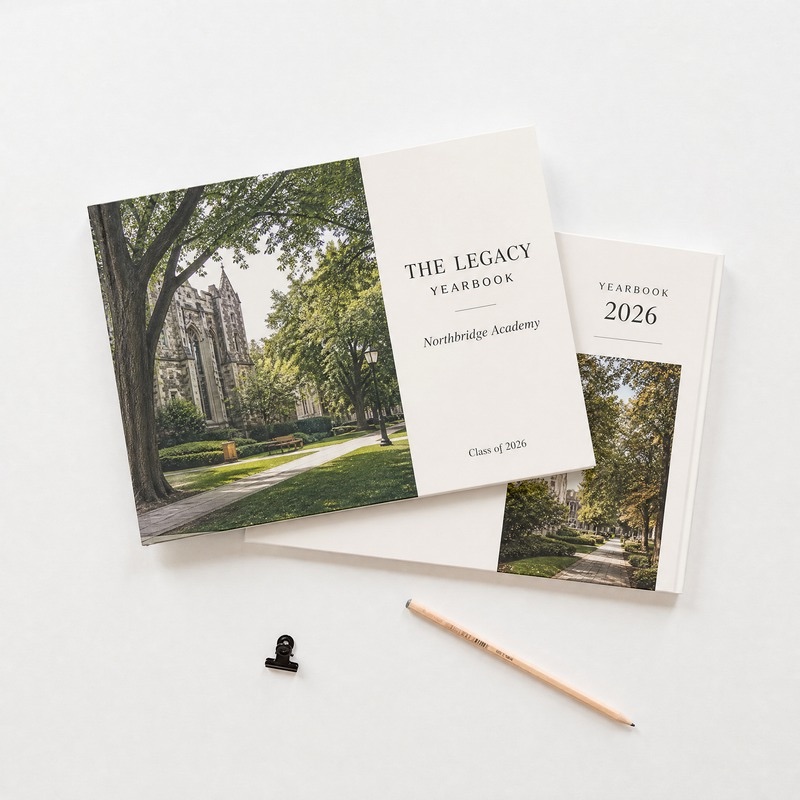
Softcover yearbooks are lighter and generally more economical. PUR perfect binding is a practical choice for elementary school yearbooks and larger student distribution programs where controlling the cost per copy matters.
For schools ordering both formats, the printer should confirm the quantities and specifications for each version before quoting.
You can compare available impression de livres reliés et paperback printing options when selecting the right format.
How Does Xinyi Manage Custom Yearbook Printing?
A custom yearbook printing order starts with the school’s section list, page plan, photo files, and cover requirements. Xinyi’s prepress team can review supplied artwork for resolution, saigner, and color before production begins.
After proof approval, the production process includes:
- Prépresse: Check artwork, page order, and printing specifications.
- Impression: Use Heidelberg and Komori presses for the approved files.
- Folding and binding: Fold printed sheets, collate the sections, and complete the selected binding.
- Contrôle qualité: Check printing, obligatoire, and finished book quality.
- Packing and shipping: Prepare export cartons and arrange international delivery.
Xinyi operates a 20,000㎡ printing facility with automated production and binding equipment. Its manufacturing setup supports different book formats and customized finishing requirements. More details are available on the Xinyi printing and manufacturing page.
The standard MOQ for custom book printing starts at 200 copies par titre. Production schedules depend on the final specifications and proof approval. Xinyi’s published standard production windows are 7–12 business days for paperbacks and 10–18 business days for casebound hardcovers.
For schools planning a yearbook project, working with a factory that can coordinate prepress, impression, obligatoire, and export delivery helps keep the process organized. Visite Quelle impression to discuss your yearbook specifications and request a factory-direct quotation.
Foire aux questions
What is the minimum order for custom yearbook printing?
Xinyi’s standard MOQ starts at 200 copies par titre. The final quotation depends on quantity, nombre de pages, papier, obligatoire, et exigences de finition. Schools planning different versions should confirm the quantity and specifications for each version before requesting a quotation.
What paper should schools use for yearbooks?
Coated paper is suitable for yearbook pages with student portraits and colorful event photos. Uncoated paper is a practical option for autograph pages because it provides a writing surface for pens and markers. Schools should confirm the available paper types and weights with the printer before finalizing the specifications.
How many pages should a school yearbook have?
There is no fixed page count. It depends on the number of students, content sections, photos, and available space. Schools should allocate pages first, then confirm the final count with the printer to match the required signature and imposition plan.
Can schools order hardcover and softcover yearbooks together?
Oui. Different binding options can be discussed within one project. Schools should confirm the quantity, type de liaison, and specifications for each version before production so the factory can prepare an accurate quotation.