

Brochures are used in all kinds of scenarios—product instructions, travel guides, event promotions, store displays, and more. Because each use case is different, the styles and sizes of brochures have become increasingly diverse. As a printing factory with 28 years of experience, we’ve seen many clients bring in files with layout issues, oversized images, or fonts that are too small to read. Others worry that the final printed colors look different from what they expected.
In this article, we’ll walk you through the most common brochure folding types. If you’re planning to customize a brochure, this guide will help you choose the right fold and avoid common design mistakes.
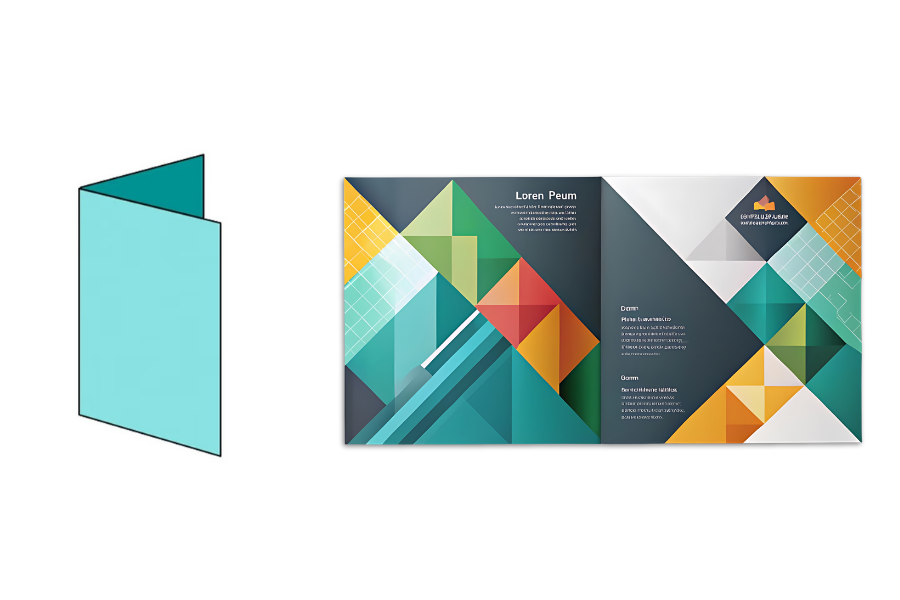
Half Fold Brochure
A half fold brochure is created by simply folding a printed sheet in half, giving you four panels when fully opened. It’s straightforward, clean, and ideal for content that doesn’t require many pages. Common sizes include A3 and A4, and the fold direction can be symmetrical or asymmetrical, either left–right or top–bottom.
This type of brochure is great for projects that need to deliver key information quickly and clearly, especially one-time-use materials such as invitations, vouchers, coupons, or simple product highlights.
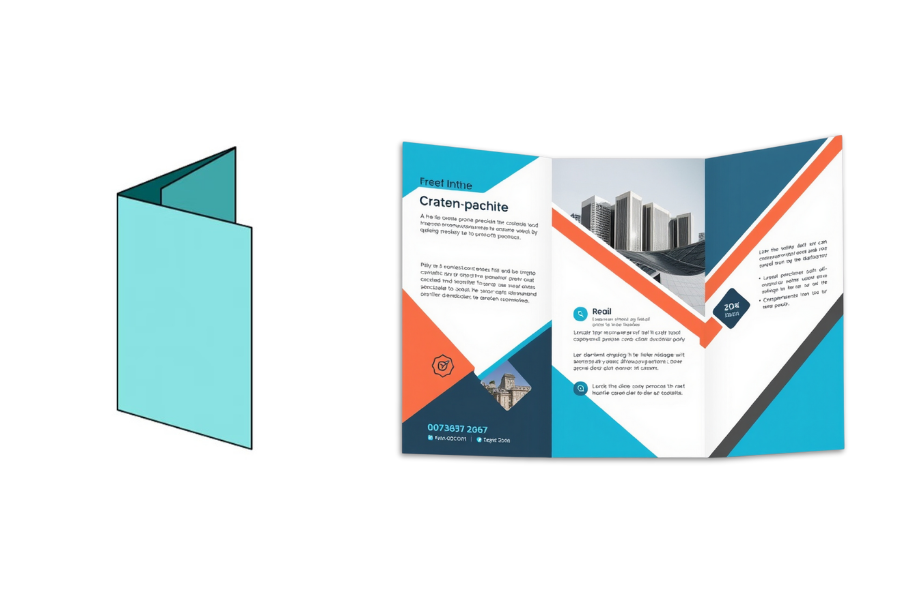
Tri-Fold Brochure
The most classic brochure style in the business world. The sheet is evenly folded twice, creating three parallel panels. Typically, the left and right panels fold inward, forming a compact and easy-to-carry piece. When opened, it spreads out like a small screen, providing six panels across both sides—perfect for structured, modular content.
Tri-fold brochures are commonly made in A3 or A4, depending on the amount of information. They’re ideal for:
- Company or product overview
- Trade show handouts
- Travel guides
- Instruction manuals (appliances, tools, devices)
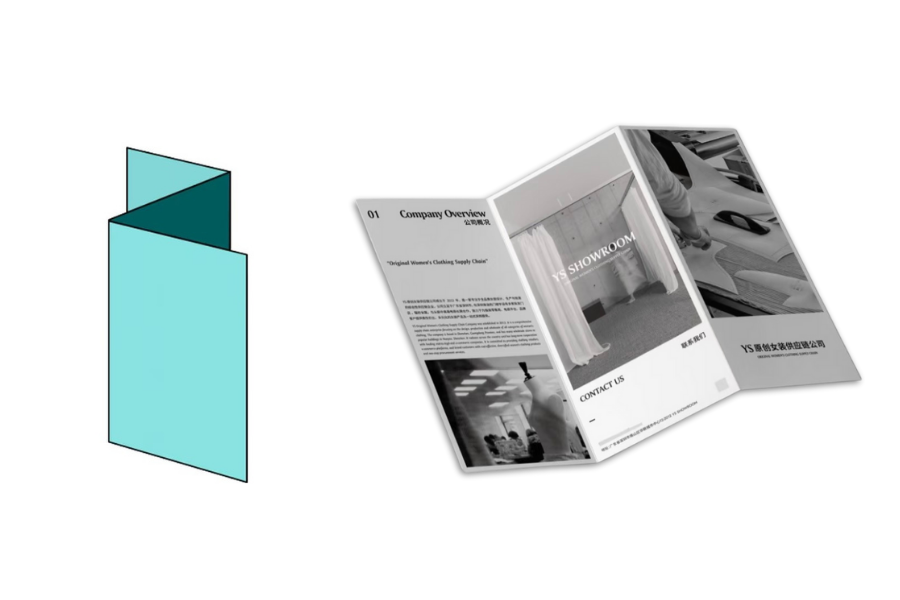
Z-Fold Brochure
A Z-fold brochure is folded in alternating directions to form a shape similar to the letter “Z.” The fold lines are continuous and reversed, creating a seamless multi-panel layout that’s great for linear storytelling or panoramic visual presentations.
This fold works particularly well for content that needs to flow in a sequence, such as:
- Annual reports
- Product series catalogs
- Large event or exhibition schedules
- Long-format illustrations or exploded diagrams
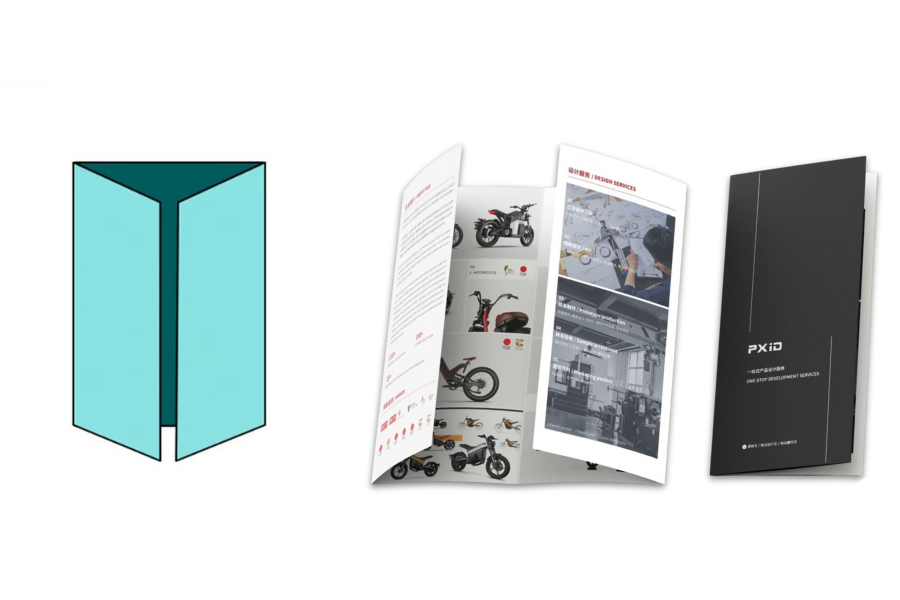
Gate Fold Brochure
The gate fold starts with folding the right and left sides inward, like closing double doors. The entire piece is then folded again. When reading, users open the outer layer first, then “open the doors” to reveal the central content—creating a dramatic, premium reveal effect.
Perfect for brands that want to highlight a single core message or hero product, such as:
- Luxury goods (cars, jewelry, watches)
- High-end product launches
- Art exhibitions
- Premium brand presentations
Double Gate Fold Brochure
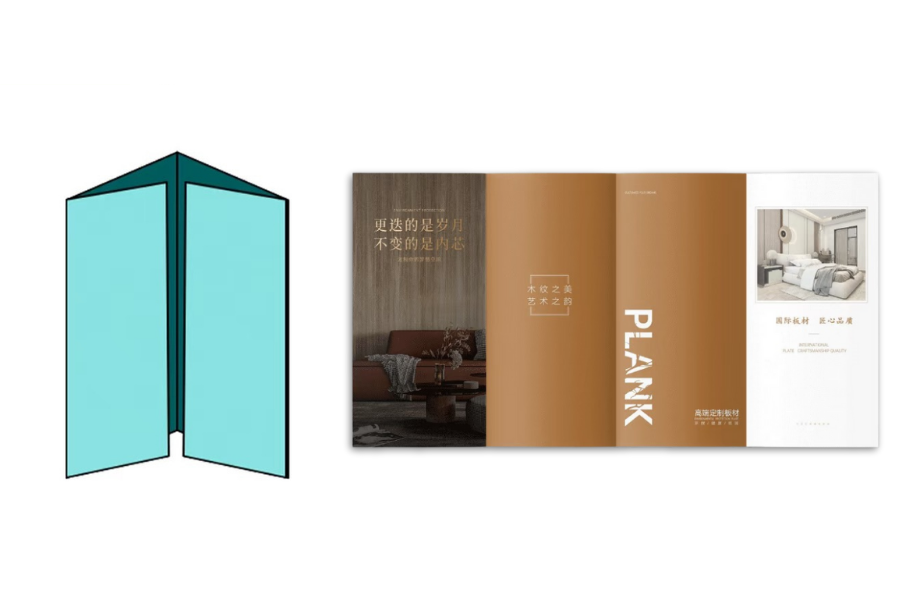
A double gate fold uses two successive inward folds, creating a “gate within a gate.” This multi-layer opening experience delivers a strong sense of depth and ceremony. It can create up to eight panels, making it a favorite for premium-grade marketing materials.
Typically printed on A3 or similar large sheets, it’s ideal for:
- Luxury launches
- Creative visual showcases
- Art or exhibition promotions
- High-end brand storytelling
Accordion Fold Brochure
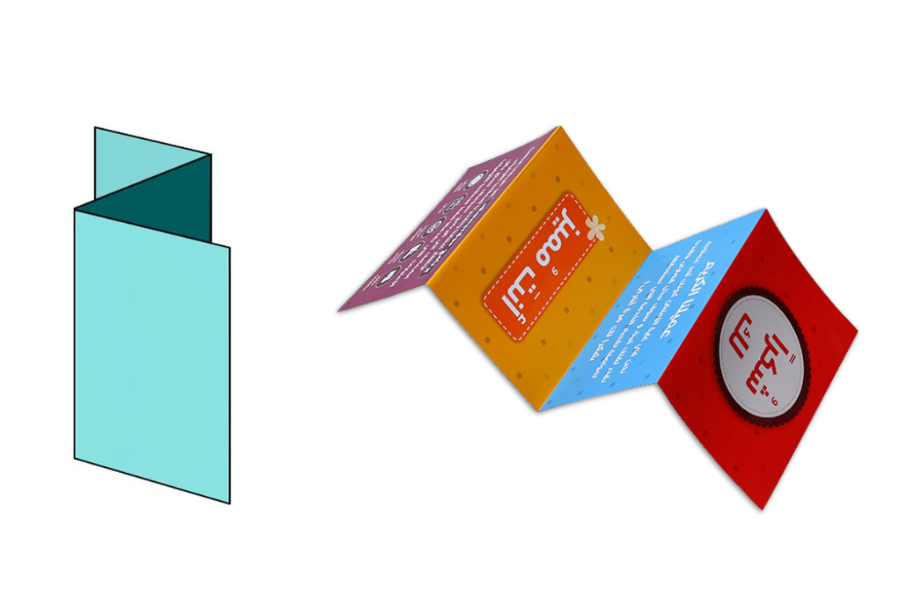
Just like its name suggests, the accordion fold expands and contracts like a hand fan or accordion. The sheet is folded back and forth in equal segments, and the number of panels can be increased as needed. When opened, it forms a continuous, extra-long layout with no visual breaks—perfect for large volumes of linear information.
Recommended for:
- Annual reports or timelines
- Product series catalogs
- Event or trade show guides
- Restaurants with extensive menus
French Fold Brochure
Also known as the cross fold, this type involves folding the sheet once horizontally and once vertically. When fully unfolded, it becomes a large poster with four connected sections. It’s commonly in A3 size.
Compared to the accordion fold’s long, linear flow, the French fold is better for center-focused, multi-directional layouts. It’s often used for:
- Posters with brochures
- Maps
- Event promotions
- Large visual storytelling
Half + Tri-Fold Brochure
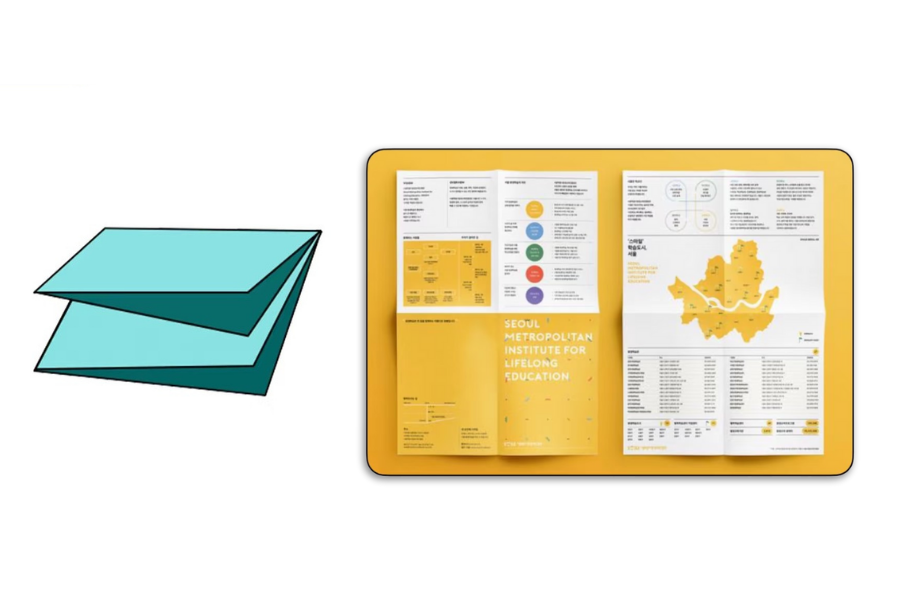
This hybrid fold combines a half fold with a horizontal tri-fold or accordion fold. When opened, you’ll see fold lines running both vertically and horizontally. The final folded piece is small, compact, and highly portable—making it perfect for packaging inserts or items that require detailed instructions in a tiny format.
There’s no fixed print size; it depends on your content. This format is widely used for:
- Electronic device manuals
- Pharmaceutical inserts
- Compact product instructions
Common Tri-Fold Brochure Sizes
| Brochure Type | Full Size (Unfolded) | Final Size (Folded) |
| Tri-Fold A5 | 210 × 140 mm | 70 × 140 mm |
| Tri-Fold A4 | 285 × 210 mm | 95 × 210 mm |
| Tri-Fold A3 | 420 × 285 mm | 140 × 285 mm |
| Tri-Fold (3 × A5) | 420 × 210 mm | 140 × 210 mm |
| Tri-Fold (2 × Horizontal A4) | 570 × 210 mm | 190 × 210 mm |
| Tri-Fold (3 × A4) | 630 × 285 mm | 210 × 285 mm |
How to Choose the Right Paper for Your Brochure
Choosing the right paper stock plays a major role in how your brochure feels, folds, and ultimately how much it costs. Here are the most common options we recommend to clients:
Coated Paper (Gloss or Matte)
This is the most widely used paper for brochures. Its smooth surface and strong color performance make it ideal for marketing materials. Popular weights include 128g, 157g, and 200g—the higher the weight, the thicker and more premium it feels.
Matte Coated Paper
With a non-reflective, soft finish, matte paper delivers a more subtle and refined look. It works especially well for brands aiming for a premium or understated tone.
Uncoated Offset Paper
This paper absorbs ink more easily and offers a natural writing-friendly surface. It’s more commonly used for letterheads and notebooks, and only selected for brochures when handwriting or notes are needed.
Textured or Specialty Paper
Featuring unique textures, colors, or tactile finishes, specialty paper immediately elevates the brochure’s perceived value. While it comes at a higher cost, it’s an excellent choice for luxury brands or high-impact presentations.
How to Choose a Brochure Printing Manufacturer for your Company Brochure?
Choosing the right fold type, paper stock, and size can make a significant difference in how your brochure communicates your message and represents your brand. Whether you’re creating a simple half-fold for quick information or a premium gate fold for a high-impact presentation, a well-designed brochure always delivers value.
With 28 years of printing experience, our team has helped thousands of businesses transform their ideas into polished, professional marketing materials. If you’re planning to customize a brochure and need guidance on folds, layout, or printing specifications, we’re here to help—simply reach out, and our experts will support you every step of the way.