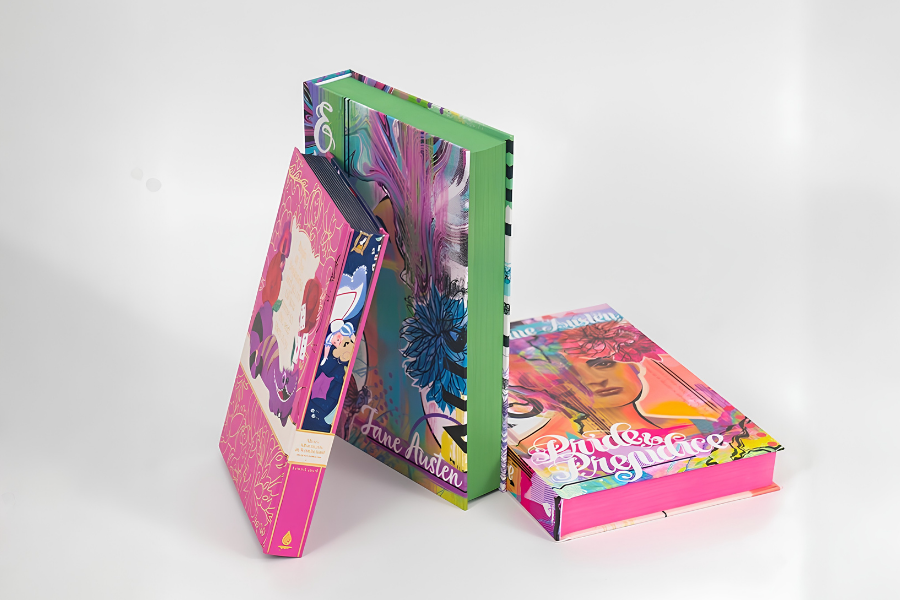


Hardcover book binding decides how a book opens, how long it survives handling, and what each copy costs. Two internal structures cover most custom work: a sewn book block and an adhesive-bound book block. Either one can be cased into the same rigid cover, which is why two hardcovers can look identical on a shelf and behave very differently after a year of use.
This guide is written for buyers comparing those two options. It explains what each structure does, which factors change the result, and what to confirm with a factory before you approve a run. It does not rank one method above the other. For the wider method list, see our guide to 製本の種類, and for product specifications see the complete hardcover printing guide.
Two Ways To Build A Hardcover Book Block
A hardcover case hides two very different internal structures. The book block decides how the book behaves over its working life.
What Sewn Binding Means
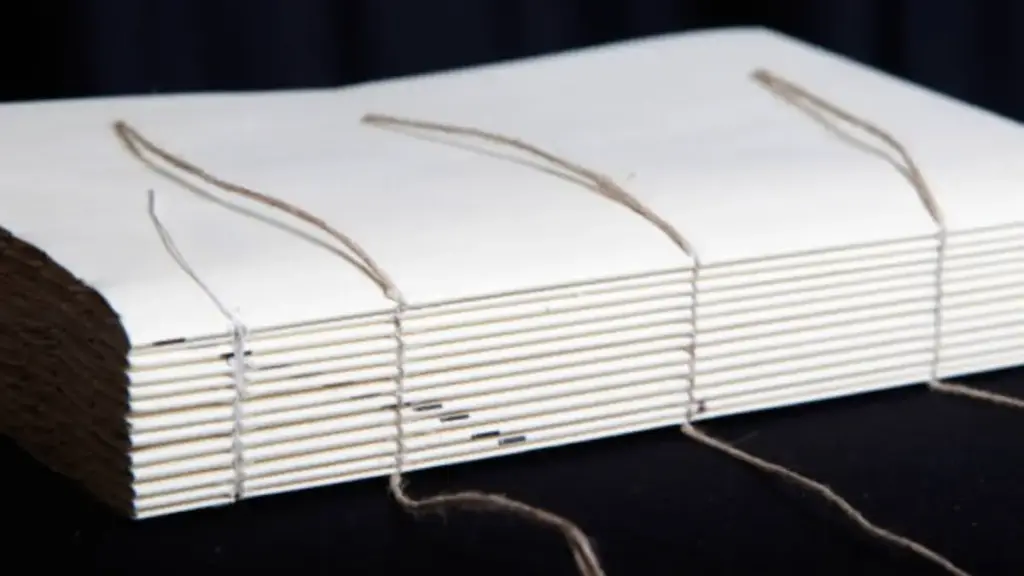
Sewing joins folded groups of pages, called signatures or sections, with thread. The machine stitches through the fold of each signature and links the sections into one block. That block is then rounded, 裏地付き, and attached to a separate rigid cover in a step called casing-in. Thread carries the mechanical load, so the structure keeps holding even where spine adhesive softens.
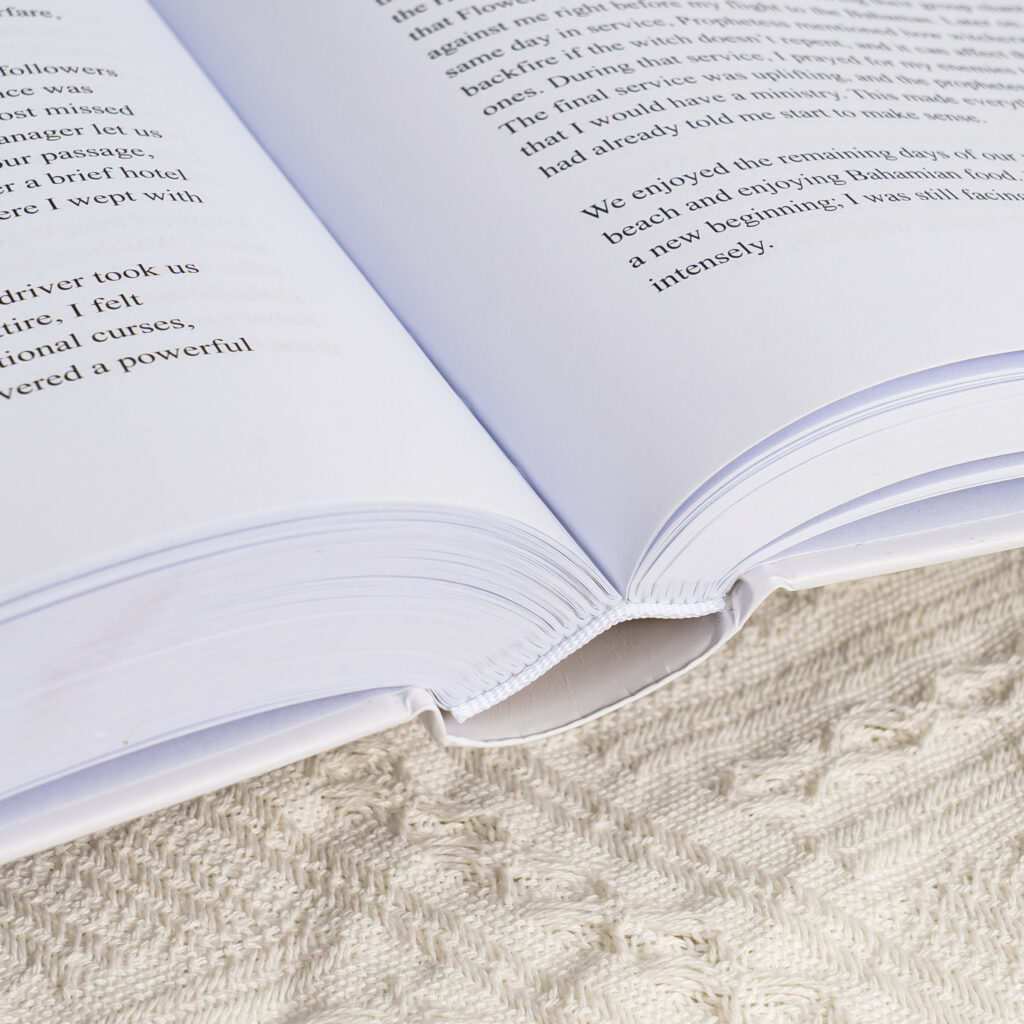
Smyth sewing is the common name for chain-stitched section sewing. Many books combine sewing with adhesive on the spine, so a hardcover book binding specification should name the sewing style and the adhesive, not just one of them.
What Adhesive Binding Means
Adhesive binding stacks cut leaves, prepares the spine edge to open the paper fibres, and bonds the pages with a layer of glue. The block is lined and cased in the same way as a sewn one. ピュア, a polyurethane reactive adhesive, and EVA hot-melt are the two families most often quoted, and they cure and age differently.
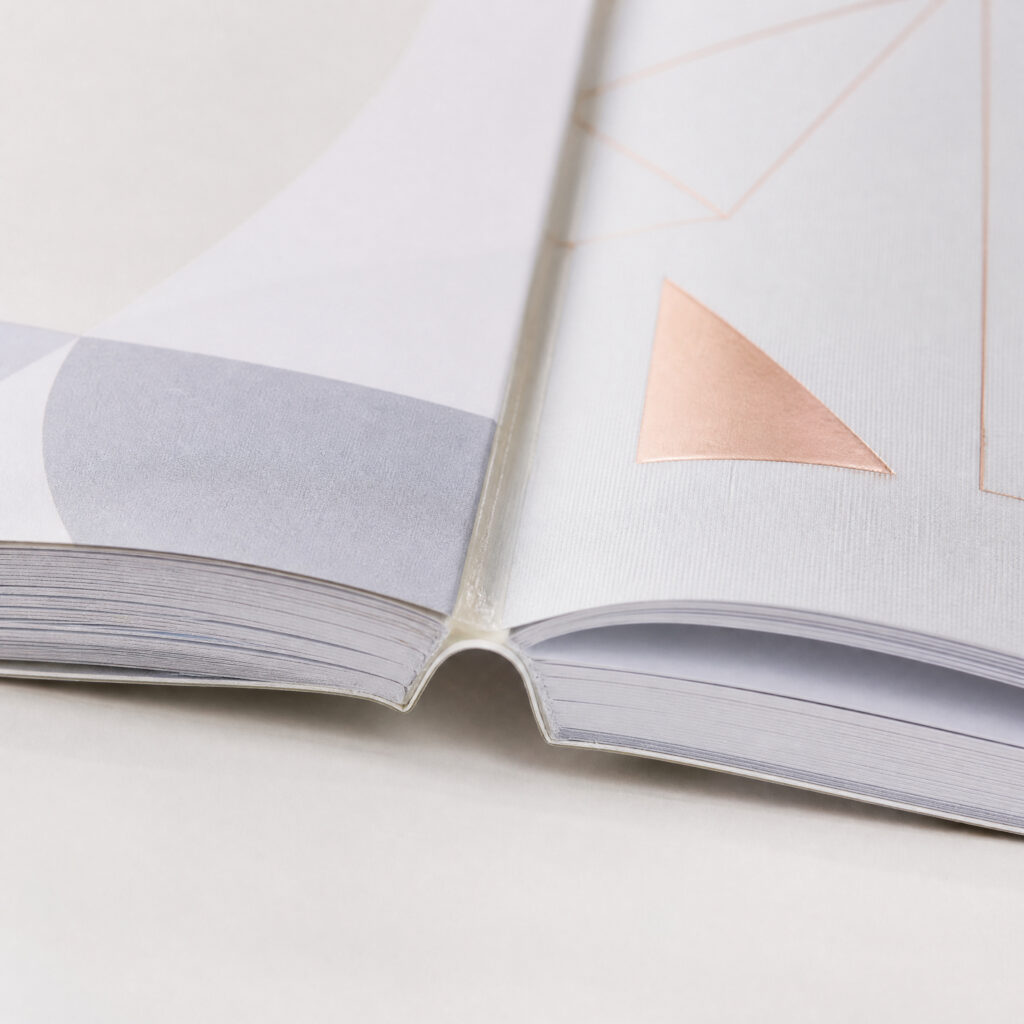
Every leaf hangs from that one film of adhesive, so the result follows the film. Coated paper, heavy ink coverage near the spine, glue temperature, spine preparation, and page count all change how firmly each page holds.
Performance Depends On More Than Method
Sewing and adhesive are starting points, not verdicts. 紙, 構造, and workmanship decide whether a given title performs.
Paper And Structure Share The Load
A heavy coated paper gathered in short signatures puts more stress on the spine than a light uncoated text stock in deep signatures. 結晶粒方向, ページ数, and the width of the inner margin change that load again. Ask the supplier which combination they used on a book of your weight, and request a physical sample close to it.
The case contributes as well. 板厚, 被覆材, hinge construction, and how the endpapers attach all affect how the book opens and how the spine ages. A request that names only the binding method leaves those choices to the factory, which is where hardcover book binding quality varies most between two quotes.
Opening And Lay-Flat Are Conditional
Sewn blocks usually open more easily than adhesive blocks, because the thread sits at the fold and the sections can roll at the spine. That is a tendency, not a guarantee. Rounding, spine lining, case adhesive, and stiff papers can each limit how flat a sewn book lies. An adhesive book with a flexible PUR film and a well-prepared spine can also open comfortably.
If flat opening matters for your content, test it on a dummy built to your own structure. Press the book open on a table and watch the outer pages, where lifting shows first.
Sewn Versus Glued Side By Side
Compare the two structures on one agreed specification, and note what each row asks the factory to confirm.
| 側面 | Sewn Book Block | Adhesive Book Block |
|---|---|---|
| How pages join | Folded signatures stitched through the fold with thread. | Cut leaves bonded by a prepared adhesive film at the spine. |
| Typical first sign of wear | Spine lining loosens before sections separate. | Loose leaves appear where the film released. |
| Opening behaviour | Often easier, shaped by signature depth and lining. | Varies with adhesive type and spine stiffness. |
| Thick or heavy paper | Thread spreads load across more of the spine. | Needs a tested adhesive and an agreed page range. |
| Production steps | Folding and sewing add steps before casing-in. | Fewer steps, so scheduling is usually simpler. |
| Common uses | Reference titles, アートブック, editions meant for resale. | Trade fiction, 雑誌, catalogues with predictable handling. |
| What to confirm | Signature size, thread, stitch tension, lining. | Adhesive family, spine preparation, cure method. |
The table assumes equal workmanship. A poorly sewn book fails early, and a well-built adhesive book outlasts expectations. Treat each row as a question to verify rather than a promise to accept.
Match The Binding To The Use
Start from how the book will be handled and who opens it. The structure follows from that answer.
Frequent Handling And Reference Use
Titles that travel, sit on shared shelves, and open many times a week show binding wear first. Institutional buyers often specify a sewn block with reinforced lining for this workload. Published specifications exist for binding that must meet durability and permanence needs, 含む ISO 14416 for archive and library binding. Cite the standard you need in your request, and ask the supplier to state how they meet it.
Spreads And Flat Work Surfaces
料理本, マニュアル, アートブック, and photo books get used open on a surface. A sewn block with shallow signatures and a flexible lining supports spreads better than a stiff build, although the case and endpapers can still hold the book half closed. Where a photograph runs across the gutter, approve a dummy and check the centre pages before the run.
Short Runs And Cost Ceilings
Trade fiction, corporate journals, and promotional hardcovers with predictable handling can work well as adhesive books, particularly where unit price is the binding constraint. Confirm the adhesive family and spine preparation, and check your page count against the range the factory recommends for that build. If a title later moves into heavier use, a reprint on a sewn block is a specification change, not a repair.
Where Buyers Get The Choice Wrong
Most binding complaints trace back to a vague request, not to the sewing machine or the glue pot.
Buyers often decide the cover first and leave the book block to the quote. That is the first shortcut. The case is visible at launch, while the hardcover book binding decides how the book reads in its third year. Ask to see the block itself before you sign off a cover.
A second shortcut is treating sewn as automatically premium. A sewn block built with thin thread, shallow signatures, and a rigid lining can perform worse than a careful adhesive build. Specify thread, signature depth, and lining, then compare two samples side by side rather than two adjectives.
The third is comparing quotes as single numbers. Two suppliers can price the same title with different page counts, board grades, or endpaper choices. Put every hardcover book binding quote on one sheet with the structure written out. The gap between them stops being a guess at that point.
Confirm These Points Before Ordering
Turn the comparison into a written checklist. Ask every supplier the same questions and keep the answers in one file.
Ask For Inspection Items And Methods
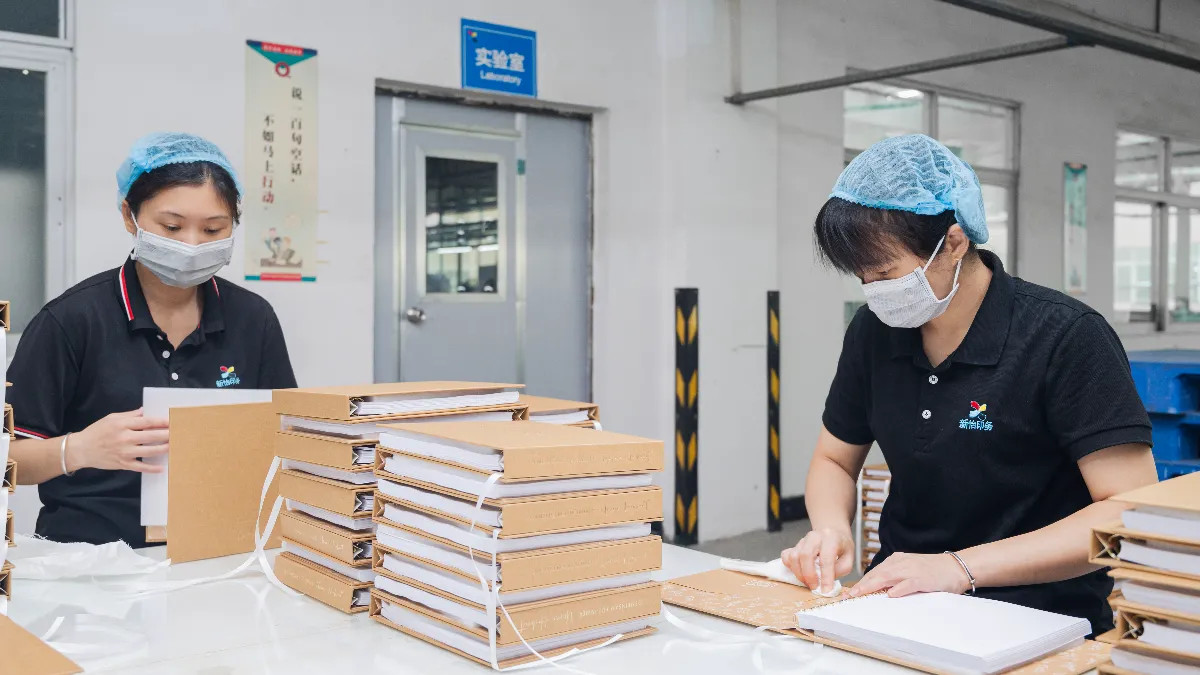
Request the list of checks a factory runs during binding, the method behind each check, and the record it keeps. Test names alone say little, so ask how the check is performed and what result passes. Ask the same about the sewing or adhesive line itself: which machine, which settings, and who signs off the first sheets off the press.
Agree Acceptance Limits In Writing
Set the limits before production rather than after delivery. Cover squareness, spine alignment, hinge cracking, page release, cover flatness, and odour, then state what happens when a batch falls outside them. Sampling is normal practice, so ask how many units are checked and at which stage. Where a paper permanence claim matters, ask which specification the stock meets, such as the permanent paper requirements in ISO 9706.
Judge A Physical Dummy First
Approve a bound dummy built to the real structure before the run starts. Open it, flex the spine, lift a corner page gently, and leave it closed for a week to see how the cover settles. Keep that dummy: it becomes the reference you compare the bulk shipment against, and the item you cite if a delivery looks different.
What Actually Drives Binding Cost
Binding cost follows process steps and materials. Ask for the breakdown instead of comparing headline unit prices.
Sewing adds folding and stitching before casing-in, so it usually raises both price and lead time relative to a single adhesive line. Case boards, 被覆材, 見返し, lining cloth, ホイル, and head-and-tail bands each sit on top of the structure. Page count and paper weight move the number as much as the binding method does.
Ask for an itemized quote at your quantity, with book block preparation, sewing or adhesive, ケーシングイン, カバー素材, 仕上げ, and packaging as separate lines. Two suppliers quoting the same breakdown are comparable. Two suppliers quoting one line each are not. The same rule applies to wholesale volumes, as we cover in our wholesale hardcover printing guide.
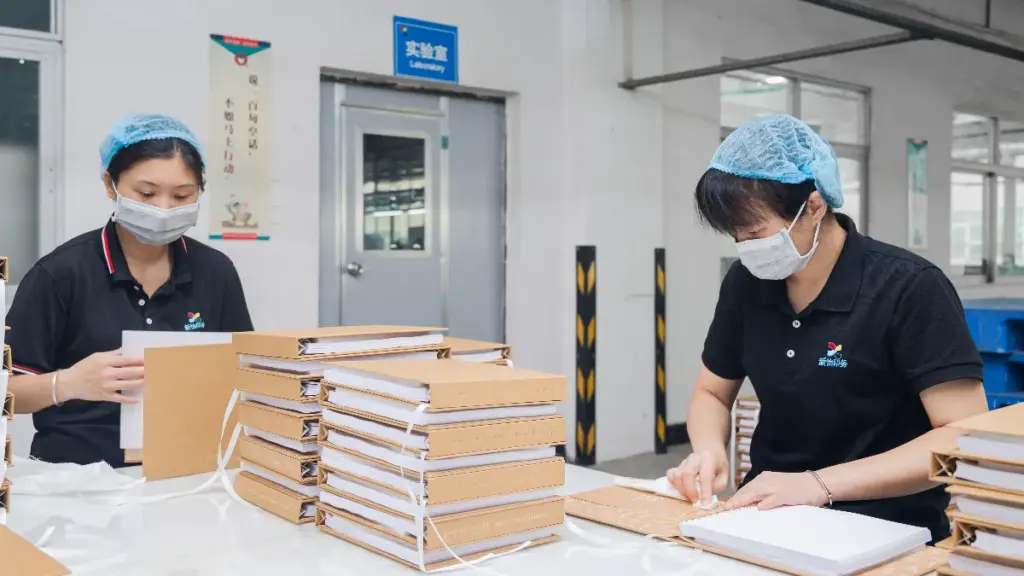
Sewn And Adhesive Hardcover Binding In One Factory

最終的な考え
Sewn and adhesive book blocks solve different problems, and either can fail when the specification stays vague. Fix the use case first, then ask each factory to state the structure, 材料, checks, and acceptance limits in writing. A dummy you approve and keep is worth more than any paragraph of marketing copy.
Xinyi Printing builds both structures for publishers, ブランド, and institutional buyers. Compare the answers you get against the checklist above, and start the specification on our home page.
よくある質問
What binding is best for hardcover books?
Neither method wins on its own. Match the structure to the workload: a sewn block suits frequent handling and wide spreads, while an adhesive block suits predictable use and tighter unit costs. Confirm paper, ページ数, and lining before choosing.
Is sewn binding better than glued binding?
Sewn blocks generally open more easily and keep holding when spine adhesive softens, so they suit heavy use. That advantage depends on signature depth, thread, lining, and workmanship. Ask which structure the supplier built for a comparable sample and test it yourself.
How are hardcover books bound?
Pages are assembled into a book block by sewing folded signatures or by bonding cut leaves with adhesive. The block is rounded, 裏地付き, and attached to a rigid case made of boards wrapped in paper or cloth. Endpapers bridge block and case.
How do I check binding before shipping?
Approve a dummy built to the real structure, then agree written limits for squareness, spine alignment, hinge cracking, and page release. Ask which checks run during production, how many units are sampled, and what happens when a batch falls outside the limits.
Does glued hardcover binding crack over time?
It can, and it depends on the adhesive, the paper, and how the book is stored. Adhesive films stiffen with age, heat, and dry air, and the result varies by formulation. Ask which adhesive family the quote assumes and request a sample aged in your own conditions.