Heavy hardcover books are designed for projects that require durability, عرض متميز, وقيمة طويلة الأجل. هياكل الغطاء السميكة, خيارات ورق أثقل, and stronger binding methods create a more substantial feel compared with standard book formats.
للناشرين والعلامات التجارية, understanding how materials and thickness affect a hardcover book is essential before production. Cover boards, وزن الورق, عدد الصفحات, and finishing choices all influence the final quality, يكلف, and user experience of the finished book.
What Makes Heavy Hardcover Books Premium and Durable
Heavy hardcover books stand out because their structure, مواد, and weight create a stronger sense of quality.
What Is a Hardcover Book and How Is It Structured
أ كتاب غلاف فني is a book format that uses a rigid cover to protect the printed pages and provide a more durable, premium appearance. Compared with paperback formats, hardcover books have a stronger outer structure, making them suitable for publications that require long-term use and higher perceived value.
A typical hardcover book consists of several basic components:
| عنصر | وظيفة |
|---|---|
| لوحة الغلاف | Creates a firm outer cover and protects the pages inside. |
| مادة الغطاء | Provides the book’s appearance, نَسِيج, and additional protection. |
| كتلة الكتاب | Contains the printed pages and determines much of the book’s thickness. |
| العمود الفقري | Connects the cover structure and supports comfortable opening. |
While all hardcover books share this basic construction, heavy hardcover books usually use thicker boards, heavier paper, and stronger production specifications to create a more substantial feel. These differences make them a preferred choice for premium editions, كتب الصور, children’s publications, and collectible books.
Why Heavy Hardcover Books Feel More Premium and Valuable
The weight of a book influences how readers perceive its quality. أ heavy hardcover book creates a stronger premium impression through its solid structure, مواد متينة, and refined appearance. The feeling usually comes from a combination of thicker cover boards, heavier paper, reliable binding, and quality finishing. لكن, adding weight alone does not guarantee better quality. High-quality hardcover book printing requires the right balance between materials, قابلية الاستخدام, production cost, and the purpose of the publication.
Common Uses of Heavy Hardcover Book Formats
Heavy hardcover books are commonly chosen for publications that require durability, عرض متميز, وقيمة طويلة الأجل. Their stronger construction makes them suitable for projects where appearance and lifespan are equally important.
Common applications include:
- Children’s hardcover books: Durable covers help withstand frequent handling while providing a premium reading experience.
- Photo books: Thicker paper and rigid covers improve image presentation and create a high-value keepsake.
- Art books and collector editions: Premium structures protect valuable content while improving shelf appeal and collectability.
- منشورات الشركات: Hardcover formats help companies present brand stories, التقارير السنوية, and promotional materials professionally.
- Gift books and special editions: A heavier structure increases perceived value and makes the product suitable for premium gifting.
للناشرين والعلامات التجارية, choosing a heavy hardcover format is not only a design decision. It also helps strengthen product positioning and create books with higher perceived value in the market.

Hardcover Book Materials That Make Books Heavier and Stronger
The materials of a hardcover book determine its strength, وزن, and overall feel. The right choices help create durable and premium heavy hardcover books.
Cover Boards and Hardcover Materials That Increase Durability
The cover structure plays an important role in determining the strength and weight of hardcover books. The board inside the cover provides rigidity, protects the pages, and creates the solid feeling that readers expect from a premium book.
Different cover boards offer different levels of strength and flexibility:
| مادة | سمات | Suitable Applications |
|---|---|---|
| Grey board | قوي, مستقر, and widely used for reliable hardcover structures. | General hardcover books and commercial publications. |
| Thick paperboard | Provides good flexibility with a lighter overall weight. | Everyday books and projects requiring easier handling. |
| Premium board | Offers higher strength and thickness for a more substantial feel. | طبعات فاخرة, collector books, and premium projects. |
The outer cover material also affects the appearance and tactile experience of the book. تشمل الخيارات الشائعة:
- Printed paper with lamination: Provides a customizable surface with improved protection against scratches and daily wear.
- Fabric covering: Creates a refined texture and is often used for premium or collectible editions.
- Leatherette covering: Adds a luxury appearance while maintaining durability.
- Specialty textured materials: Help create unique designs for brands and limited-edition publications.
ل heavy hardcover books, thicker cover boards are often combined with premium cover materials to create a stronger structure and improve perceived value. The final selection depends on the book’s purpose, الجمهور المستهدف, and expected usage.
Paper Weight and Page Count That Make Hardcover Books Heavier
Paper selection directly affects the thickness, وزن, and overall feel of hardcover books. Even books with the same page count can have different weights because paper thickness and density vary.
Paper GSM refers to the weight of paper per square meter. Higher GSM paper usually creates thicker pages and a more substantial reading experience, making it popular for photo books, كتب فنية, and premium editions. Lower GSM paper is often used for text-focused publications where lighter weight is preferred.
Page count also affects the final size and weight of a book. More pages usually create a thicker spine and require stronger structural support. لكن, page count should always be considered together with paper selection, as fewer pages with heavier paper can still create a heavy hardcover book.
During طباعة كتاب غلاف فني, manufacturers balance paper type, عدد الصفحات, and binding requirements to achieve the desired quality and usability.
Binding Methods for Strong Heavy Hardcover Books
Binding plays an important role in maintaining the durability and performance of heavy hardcover books. A thicker book structure requires a reliable binding method to keep pages secure and allow comfortable opening.
تتضمن خيارات الربط الشائعة ذات الغلاف المقوى:
- ملزمة القضية: The standard hardcover method that connects the book block with a rigid cover case for strong protection.
- ملزمة مخيط: Uses thread to connect page sections, providing excellent durability and smooth opening for premium publications.
- ملزمة الغراء: Offers efficient production for some projects but may not provide the same long-term strength as sewn binding for very thick books.
The right binding method helps ensure that heavy hardcover books remain durable and functional throughout their expected lifespan.
Premium Hardcover Books, Manufactured at Scale

How Hardcover Book Specifications Affect Weight and Final Quality
Book specifications influence more than appearance. مقاس, spine structure, and finishing choices work together to determine the usability, متانة, and overall quality of a hardcover book.
Standard Hardcover Book Sizes and Dimensions for Different Projects
Book size affects the overall proportion, تجربة القراءة, and production requirements of a hardcover project. While many publishers use common formats, custom dimensions allow brands to create books with a more distinctive appearance.
Common hardcover book sizes include:
| مقاس | التطبيقات المشتركة |
|---|---|
| 6 × 9 بوصات | روايات, كتب الأعمال, and general publications. |
| 8.5 × 11 بوصات | Educational books, كتالوجات, ومنشورات الشركات. |
| 10 × 10 inches or larger | Photo books, كتب فنية, and premium children’s books. |
The right standard hardcover book size depends on the purpose of the publication. Larger formats usually require more paper and cover materials, which increases the final weight and production requirements.
For custom hardcover book printing projects, size selection should also consider storage, شحن, التعبئة والتغليف, and reader comfort to achieve a practical final product.
How Spine Width Changes with Heavy Hardcover Book Specifications
The spine is an important part of hardcover book design because it affects both the book’s appearance on shelves and its structural performance. A thicker book requires more accurate spine calculation to ensure proper printing, ملزم, and cover alignment.
Spine width mainly depends on several specifications:
| Factor | Impact on Spine Width |
|---|---|
| عدد الصفحات | More pages create a thicker book block and a wider spine. |
| Paper thickness and GSM | Heavier or thicker paper increases the overall thickness of the book. |
| طريقة الربط | Different binding structures affect the final dimensions and flexibility. |
| Cover board thickness | A thicker cover increases the overall hardcover structure. |
ل heavy hardcover books, accurate spine planning becomes especially important because larger dimensions can affect cover design, shelf presentation, and packaging efficiency.
Printing and Finishing Options for Premium Heavy Hardcover Books
Finishing options add visual appeal and improve the overall perception of a hardcover book. For premium projects, the right finishing combination can strengthen brand identity and make the book feel more valuable.
Common finishing options include:
- ماتي التصفيح: Creates a smooth surface and provides additional protection against wear.
- التصفيح اللامع: Enhances color brightness and creates a more eye-catching appearance.
- ختم احباط: Adds a luxury effect for logos, العناوين, and special design elements.
- النقش والنقش: Creates a three-dimensional texture that improves the tactile experience.
- بقعة الأشعة فوق البنفسجية: Highlights specific areas of the cover design with a contrast effect.
- الإشارات المرجعية الشريطية: Adds functionality and a premium detail for special editions.
The best finishing choices should match the book’s purpose and target market. During طباعة كتاب غلاف فني, publishers need to balance visual impact, متانة, and production cost to create a finished product that meets both design and commercial goals.

Heavy Hardcover Books vs Paperback and Board Books
The choice between heavy hardcover books, كتب ذات غلاف ورقي, and board books depends on durability, ميزانية, target readers, and product positioning.
Heavy Hardcover Books vs Paperback Books: Quality and Cost Comparison
Hardcover and paperback books differ mainly in structure, متانة, وتكلفة الإنتاج. Heavy hardcover books provide stronger protection and a more premium appearance, while paperback books focus on affordability and easy distribution.
Key differences include:
- متانة: Heavy hardcover books use rigid covers that better protect pages and withstand repeated use, making them suitable for long-lasting publications.
- Weight and handling: Hardcover formats create a more substantial reading experience, while paperback books are lighter and easier to transport.
- Production cost: Paperback books require fewer materials and are more cost-effective for large-volume printing. Hardcover books involve higher production costs but offer greater perceived value.
- Market positioning: Hardcover books are commonly used for premium editions, كتب الهدايا, and professional publications, while paperback books are often selected for mass-market distribution.
للناشرين, heavy hardcover books are a better choice when durability and presentation quality are important. Paperback books remain practical for projects where price and shipping efficiency are the main priorities.
Heavy Hardcover Books vs Board Books for Children’s Publishing
The choice between board books and hardcover books depends on the child’s age, reading habits, and expected durability.
Board books use thick paperboard pages designed for toddlers and early learners. They provide excellent resistance to tearing and frequent handling.
Heavy hardcover children’s books are more suitable for:
- Picture books: Provide premium presentation with stronger covers and flexible design options.
- Premium children’s editions: Create higher-value products for gifts and special collections.
- Educational books: Offer durability for older children who need a traditional reading format.
The decision between board book vs hardcover should match the target audience, نوع المحتوى, and expected product lifespan.
Choosing the Right Hardcover Format for Different Publishing Goals
Publishers should select the format based on their product goals:
- Heavy hardcover books: Best for premium publications, طبعات جامع, كتب الشركات, and long-term use.
- كتب ذات غلاف ورقي: Suitable for affordable products, large-volume sales, and lightweight distribution.
- Board books: Ideal for toddlers and early learning products requiring maximum durability.
Choosing the right format helps publishers balance quality, تكاليف الإنتاج, and market expectations before printing begins.
You can learn more about detail in this article: Board Book vs Hardcover vs Paperback
How to Choose the Best Heavy Hardcover Book Specifications
The right specifications help create heavy hardcover books that meet quality, قابلية الاستخدام, ومتطلبات السوق.
Select Thickness Based on Book Purpose and Audience
Book thickness should support the intended reading experience, durability requirements, وتحديد المواقع في السوق. Different types of publications require different approaches:
- Children’s books: Need durable structures that can withstand frequent handling while remaining comfortable for young readers.
- Photo books: Benefit from thicker paper and premium structures that enhance image quality and visual impact.
- Corporate books: Often require a refined appearance and strong presentation to support brand communication.
- روايات: Need a balanced structure that provides durability without making the book difficult to carry.
The ideal thickness creates a hardcover book that feels premium while remaining practical for its intended audience.
Balance Premium Quality, وزن, and Production Budget
A heavier book does not always deliver better value. Publishers need to consider the relationship between material choices, قابلية الاستخدام, تكاليف الإنتاج, and market expectations.
Important factors include:
- Target audience: Determines the expected level of durability, appearance, وتجربة القراءة.
- Distribution method: Influences acceptable weight, packaging requirements, وتكاليف الشحن.
- Order volume: Affects production efficiency and the overall cost per unit.
- Market positioning: Defines whether the book should focus on affordability, premium value, or collectability.
By balancing quality, وزن, والميزانية, publishers can create heavy hardcover books that provide a strong reader experience while maintaining practical production requirements.
If you want to custom hardcover book for sale, you can read this article: الدليل الكامل للكتب ذات الغلاف الصلب المخصص
Work with an Experienced Hardcover Book Printing Manufacturer
A reliable printing partner helps turn the right specifications into high-quality hardcover books. Experience in material selection, structural planning, الطباعة, and finishing ensures better consistency throughout the production process.
For publishers and brands seeking custom hardcover book printing, طباعة Xinyi provides tailored manufacturing solutions for different book projects and market needs. From initial specification planning to final production, we help create durable, premium hardcover books with reliable quality and long-term value.
الأسئلة المتداولة
Why are some hardcover books heavy?
Some hardcover books are heavy because they use materials like thicker paper, rigid cover boards, and stronger binding structures. The combination of high page count, large dimensions, and dense paper for illustrations—common in technical or art books—also adds significant weight compared to a standard novel.
How much does a hardcover book weigh?
A standard hardcover book typically weighs between 1 ل 3 جنيه (about 0.45 ل 1.36 كجم). Larger volumes, such as textbooks or coffee-table books, often weigh more, sometimes ranging from 2 ل 6 pounds or even higher depending on page count and paper density.
What thickness is hardcover board?
The board used for hardcover books typically ranges from 2.0 mm to 3.5 مم سميكة. A common standard for many hardcovers is between 2.5 mm and 3.0 مم, while heavier technical or oversized books may use boards up to 3.5 mm for added rigidity and durability.
What makes a hardcover book durable?
A hardcover’s durability comes from its rigid cover boards that resist bending, a reinforced binding like Smyth-sewn construction that prevents pages from falling out, and durable cover materials that protect against wear. The use of acid-free paper also ensures the pages do not become brittle over time.
How thick can a hardcover book be?
While there is no strict maximum, the practical thickness of a hardcover book is limited by binding technology and material handling. Most commercial hardcovers have a spine thickness between 0.5 و 2 بوصات. Exceptionally thick books with over 800 pages are possible but require special consideration for binding strength and cover construction.
Are heavy books better quality?
While a heavy book often indicates the use of higher-quality materials like denser paper and thicker cover boards, weight alone does not guarantee quality. The best measure of quality is the construction method, such as whether the book has a durable Smyth-sewn binding and uses archival-grade, ورق خالي من الأحماض.
نشر قسط طباعة كتاب غلاف فني يتطلب المشروع أكثر من مجرد غطاء متين. يحتاج الناشرون والشركات إلى تحقيق التوازن بين جودة المواد, تكاليف الإنتاج, متطلبات التصميم, وقيمة طويلة المدى لإنشاء كتب تلبي أهدافهم.
يقدم هذا الدليل رؤى عملية حول هياكل الكتب ذات الغلاف الصلب, مواد, خيارات التخصيص, واعتبارات الإنتاج الرئيسية. بالمواصفات المناسبة وشريك الطباعة, يمكن للشركات إنشاء كتب مخصصة بغلاف مقوى توفر مظهرًا احترافيًا, متانة دائمة, وتجربة أفضل للقراء.
ما هو الكتاب ذو الغلاف الصلب?

أ كتاب غلاف فني وهو كتاب بغلاف صلب مصنوع من ألواح قوية مغلفة بالورق المطبوع, قطعة قماش, أو غيرها من المواد الزخرفية. بالمقارنة مع الكتب ذات الغلاف الورقي, توفر الكتب ذات الغلاف الصلب حماية أفضل, متانة أعلى, ومظهر أكثر تميزًا.
يتكون الكتاب ذو الغلاف المقوى عادة من عدة مكونات رئيسية:
- لوحة الغلاف: لوح صلب يوفر الدعم الهيكلي ويحمي الصفحات.
- التفاف الغطاء: ورق مطبوع, قطعة قماش, أو المواد المتخصصة التي تخلق التصميم الخارجي.
- الأوراق النهائية: صفائح تربط الغلاف بالصفحات الداخلية وتحسن الثبات.
- كتلة الكتاب: تم تجميع الصفحات المطبوعة في كتاب كامل.
- ملزم: العملية المستخدمة لتأمين الصفحات, مثل ربط العلبة أو خياطة الخيط.
يتم إنتاج معظم الكتب ذات الأغلفة الصلبة باستخدام ملزمة القضية, حيث يتم ربط كتلة الكتاب بحافظة غطاء متينة. يساعد هذا الهيكل الكتاب على الحفاظ على شكله وجودته مع مرور الوقت.
للناشرين, العلامات التجارية, والشركات, توفر الكتب ذات الغلاف الصلب المخصص تنسيقًا احترافيًا لإنشاء كتب متينة, منشورات عالية الجودة.
مزايا الكتب ذات الغلاف الصلب لمشاريع النشر المتميزة
للناشرين والعلامات التجارية, توفر الكتب ذات الغلاف الصلب تنسيقًا متميزًا يجمع بين المتانة, مرونة التصميم, وقيمة طويلة الأجل.
متانة أفضل وحماية طويلة الأمد
واحدة من أكبر مزايا الكتب ذات الأغلفة الصلبة هي متانتها. يساعد هيكل الغطاء الصلب على حماية الصفحات من الانحناء, تمزق, والارتداء اليومي. وهذا يجعل الكتب ذات الغلاف الورقي مناسبة للمطبوعات التي تحتاج إلى الحفاظ عليها واستخدامها لفترة طويلة.
على سبيل المثال, الكتب التعليمية, الكتب المرجعية, وغالبًا ما تتطلب كتب الأطفال بنية أقوى لأنه يتم التعامل معها بشكل متكرر. يساعد تصميم الغلاف الصلب في الحفاظ على حالة الكتاب حتى بعد الاستخدام المتكرر.
كما يوفر الهيكل الأقوى حماية أفضل أثناء التخزين والنقل. للناشرين والشركات التي توزع الكتب دوليًا, يمكن أن تقلل طباعة الكتب ذات الغلاف الصلب من مخاطر التلف أثناء الشحن والمناولة.
الكتب ذات الغلاف الصلب مناسبة بشكل خاص لـ:
- مجموعات طويلة الأجل
- كتب المكتبة
- المنشورات المهنية
- طبعات متميزة
- كتب تذكار
مظهر متميز وقيمة أعلى للعلامة التجارية
يخلق الكتاب ذو الغلاف المقوى انطباعًا بصريًا أقوى مقارنةً بالكتاب الورقي القياسي. الغطاء الصلب, حواف نظيفة, وتساعد خيارات التشطيب عالية الجودة في إنشاء منتج متميز يجذب القراء.
للشركات, يمكن أن يؤثر مظهر الكتاب على كيفية إدراك العملاء للعلامة التجارية. كتب تاريخ الشركات, التقارير السنوية, كتالوجات المنتجات, غالبًا ما تستخدم منشورات الذكرى السنوية تنسيقات ذات غلاف مقوى لأنها تنقل الاحترافية والموثوقية.
يوفر تنسيق الغلاف أيضًا مساحة أكبر للتصميم الإبداعي. يمكن للغلاف المصمم بعناية بمواد عالية الجودة وتقنيات التشطيب أن يحول منشورًا بسيطًا إلى أصل علامة تجارية لا يُنسى.
ولهذا السبب يتم اختيار الكتب ذات الغلاف الورقي بشكل شائع للمشاريع التي تكون فيها جودة العرض التقديمي مهمة بقدر أهمية المحتوى نفسه.
المزيد من خيارات التخصيص لتصميمات الكتب الفريدة
توفر طباعة الكتب ذات الغلاف الصلب مجموعة واسعة من خيارات التخصيص. يمكن للناشرين والعلامات التجارية تعديل كل جزء من الكتاب تقريبًا, من المواد إلى تفاصيل التشطيب.
تتضمن خيارات التخصيص الشائعة للأغلفة الصلبة:
- ماتي أو لمعان التصفيح
- ختم احباط
- النقش والنقش
- بقعة طلاء للأشعة فوق البنفسجية
- مواد تغطية مخصصة
- الإشارات المرجعية الشريطية
- أوراق نهاية خاصة
تسمح هذه الخيارات للشركات بإنشاء كتب تتوافق مع هوية علامتها التجارية أو أهداف النشر الخاصة بها.
على سبيل المثال, قد تختار العلامة التجارية الفاخرة غلافًا من القماش بختم رقائق معدنية, بينما قد يركز ناشر كتب الأطفال على المواد المتينة والتصاميم الملونة.
أنشئ كتبًا مخصصة ذات أغلفة كرتونية بجودة متميزة
المواد المستخدمة في طباعة الكتب ذات الغلاف الصلب

تؤثر المواد المستخدمة في طباعة الكتب ذات الغلاف المقوى بشكل مباشر على مظهر الكتاب, متانة, والجودة الشاملة. تتطلب المشاريع المختلفة مجموعات مواد مختلفة لتحقيق النتيجة المرجوة.
مواد الغلاف وخيارات اللوحة
الغلاف هو الجزء الأكثر تميزًا في الكتاب ذو الغلاف المقوى. وتتكون عادة من لوح صلب مغطى بورق مطبوع أو مواد زخرفية.
تتضمن مواد الغلاف الشائعة:
| مادة | سمات | التطبيقات المشتركة |
|---|---|---|
| السبورة الرمادية / اللوح | يوفر بنية قوية ومتينة لحماية الصفحات الداخلية والحفاظ على شكل الكتاب. | الكتب الورقية العامة, الكتب المدرسية, ومنشورات طويلة الأمد. |
| غلاف ورقي مطبوع | يدعم الطباعة بالألوان الكاملة وتصميمات الغلاف المرنة لتلبية احتياجات النشر المختلفة. | المطبوعات التجارية, كتب الشركات, ومشاريع غلاف فني مخصصة. |
| غطاء من الكتان أو القماش | يخلق الكلاسيكية, مظهر أنيق مع ملمس ممتاز ولمسة نهائية راقية. | طبعات خاصة, المجلات, الدفاتر المتميزة, وكتب الهدايا. |
| مادة تشبه الجلد | يوفر مظهرًا فاخرًا ويعزز القيمة المتصورة للكتاب. | كتب جامع, طبعات فاخرة, ومنشورات الهدايا الراقية. |
يؤثر سمك لوح الغطاء على قوة وملمس المنتج النهائي. توفر الألواح السميكة حماية أفضل, بينما تساعد مواد التغليف المختلفة على تحقيق تأثيرات بصرية مختلفة.
للكتب ذات الغلاف الصلب المخصص, يجب أن يأخذ اختيار مادة الغلاف في الاعتبار غرض الكتاب, الجمهور المستهدف, والعمر المتوقع.
أنواع الورق الداخلي للكتب ذات الغلاف الصلب المختلفة
تلعب الصفحات الداخلية دورًا مهمًا في تجربة القراءة وجودة الطباعة. تتطلب فئات الكتب المختلفة اختيارات ورقية مختلفة.
تتضمن خيارات الورق الشائعة:
- ورق الأوفست: مناسبة للروايات, الكتب المدرسية, والكتب ذات النصوص الثقيلة لأنها توفر قراءة مريحة.
- الورق المطلي: مثالية لكتب الصور, كتب فنية, والمنشورات التي تتطلب صورًا عالية الجودة.
- ورق خاص: يستخدم للمشروعات المتميزة التي تتطلب ملمسًا أو مظهرًا فريدًا.
على سبيل المثال, يحتاج كتاب التصوير الفوتوغرافي عادة إلى ورق مطلي لعرض صور واضحة وألوان غنية, بينما قد يستخدم تقرير الأعمال ورق الأوفست لتسهيل القراءة.
يساعد تحديد نوع الورق المناسب على موازنة جودة الطباعة, متانة, وتكلفة الإنتاج.
طرق الربط للكتب ذات الغلاف الصلب المتين
تحدد طريقة الربط مدى جودة تماسك الكتاب مع مرور الوقت. تستخدم الكتب ذات الغلاف الصلب عادة طرق ربط أقوى مقارنة بالكتب ذات الغلاف الورقي.
تتضمن خيارات الربط الشائعة ذات الغلاف المقوى:
| طريقة الربط | وصف | فوائد |
|---|---|---|
| ارتباط الحالة | يتم ربط كتلة الكتاب بحافظة غلاف صلبة لإنشاء هيكل قوي للغلاف الصلب. | يوفر متانة ممتازة, مظهر متميز, وحماية طويلة الأمد. |
| ربط الخيط المخيط | تتم خياطة الصفحات معًا بخيط قبل تثبيتها على الغلاف. | يوفر قوة متفوقة, استقرار أفضل للصفحة, وعمر أطول. |
| ملزمة الغراء | يتم إرفاق الصفحات باستخدام مادة لاصقة لإنشاء بنية ربط مرنة وفعالة. | يوفر خيارًا فعالاً من حيث التكلفة لمشاريع الكتب ذات الغلاف المقوى المحددة. |
للكتب ذات الغلاف الصلب المتميز, يُفضل عادةً تجليد العلبة وتجليد الخيوط لأنها توفر متانة أفضل وتسمح بفتح الكتاب بشكل مريح.
ما يجب عليك مراعاته عند طباعة الكتب ذات الغلاف الصلب
بعد فهم الفوائد, مواد, وتطبيقات الكتب ذات الغلاف الصلب, هناك العديد من العوامل الأساسية التي يجب مراعاتها قبل البدء في مشروع الطباعة الخاص بك. تساعد هذه القرارات على ضمان أن الكتاب النهائي يلبي الجودة التي تريدها, ميزانية, والمتطلبات الوظيفية.
غرض الكتاب, جمهور, ومتطلبات الاستخدام
الغرض من الكتاب يؤثر بشكل مباشر على شكله, اتجاه التصميم, ومتطلبات الإنتاج. قد يحتاج الكتاب بغلاف مقوى للقراءة اليومية إلى مواصفات مختلفة عن المنشور المتميز المصمم للعرض أو التجميع.
قبل البدء في الإنتاج, فكر في كيفية تفاعل القراء مع الكتاب:
- تردد القراءة: الكتب المستخدمة بانتظام, مثل كتب الأطفال أو المواد التعليمية, تتطلب هياكل أقوى للتعامل مع الاستخدام المتكرر.
- الجمهور المستهدف: القراء المختلفون لديهم توقعات مختلفة للمظهر, راحة, والمتانة.
- غرض الكتاب: منشورات الشركات, كتب الهدايا, غالبًا ما تركز إصدارات المجمعات بشكل أكبر على العرض المتميز وقيمة العلامة التجارية.
يساعد فهم هذه العوامل في تحديد التوازن الصحيح بين الجاذبية البصرية, متانة, وتكلفة الإنتاج. لا ينبغي للكتاب الجيد التخطيط أن يبدو مثيرًا للإعجاب فحسب، بل يجب أن يوفر أيضًا تجربة مناسبة للقراء المستهدفين.
حجم الكتاب, عدد الصفحات, واختيار الورق
تؤثر المواصفات المادية للكتاب بغلاف مقوى على جودة الإنتاج والأداء العام. مقاس, عدد الصفحات, ويعمل اختيار الورق معًا لتحديد وزن الكتاب, تجربة التعامل, ومتطلبات الطباعة.
المواصفات الهامة للتقييم تشمل:
| مواصفة | التأثير على طباعة الكتب ذات الغلاف الصلب |
|---|---|
| حجم القطع | يحدد المظهر العام, راحة القراءة, ومتطلبات التعبئة والتغليف للكتاب النهائي. |
| عدد الصفحات | يؤثر على سمك الكتاب, متطلبات ملزمة, وتكلفة الإنتاج النهائية. |
| وزن الورق | يؤثر على شعور الكتاب, متانة, وملاءمتها لأنواع المحتوى المختلفة. |
| متطلبات الطباعة الملونة | يحدد جودة الطباعة وهو مهم بشكل خاص للمنشورات التي تركز على الصور. |
على سبيل المثال, قد يتطلب كتاب الصور الكبير تخطيطًا دقيقًا للحفاظ على التوازن بين جودة الصورة والوزن الإجمالي. قد تركز الرواية الأصغر حجمًا بشكل أكبر على القراءة المريحة والإنتاج الفعال.
يضمن تحديد المواصفات الصحيحة أن المنتج النهائي يقدم تجربة قراءة متسقة مع تلبية متطلبات الإنتاج العملية.
كمية الطباعة, ميزانية, وخيارات التخصيص
يلعب تخطيط الإنتاج أيضًا دورًا مهمًا في مشاريع الكتب ذات الغلاف المقوى. كمية الطلب, مستوى التخصيص, والميزانية كلها تؤثر على نهج الإنتاج الأكثر ملاءمة.
عند إعداد خطة الطباعة, يجب على الشركات تقييم:
- كمية الطباعة: الكميات الأكبر عادة ما تعمل على تحسين كفاءة التكلفة, بينما قد تتطلب الطلبات الصغيرة حلولاً أكثر مرونة.
- مستوى التخصيص: يمكن للتشطيبات الخاصة والخيارات المتميزة أن تزيد من قيمة الكتاب ولكنها قد تؤثر على تكاليف الإنتاج.
- إجمالي ميزانية المشروع: اختيارات مادية, تفاصيل التشطيب, التعبئة والتغليف, وينبغي النظر في الشحن معا.
خيارات التخصيص مثل ختم احباط, أغطية منقوشة, وتسمح التشطيبات المتخصصة للشركات بإنشاء كتب فريدة من نوعها ذات غلاف مقوى تبرز في السوق. لكن, يجب أن تدعم كل ميزة إضافية غرض الكتاب بدلاً من زيادة التكاليف دون قيمة واضحة.
إن العمل مع شريك ذي خبرة في طباعة الكتب ذات الأغلفة الصلبة يساعد الناشرين والشركات على إيجاد التوازن الصحيح بين الجودة, التخصيص, وكفاءة الميزانية.
ما هي الكتب المناسبة للطباعة على الغلاف الصلب؟?
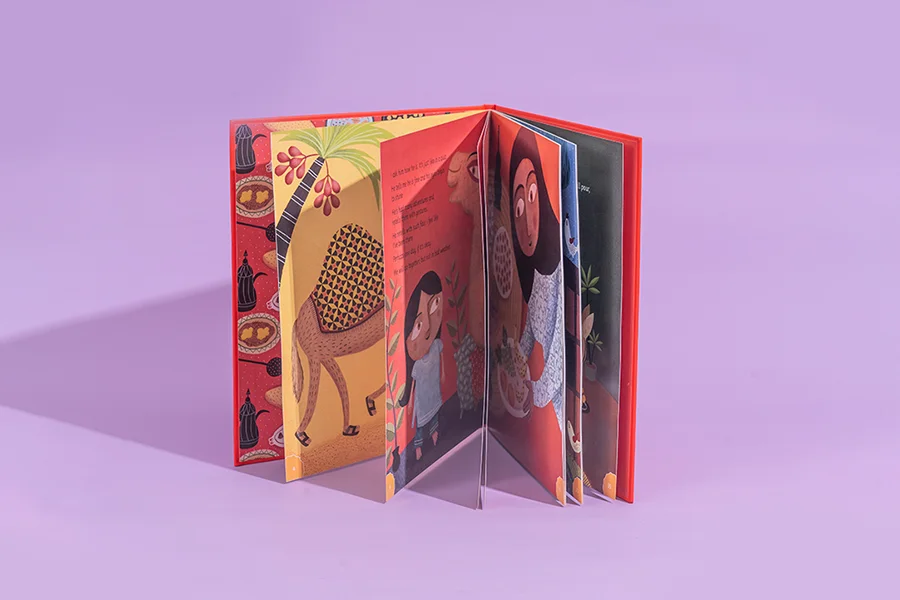
تعتبر الطباعة ذات الغلاف الصلب مناسبة للمطبوعات التي تتسم بالمتانة, عرض تقديمي, وقيمة دائمة. تتطلب أنواع الكتب المختلفة تنسيقات مختلفة لتحقيق الغرض منها, جمهور, واحتياجات الاستخدام.
كتب الأطفال
غالبًا ما يتعامل القراء الشباب مع الكتب بشكل متكرر, مما يجعل المتانة وسهولة الصيانة من العوامل المهمة لهذه الفئة.
- متانة: تساعد الأغطية الصلبة على حماية الصفحات من الانحناء, تمزق, والارتداء المنتظم.
- السلامة وسهولة الاستخدام: هيكل أقوى يجعل من السهل على الأطفال حمل الكتاب واستخدامه.
- القيمة طويلة المدى: يساعد البناء المتين على بقاء كتب الأطفال في حالة جيدة لفترات طويلة.
كتب الصور والكتب الفنية
تتطلب الصور والمحتوى المرئي عالي الجودة تنسيقًا يمكنه تحسين العرض التقديمي مع حماية الصفحات المطبوعة.
- عرض تقديمي مميز: هيكل الغطاء القوي يكمل التصوير الفوتوغرافي والأعمال الفنية الاحترافية.
- حماية أفضل: تساعد المواد المتينة في الحفاظ على الصفحات المطبوعة والأوراق المتخصصة.
- نداء تحصيل: تزيد التشطيبات والمواد المتميزة من قيمة الإصدارات المحدودة أو الخاصة.
كتب الشركات والتقارير السنوية
غالبًا ما تحتاج الشركات إلى منشورات احترافية لتوصيل قصص العلامات التجارية, الإنجازات, ومعلومات مهمة.
- صورة العلامة التجارية: يعمل تصميم الكتاب المتميز على تقوية هوية الشركة وتحسين عرض الأعمال.
- التواصل المهني: منشورات عالية الجودة تدعم اجتماعات العملاء, الأحداث, ومعالم الشركة.
- مرجع طويل المدى: يسمح البناء المتين بالحفاظ على المعلومات التجارية القيمة.
الكتب التربوية والمطبوعات المرجعية
الكتب المستخدمة في الفصول الدراسية, المكتبات, وتحتاج البيئات المهنية إلى هياكل موثوقة تدعم الاستخدام المتكرر.
- التعامل المتكرر: توفر الأغطية القوية حماية أفضل أثناء القراءة والمراجع المنتظمة.
- عمر ممتد: يساعد الربط المتين الكتب على الحفاظ على الجودة على مدار سنوات من الاستخدام.
- الجودة المهنية: يضيف التنسيق ذو الغلاف المقوى المصداقية إلى المواد التعليمية.
إصدارات المجمع والمنشورات المميزة
غالبًا ما تركز الإصدارات المحدودة والمنشورات الخاصة على إنشاء منتج قيم يرغب القراء في الاحتفاظ به.
- تصميم حصري: تخلق الأغطية المخصصة وخيارات التشطيب مظهرًا مميزًا.
- قيمة أعلى: تعمل المواد المتميزة على تحسين الجودة الملموسة للكتب القابلة للتحصيل.
- الحفاظ على المدى الطويل: يساعد البناء القوي على حماية المنشورات المهمة لسنوات.
كتب الطبخ
تعمل الوصفات جنبًا إلى جنب مع تصوير الطعام على إنشاء منشورات تستفيد من المتانة العملية والعرض المتميز.
- الاستخدام المتكرر: تساعد الأغطية القوية على حماية الكتب التي يتم فتحها والتعامل معها بانتظام أثناء الطهي.
- الجودة البصرية: توفر الهياكل ذات الغلاف الصلب منصة متميزة لتصوير الطعام والوصفات التفصيلية.
- نداء الهدية: المواد عالية الجودة وخيارات التشطيب تجعل كتب الطبخ مناسبة للمجموعات الشخصية والهدايا المميزة.
إذا كنت تريد أن تفهم هذا بمزيد من التفصيل, يمكنك أيضًا قراءة دليلنا حول دليل طباعة كتاب الطبخ بغلاف مقوى.
للناشرين, العلامات التجارية, والشركات, الكتب ذات الغلاف المقوى هي أكثر من مجرد مواد للقراءة. إنها منتجات متميزة تنقل الجودة, تعزيز قيمة العلامة التجارية, وإنشاء اتصال دائم مع القراء.
كتب ذات غلاف فني مقابل كتب ذات غلاف عادي: الاختلافات الرئيسية
إن فهم الاختلافات بينهما يساعد الناشرين, العلامات التجارية, وتختار الشركات التنسيق الصحيح بناءً على الأهداف, ميزانية, وتوقعات القراء.
الاختلافات في المتانة, يكلف, والمظهر
الاختلافات الرئيسية بين الكتب ذات الغلاف المقوى والكتب الورقية تأتي من بنيتها, عملية الإنتاج, والاستخدام المقصود. تركز الكتب ذات الغلاف الصلب على القيمة طويلة المدى والعرض المتميز, بينما توفر الكتب ذات الغلاف الورقي خيارًا أكثر مرونة وفعالية من حيث التكلفة.
| ميزة | كتب غلاف | كتب غلاف ورقي |
|---|---|---|
| هيكل الغلاف | يستخدم غطاء لوحي صلب يوفر حماية أقوى للاستخدام طويل الأمد. | يستخدم غطاء ورقي مرن يوفر معالجة خفيفة الوزن وسهولة النقل. |
| متانة | مناسب للكتب التي تتطلب عمرًا أطول ومعالجة متكررة. | أكثر ملاءمة للقراءة العامة والاستخدام على المدى القصير. |
| مظهر | يخلق مظهرًا متميزًا مناسبًا للمنشورات المهنية والخاصة. | يوفر تنسيقًا بسيطًا وعمليًا للنشر اليومي. |
| تكلفة الإنتاج | يتطلب استثمارًا أعلى بسبب المواد الأقوى وخطوات الإنتاج الإضافية. | يقدم حلاً أقل تكلفة للطباعة بكميات كبيرة. |
| وزن | يوفر الهيكل الأثقل حماية أفضل ولكنه يزيد من وزن الشحن. | التصميم الأخف يجعل التوزيع والنقل أسهل. |
| التخصيص | يدعم المزيد من خيارات التشطيب للتصميمات المتميزة والمخصصة. | يوفر خيارات تشطيب أقل ولكنه يعمل بشكل جيد مع المنشورات القياسية. |
على العموم, تعمل الكتب ذات الغلاف الصلب بشكل أفضل مع المشاريع التي تتطلب المتانة, عرض متميز, وقيمة طويلة الأجل. غالبًا ما تُفضل الكتب ذات الغلاف الورقي عند القدرة على تحمل التكاليف, قابلية النقل, والتوزيع الفعال هي الأولويات الرئيسية.
متى يجب عليك اختيار الغلاف الصلب على الغلاف الورقي؟?
يعتمد التنسيق الصحيح على الغرض من النشر والتجربة التي ترغب في إنشائها للقراء.
أ كتاب غلاف فني عادة ما يكون الخيار الأفضل عندما:
- الحفاظ على المدى الطويل: يحتاج الكتاب إلى الحفاظ على جودته لسنوات, مثل طبعات المجمع, الكتب المرجعية, أو المنشورات المهنية.
- عرض العلامة التجارية: المنشور يمثل شركة, منظمة, أو منتج متميز يتطلب تأثيرًا بصريًا أقوى.
- تجربة قارئ متميزة: الكتاب مصمم كهدية, طبعة خاصة, أو منشور ذو قيمة عالية.
أ كتاب ورقي الغلاف قد يكون أكثر ملاءمة عندما:
- كفاءة التكلفة: يتطلب المشروع تكلفة إنتاج أقل أو كمية طباعة أكبر.
- توزيع سهل: يفضل الكتب خفيفة الوزن للشحن, مبيعات التجزئة, أو التوزيع الدولي.
- القراءة العملية: يركز المنشور على إمكانية الوصول والاستخدام اليومي بدلاً من الحفاظ عليه على المدى الطويل.
للناشرين والشركات, فالاختيار الأفضل يعتمد على دور الكتاب في السوق. يمكن لتنسيق الغلاف أن يخلق قيمة مدركة أقوى, في حين أن تنسيق الغلاف الورقي يمكن أن يوفر مرونة أكبر للمشاريع الحساسة من حيث التكلفة.
يمكنك قراءة هذه المقالة لمعرفة المزيد حول طرق ربط الكتب: الفرق بين كتاب اللوحة مقابل الغلاف الصلب مقابل الغلاف الورقي
الأفكار النهائية
يمكن للكتاب ذو الغلاف المقوى المصمم جيدًا أن يقدم قيمة طويلة المدى من خلال مواد عالية الجودة, بناء موثوق, وتجربة قراءة متميزة. للناشرين, العلامات التجارية, والمنظمات, طباعة كتاب غلاف فني يقدم طريقة احترافية لإنشاء منشورات تعكس الجودة وتبني انطباعات دائمة.
ما الطباعة يوفر حلول طباعة الكتب ذات الغلاف الصلب المخصصة مع صيغ مرنة, خيارات المواد, وخدمات التشطيب. نحن نعمل مع العملاء العالميين لخلق دائم, كتب عالية الجودة تتوافق مع أهداف علامتهم التجارية ومتطلبات النشر.
الأسئلة المتداولة
كم من الوقت تدوم الكتب ذات الغلاف الصلب?
عادةً ما يستمر الكتاب ذو الغلاف المقوى الجيد الصنع لمدة تتراوح بين 40 إلى 60 عامًا في ظل ظروف المنزل أو المكتبة العادية. مع مواد أرشيفية عالية الجودة مثل الورق الخالي من الأحماض والتخزين المناسب, يمكنهم الاستمرار لمدة 100 سنوات أو أكثر. يكون هذا بشكل عام أطول مرتين إلى ثلاث مرات من عمر الغلاف الورقي النموذجي.
كم من الوقت تستغرق طباعة الكتب ذات الغلاف الصلب المخصص؟?
يعتمد وقت إنتاج الكتب ذات الغلاف المقوى المخصص على عوامل مثل حجم الكتاب, عدد الصفحات, مواد, خيارات التشطيب, وكمية الطلب. قد تتطلب المشاريع ذات التصميمات المعقدة أو التشطيبات الخاصة وقتًا إضافيًا. يساعد العمل مع مورد طباعة الكتب ذات الأغلفة الصلبة على ضمان الإنتاج الفعال بدءًا من الموافقة على الإثبات وحتى التسليم النهائي.
ما هي خيارات التخصيص المتاحة لطباعة الكتب ذات الغلاف الصلب؟?
يمكن تخصيص الكتب ذات الغلاف المقوى من خلال مواد الغلاف المختلفة, خيارات الورق, طرق الربط, وتقنيات التشطيب. تتضمن الخيارات الشائعة تصميمات الغلاف المخصصة, ختم احباط, النقش, القوام الخاص, وتنسيقات الكتب الفريدة. تساعد خيارات التخصيص هذه الناشرين والشركات على إنشاء كتب تتوافق مع هوية علامتهم التجارية وأهداف المشروع.
ما هي العوامل التي تؤثر على تكلفة طباعة الكتب ذات الغلاف الصلب؟?
تعتمد تكلفة طباعة الكتب ذات الغلاف المقوى على عدة عوامل, بما في ذلك مواصفات الكتاب, اختيار المواد, كمية الطباعة, طريقة الربط, ومتطلبات التخصيص. قد تؤدي المواد المتميزة والتشطيبات الخاصة إلى زيادة التكلفة الإجمالية, في حين أن أحجام الإنتاج الأكبر عادة ما تعمل على تحسين كفاءة التكلفة. يساعد التقييم التفصيلي للمشروع على تحقيق التوازن الصحيح بين الجودة والميزانية.
"لقد التقطت كتابًا يشبه كتابي - نفس النوع, عدد صفحات مماثل, نفس الرف في بارنز & النبيل. ولكن جنبا إلى جنب, شعرت بشيء ما. بدا لي وكأنه محلي الصنع تقريبًا. لماذا تحدث هذه الظاهرة? لم تكن المشكلة في القصة أو في تصميم الغلاف. لقد كان البعد كتاب غلاف فني.
عند وضعها بجوار الأغلفة الصلبة المنشورة تقليديًا, بدت العديد من الكتب المستقلة مختلفة على الفور. شعرت النسب بالحرج. العمود الفقري لم يجلس بشكل صحيح. نادرًا ما تُرى بعض أحجام القطع المستعملة في المكتبات, جعل الكتاب يبرز بطريقة خاطئة.
وهذه هي حقيقة النشر بغلاف مقوى: فالقارئ يحكم على الكتاب قبل أن يقرأه.
البعد, سماكة, وتؤثر نسب الغلاف المقوى على الفور على مدى احترافية مظهره على الرف. حتى الكتاب المصمم بشكل جميل يمكن أن يبدو في غير مكانه إذا كانت الأبعاد خاطئة.
في هذا الدليل, نحن نحلل كل ما تحتاج لمعرفته حول كتاب غلاف فني أبعاد, من أحجام الغلاف القياسية إلى صيغة حساب الغلاف خطوة بخطوة, بالإضافة إلى طريقة موثوقة لتقدير سمك العمود الفقري قبل الطباعة.
جدول مرجعي سريع: أحجام الغلاف الصلب القياسية
فيما يلي أحجام القطع الأكثر شيوعًا (حجم كتلة الكتاب النهائي). ستساعدك هذه الأبعاد على التواصل بوضوح مع أي طابعة احترافية.
| نوع الكتاب غلاف فني | حجم القطع (بوصات) | حجم القطع (مم) | حالات الاستخدام النموذجية |
| التجارة غلاف فني | 6″ × 9″ | 152 × 229 | روايات, مذكرات, كتب الأعمال |
| مدمج / ملخص الغلاف الصلب | 5.5″ × 8.5″ | 140 × 216 | كتب هدايا بحجم الجيب, شِعر, والكتب التعبدية الصغيرة |
| غلاف فني لرسالة الولايات المتحدة | 8.5″ × 11″ | 216 × 280 | الكتب المدرسية, كتيبات, التقارير |
| غلاف فني مقاس A5 | 5.8″ × 8.3″ | 148 × 210 | المجلات, المخططون, دفاتر |
| غلاف فني B5 | 6.9″ × 9.8″ | 176 × 250 | الكتب المدرسية, الأدلة التقنية |
| غلاف فني هزلي | 6.625″ × 10.25″ | 168 × 260 | روايات مصورة, كاريكاتير |
| غلاف الجيب الصلب | 4.25″ × 6.87″ | 108 × 175 | روايات الجيب, كتب السفر |
| غلاف فني ملكي | 6.14″ × 9.21″ | 156 × 234 | الكتب الأكاديمية والواقعية |
| كتاب ساحة الاطفال | 8″ × 8″ | 203 × 203 | كتب الأطفال المصورة |
| غلاف فني للمناظر الطبيعية | 10″ × 8″ | 254 × 203 | كتب التصوير الفوتوغرافي والفني |
إذا كنت تستهدف السوق الأمريكية, 6يعد ″×9″ هو الاختيار الأكثر شيوعًا للكتب الخيالية والواقعية بشكل عام. للأسواق البريطانية والأوروبية, يظل رويال وديمي منافسين أقوياء.
كيف يتم حساب أبعاد الكتاب ذو الغلاف الصلب
عند طباعة كتاب بغلاف مقوى, حجم القطع وحده لا يكفي لإنشاء تخطيط الغلاف النهائي. يحتاج إلى حساب: عرض العمود الفقري, حجم القطع, المتراكمة, وحجم غطاء القضية. تعمل هذه القياسات معًا لتحديد الأبعاد الكاملة لحالة الغلاف الصلب.
| البعد | وصف | مثال (6مقاس ″×9″, 0.7" العمود الفقري) |
| حجم القطع(كتلة الكتاب) | عرض الصفحات وارتفاعها بعد التجليد والتشذيب. وهذا ما يراه القارئ عندما يُغلق الكتاب, باستثناء الغطاء. | 6″ × 9″ |
| حجم غطاء القضية | الأبعاد الخارجية لحالة الغلاف الصلب (سبورة + مادة التغطية). يكون دائمًا أكبر من حجم القطع لحماية الصفحات. | ≈ 6.25″ × 9.25″ |
| المتراكمة | المقدار الذي تمتد به علبة الغلاف المقوى إلى ما هو أبعد من الصفحات المقطوعة على كل جانب. | ≈ 0.125″ لكل جانب |
| عرض العمود الفقري | سمك العمود الفقري للكتاب, يتم تحديده حسب عدد الصفحات وسمك الورق. | ≈ 6.25″ × 9.25″ |
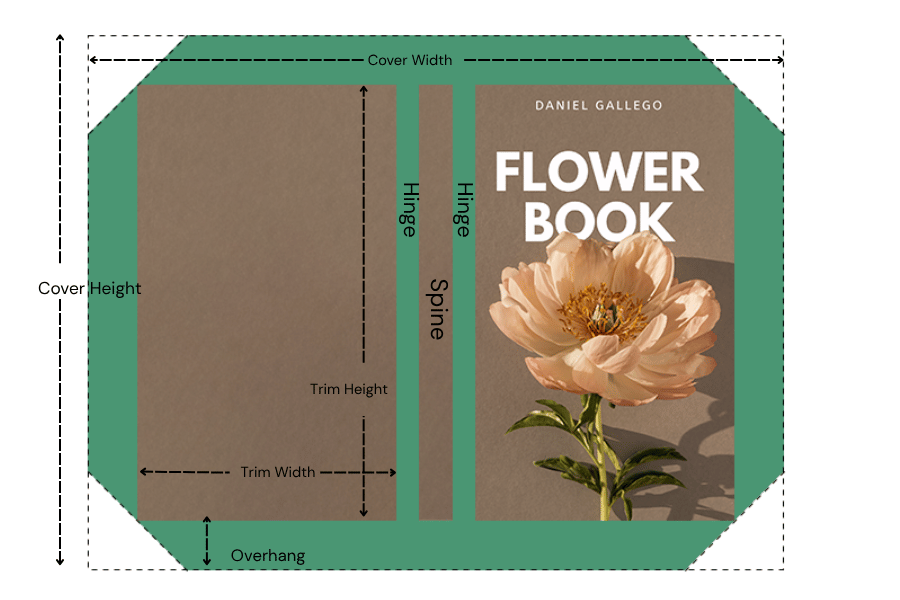
أبعاد الكتاب ذو الغلاف الصلب مقابل حجم القطع
قبل تصميم عملك الفني بغلاف مقوى, من المهم حساب أبعاد غطاء الحالة بالكامل بشكل صحيح. وهذا يضمن العمود الفقري, طَوّق, ويتم محاذاة عناصر الغلاف بشكل صحيح أثناء الطباعة والتجليد. فيما يلي الصيغ القياسية التي تستخدمها الطابعات لتحديد القياسات النهائية للغلاف المقوى.
- عرض غطاء العلبة = (عرض القطع × 2) + عرض العمود الفقري + (المتراكبة اليسرى + المتراكمة اليمنى)
- ارتفاع غطاء العلبة = ارتفاع القطع + (أعلى المتراكمة + المتراكمة السفلية)
يزداد الحجم المتراكم عادةً عندما يصبح الكتاب أكثر سمكًا. تتطلب الكتب ذات الغلاف الصلب الأكبر حجمًا امتدادًا أوسع للحالة لحماية الصفحات الداخلية بشكل أفضل والحفاظ على النسب المتوازنة على الرف.
كمبدأ توجيهي عام:
- الكتب ذات الغلاف الصلب تحت 400 تستخدم الصفحات عادةً تراكبًا يبلغ حوالي 0.125 بوصة (3 مم) على كل جانب مفتوح.
- الكتب بين 400 و 800 غالبًا ما تتطلب الصفحات تراكبًا أكبر قليلاً يبلغ حوالي 0.1875 بوصة (4.5 مم).
- أغلفة سميكة للغاية 800 قد تستخدم الصفحات تراكبًا يبلغ 0.25 بوصة (6 مم) أو أكثر, اعتمادًا على هيكل الربط وسمك اللوحة.
لأن بناء العمود الفقري, نوع الورق, ونمط الربط يمكن أن يؤثر جميعها على أبعاد الحالة النهائية, يوصى دائمًا بالتأكد من المواصفات الدقيقة للطابعة قبل بدء الإنتاج.
مثال (التجارة الأمريكية 6″×9″, 300 الصفحات)
لنفترض:
- حجم القطع: 6عرض × 9 ارتفاع
- عرض العمود الفقري (مُقدَّر): 0.7″ (انظر القسم 4 للحساب)
- المتراكمة: 0.125″ من كل جانب
عرض غطاء القضية
= (6″ × 2) + 0.7″ + 0.125″ + 0.125″
= 12″ + 0.7″ + 0.25″
= 12.95″
ارتفاع غطاء العلبة
= 9″ + 0.125″ + 0.125″
= 9.25″
لذا فإن حجم غطاء العلبة النهائي الخاص بك هو 12.95 بوصة عرضًا × 9.25 بوصة ارتفاعًا.
هذا هو البعد الذي يجب عليك استخدامه لحجم قطع العمل الفني للغلاف الخاص بك(قبل إضافة النزيف).
توصيات تراكب الغلاف الصلب
عادةً ما تزداد كمية الغلاف المقوى كلما أصبح الكتاب أكثر سمكًا. غالبًا ما تتطلب الكتب الأكبر حجمًا والأثقل امتدادًا أوسع قليلاً لتحسين المتانة, حماية حواف الصفحة, والحفاظ على النسب المتوازنة.
كمبدأ توجيهي عام للإنتاج:
| سمك الكتاب (الصفحات) | الموصى بها المتراكمة |
| حتى 400 الصفحات | حوالي 0.125 ″ (3 مم) |
| 400– 800 صفحة | حوالي 0.1875 ″ (4.5 مم) |
| زيادة 800 الصفحات | حوالي 0.25 ″ (6 مم), اعتمادا على هيكل الربط |
قد تختلف الأبعاد الفعلية المتراكمة وفقًا لنمط ربط الغلاف الصلب, سمك اللوح, ومعايير إنتاج الطابعة.
كيف يؤثر عرض العمود الفقري على أبعاد الغلاف الصلب
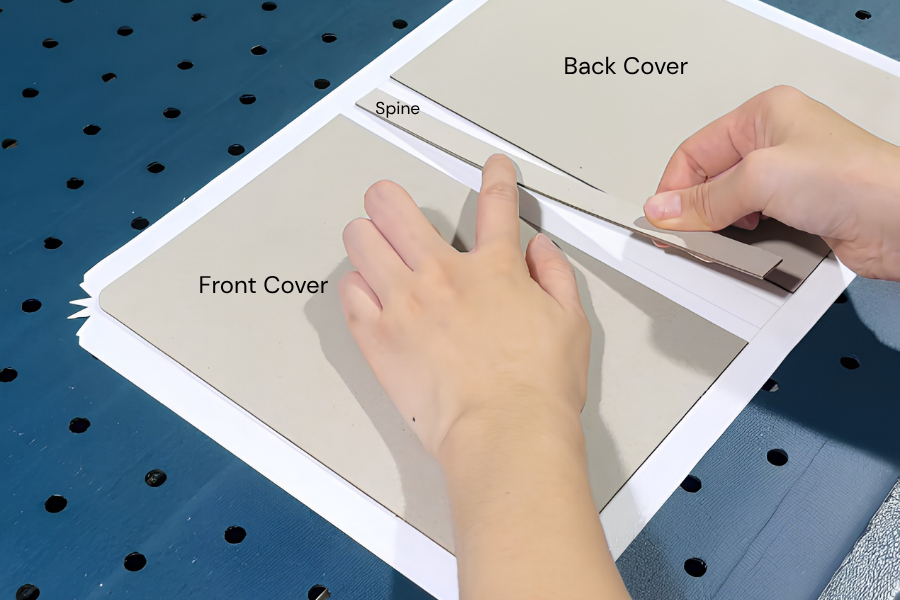
تقدير سمك العمود الفقري يعد الدقة أمرًا ضروريًا لحجم الغلاف - خاصة إذا كان العمود الفقري يتضمن نصًا أو رسمًا. نظرًا لأنه لن يكون لديك كتلة كتاب مطبوعة قبل تصميم الغلاف, استخدم الطريقة التالية.
- سمك العمود الفقري (مم) = (إجمالي الصفحات ÷ 2) × سماكة الورق (مم لكل ورقة)
الجدول المرجعي لسمك الورق
| نوع الورق | GSM | سمك لكل ورقة (مم) | سمك لكل ورقة (بوصات) |
| ورق مطفي/لامع | 80 | 0.10 | 0.0040 |
| إزاحة غير مصقولة (غالي) ورق | 100 | 0.12 | 0.0047 |
| ورق مطفي/لامع | 128 | 0.11 | 0.0043 |
| ورق مطفي/لامع | 157 | 0.14 | 0.0055 |
| المغلفة ماتي / لامعة Ppaer | 200 | 0.18 | 0.0071 |
حساب المثال
سيناريو:
- 300 الصفحات
- 80 جي إس إم الورق غير المصقول (0.10 مم لكل ورقة)
سمك العمود الفقري = (300 ÷ 2) × 0.10 مم = 150 × 0.10 = 15.0 ملم(تقريبا. 0.59″)
كيف تؤثر أنماط الربط على حجم الغلاف الصلب?
يمكن لأنماط التجليد المختلفة أن تغير أبعاد الغلاف النهائية قليلاً.
- تستخدم الأغلفة الصلبة ذات الظهر المربع صيغة الحساب القياسية مباشرة.
- عادةً ما تتطلب الأغلفة الصلبة ذات العمود الفقري المستدير بدلًا أوسع قليلاً للعمود الفقري لمراعاة الشكل المنحني.
- تتم طباعة سترات الغبار بشكل أكبر قليلاً من غلاف الغلاف الصلب للسماح بالتغليف والطي حول الألواح.
لأن هيكل الربط يؤثر على القياسات النهائية, من الأفضل دائمًا التأكد من قالب الغلاف الدقيق باستخدام الطابعة الخاصة بك قبل الانتهاء من العمل الفني.
كتب حقيقية بغلاف مقوى قمنا بطباعتها
ليست مجرد حسابات، بل كتب حقيقية, أبعاد حقيقية, نتائج حقيقية. فيما يلي بعض العناوين ذات الغلاف المقوى التي قمنا بتصنيعها للناشرين, المؤلفين المستقلين, والعلامات التجارية في جميع أنحاء أمريكا الشمالية وأوروبا.
مغامرات أليس في بلاد العجائب
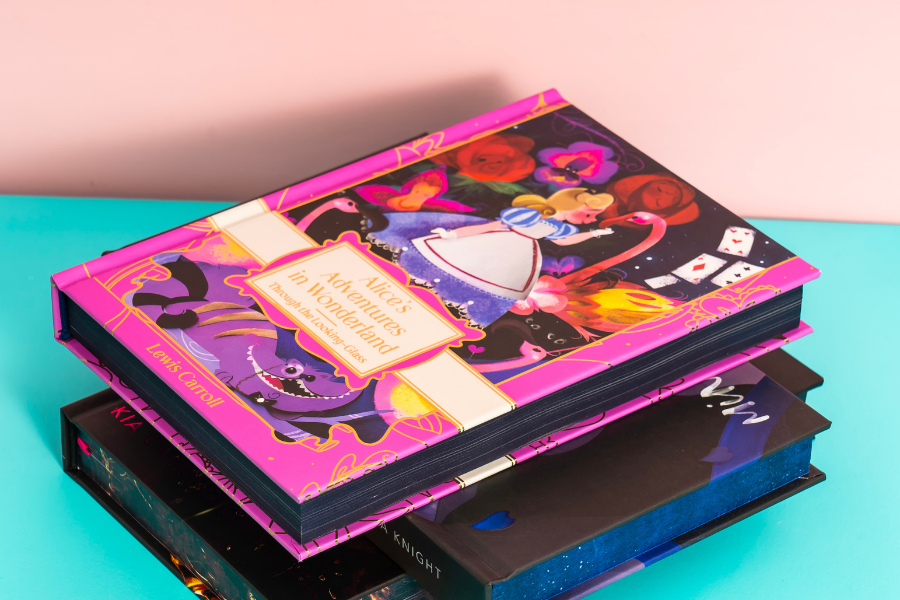
يعرض المثال أعلاه كتابًا بغلاف مقوى كبير الحجم مصممًا لتقديم عرض مرئي متميز. بناء على متطلبات العميل, مواصفات هذا الإصدار هي كما يلي:
- الحجم النهائي: 8 بوصة × 10 بوصات
- ملزم: غلاف (العمود الفقري مربع)
- عرض العمود الفقري المقدر: 20 مم
- نمط الغلاف: غلاف من الورق المقوى باللون الرمادي مع طبقة من الورق المطبوع
- الانتهاء من السطح: ماتي التصفيح, الطباعة الملونة الموضعية
- نمط الصفحة الداخلية: طباعة حدود سوداء/حواف صفحة داكنة
يُستخدم هذا الحجم من الكتب ذات الغلاف المقوى بشكل شائع:
- كتب الأطفال المصورة
- طبعات المجمع
- كتب هدايا مميزة
- منشورات الفن والخيال
الحجم الأكبر للكتب ذات الأغلفة الصلبة يجعلها أكثر وضوحًا على أرفف الكتب, جذب انتباه الأطفال, بينما يمنح العمود الفقري المربع السميك الكتاب مظهرًا أكثر رقيًا, يشعر النشر التقليدي, تعزيز قيمة العرض على أرفف الكتب أو عدادات البيع بالتجزئة.
تعلم أجزاء جسدي مع Gygy
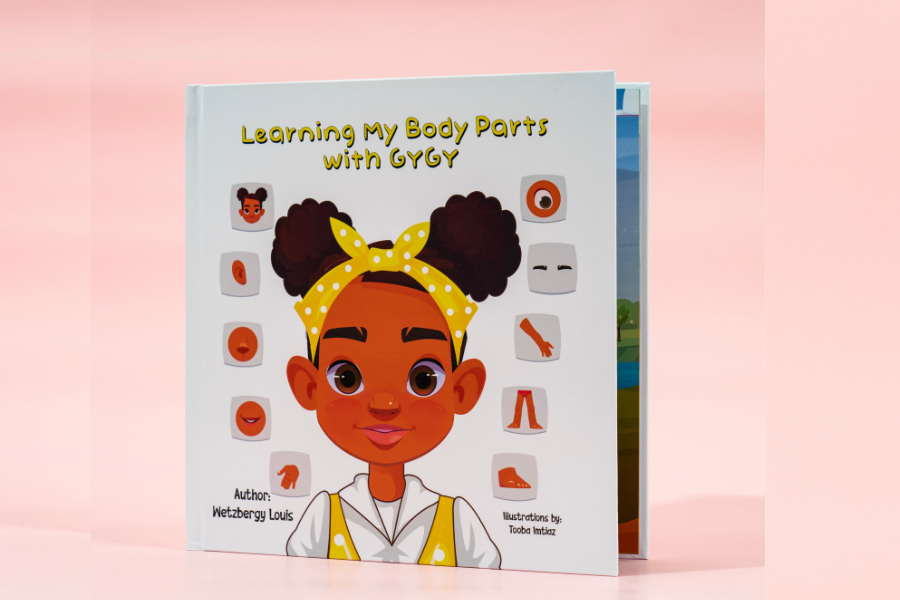
على أساس النسب, يستخدم هذا الكتاب تنسيقًا عموديًا للأطفال. مواصفات هذا الكتاب ذو الغلاف الصلب هي كما يلي:
- حجم القطع: 8.5″ × 11″
- نوع الربط: غلاف Casebound مع عمود فقري مربع
- مادة تغطية: ورق فني مطبوع مثبت على لوح رمادي
- التشطيب: ماتي التصفيح الناعمة, سطح متين
- سمك المجلس: لوح بغلاف مقوى متوسط الوزن لمتانة صديقة للأطفال
يُستخدم هذا الحجم بشكل شائع في كتب الأطفال التعليمية لأنه يخلق توازنًا أفضل بين سهولة القراءة, مساحة التوضيح, وتفاعل الصفحة. لكتب الأطفال ذات الغلاف الصلب, يسمح حجم القطع الأكبر:
- رسوم توضيحية أكبر وطباعة أكثر وضوحًا
- تخطيطات صفحة أكثر راحة للقراء الشباب
- رؤية أفضل أثناء الفصل الدراسي أو قراءة الوالدين والطفل
- جاذبية أقوى على الرف في المكتبات والأسواق التعليمية
يمكنك أيضًا ملاحظة نسب الغطاء الأمامي الواسعة نسبيًا والألواح السميكة ذات الغلاف الصلب, مما يساعد الكتاب على الشعور بالمتانة والتميز مع حماية الصفحات الداخلية من الانحناء أو التلف. ولهذا السبب يستخدم الناشرون عادةً أحجامًا أكبر للأغلفة الصلبة للكتب المصورة, الكتب التعليمية, وعناوين تعليمية تفاعلية مثل هذا.
الأفكار النهائية
لأن كل مشروع مختلف, نوصي المستخدمين بحساب حجم الكتاب بغلاف مقوى بناءً على عدد الصفحات, سمك الورق, طريقة الربط, والاستخدام المقصود في السوق قبل بدء الإنتاج.
إذا كنت تخطط لمشروع غلاف مقوى مخصص وتحتاج إلى مساعدة في تحديد حجم القطع الصحيح, عرض العمود الفقري, أو تخطيط الغلاف, يمكن لفريقنا المساعدة في تقديم توصيات الإنتاج وقوالب جاهزة للطباعة بغلاف مقوى لمشروعك.
مصممة بشكل جيد hardcover cookbook achieves a careful balance between clear information delivery and visual appetite appeal. يجب أن تجمع بين الوظائف, التميز الجمالي, واتساق العلامة التجارية لخلق تجربة مستخدم لا تنسى. يعتمد كتاب الطبخ الناجح بغلاف مقوى على ثلاثة عناصر أساسية: عرض مرئي عالي الجودة, ملزمة دائمة ومرنة, والحجم والشكل المختار بشكل مناسب. تضمن طباعة الصور المتميزة إعادة إنتاج كل طبق بألوان دقيقة, تفاصيل غنية, وملمس واقعي, بينما يضمن التصميم الدقيق والربط الاحترافي التدفق السلس للصفحة والاستقرار الهيكلي على المدى الطويل. في نفس الوقت, the right dimensions and thoughtful design details enhance usability in real kitchen environments. When these elements work together, the result is a hardcover cookbook that not only attracts attention visually but also reflects superior craftsmanship, متانة, and brand value.
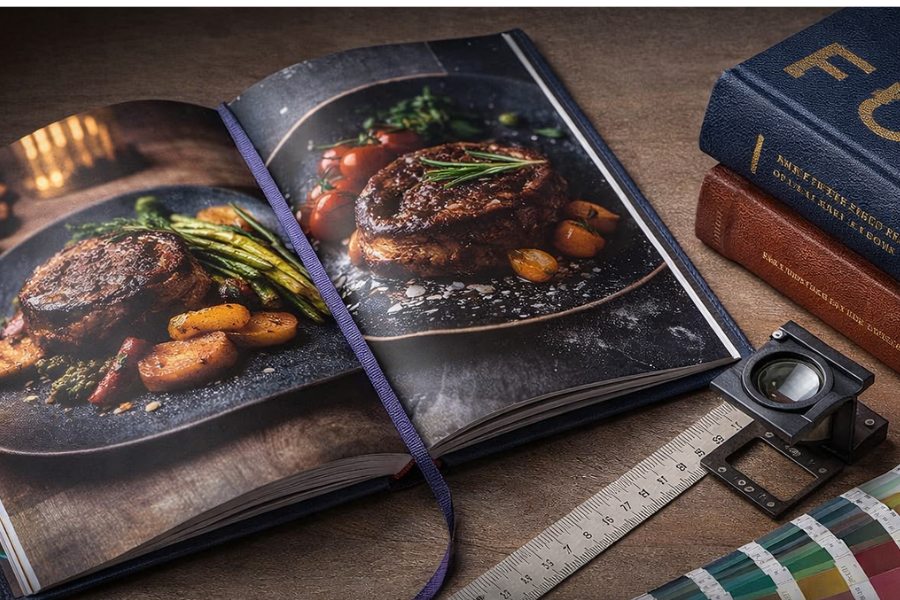
How Food Photography Becomes the Soul of a Hardcover Cookbook
Food photography is the emotional and visual centerpiece of any successful hardcover cookbook. The ability to accurately present color, نَسِيج, and freshness directly determines how appealing the dishes appear to readers. High-quality printing ensures that every image communicates an appealing appeal while reinforcing the overall brand identity. In professional hardcover cookbook production, visual presentation is not only about aesthetics. It is a strategic combination of paper selection, color management, finishing techniques, and precise layout planning.
Paper selection is the first critical factor affecting image quality. الأوراق المغلفة, such as gloss art paper and matte art paper, are widely preferred in hardcover cookbook printing because their smooth coated surface prevents excessive ink absorption. This allows ink to remain on the surface, maximizing color saturation, sharpness, and detail. في المقابل, uncoated offset paper absorbs more ink, often causing colors to appear dull or gray. Gloss art paper enhances vibrancy and contrast, making dishes look more vivid and fresh, while matte art paper reduces glare and creates a more refined, premium appearance. بعد الطباعة, finishes such as gloss lamination or UV coating can further enhance brightness and saturation, whereas matte lamination or matte varnish provides a softer, more elegant look, ideal for brands seeking a sophisticated visual tone.
Professional color management is equally essential to achieving consistent and accurate results. All food images should maintain a minimum resolution of 300 DPI to ensure sharp reproduction in print. Color also plays a functional and psychological role in hardcover cookbook design. Warm tones such as red, orange, and yellow naturally stimulate appetite and draw attention, while neutral tones create visual balance and improve readability. The primary color palette should align with the restaurant or brand identity to strengthen brand recognition, secondary colors can help organize content sections, and accent colors highlight signature dishes or seasonal specialties. To maintain visual harmony, a well-designed hardcover cookbook typically limits its palette to two or three core colors, using variations in brightness and saturation to create depth without overwhelming the reader.
قبل الإنتاج الضخم, professional color proofing and sampling are essential to ensure accurate color reproduction. This process allows designers and manufacturers to verify color accuracy, detect potential shifts, and make adjustments before full-scale printing begins. Proper proofing ensures that the final hardcover cookbook faithfully reproduces the natural tones, freshness, and visual appeal of the food, while minimizing costly production errors and revisions.
Surface finishing techniques further enhance the visual impact and perceived value of a hardcover cookbook. Processes such as spot UV, ختم احباط, النقش, and soft-touch lamination can highlight key design elements, create visual hierarchy, and elevate the tactile experience. These finishing details not only improve durability but also reinforce the premium positioning of the cookbook and the brand it represents.
أخيراً, layout structure must be carefully planned to work in harmony with printing and binding requirements. Signature dishes are often presented using full-bleed or double-page spreads to maximize visual impact, while supporting dishes are arranged in structured multi-image layouts to maintain balance and readability. This approach ensures smooth page flow, structural stability, and an engaging reading experience throughout the hardcover cookbook.
ك professional printing manufacturer, we implement a rigorous prepress review, color calibration, and proofing process to ensure every hardcover cookbook achieves the highest standards of visual accuracy, متانة, وكفاءة الإنتاج. By carefully coordinating paper selection, color control, finishing techniques, and layout optimization, we help clients produce hardcover cookbooks that combine exceptional visual appeal with long-term performance and strong brand value.
Why Cover Materials and Binding Determine the Durability of a Hardcover Cookbook
The materials and structural design of a hardcover cookbook play a decisive role in defining its overall quality, متانة, and visual identity. The cover material, بخاصة, sets the tone for the entire book and directly influences how readers perceive the brand. Options such as linen-textured cloth, leatherette, or specialty paper covers can instantly communicate sophistication and craftsmanship, while protective finishes like lamination or soft-touch coating enhance both tactile comfort and resistance to wear. These material choices not only improve longevity but also elevate the perceived value of the hardcover cookbook.
| Material Type | Key Features | أفضل ل | Considerations |
| قطعة قماش / Linen Cover | Natural texture, soft visual tone, refined woven surface | Fine dining restaurants, organic cafés, wine bars, boutique restaurants | Can absorb stains more easily; consider stain-resistant coating or darker colors |
| Specialty Paper Cover | Unique textures (embossed, الخيزران, tactile finishes), strong design identity | Modern restaurants, dessert shops, coffee houses, design-focused brands | Always review physical samples before final selection to ensure brand alignment |
| Pearl or Metallic Paper غطاء | Subtle shimmer, elegant light reflection | Upscale contemporary restaurants, luxury dining concepts | Upscale contemporary restaurants, luxury dining concepts |
| PU Leather Cover (Synthetic Leather) | متين, فعالة من حيث التكلفة, easy to clean, wide color options | Steakhouses, hotel restaurants, high-traffic dining environments | متين, فعالة من حيث التكلفة, easy to clean, and wide color options |
| Genuine Leather غطاء | Natural grain, develops character over time, luxury positioning | Michelin-level restaurants, private clubs, heritage brands | تكلفة أعلى; best paired with foil stamping or embossing |
| PVC / Waterproof Cover | Water-resistant, easy to maintain, vibrant color options | Casual dining, seafood restaurants, family restaurants | Less premium feel compared to cloth or leather |
Beyond the surface, the internal structure and binding method are equally critical. A properly constructed hardcover uses high-density greyboard to provide rigidity and structural integrity, ensuring the book maintains its shape even with frequent handling. Professional mounting and wrapping techniques further enhance durability and create clean, refined edges. Among all binding methods, Smyth-sewn binding combined with hardcover construction is considered the gold standard for hardcover cookbook printing. This method significantly improves strength while allowing the book to lay flat naturally, making it easier for readers to follow recipes and view full-page food photography without obstruction. This lay-flat capability is especially important for cookbooks, which are often used in active kitchen environments.
Attention to finishing details further strengthens both visual appeal and brand recognition. Techniques such as foil stamping, النقش, النقش, and spot UV can highlight logos, العناوين, or key design elements, creating visual contrast and tactile depth. These enhancements not only improve aesthetics but also communicate professionalism and premium positioning to the end user.
أخيرًا, the coordination of cover materials, structural design, تقنيات الربط, and finishing processes determines the durability, قابلية الاستخدام, and market perception of a hardcover cookbook. By carefully selecting the right combination of materials and binding methods, publishers and brands can create hardcover cookbooks that deliver exceptional visual impact, superior durability, and a lasting impression of quality.
How to Choose the Right Size and Detail Features for a Hardcover Cookbook
Selecting the appropriate size and incorporating thoughtful design details are essential steps in creating a hardcover cookbook or restaurant menu that is both functional and memorable. The right format improves readability, enhances usability, and reinforces the restaurant’s brand image, while carefully chosen finishing details can elevate the overall dining experience without significantly increasing production costs.
Standard Sizes for Hardcover Cookbooks and Restaurant Menus
The size of a hardcover cookbook or menu should be determined by the amount of content, dining environment, and user convenience.
مقاس A4 (210 × 297 مم)
This is the most widely used and versatile size for restaurant menus and hardcover cookbooks. It provides ample space to clearly organize appetizers, main courses, desserts, and beverages without overcrowding the layout. A4 is ideal for dine-in restaurants, fine dining establishments, and premium cookbook presentations. For enhanced durability, lamination or protective coatings are commonly applied to extend lifespan and maintain visual quality.
مقاس A5 (148 × 210 مم)
A5 offers a more compact and portable format, making it perfect for cafés, small restaurants, tasting menus, or limited-item hardcover cookbooks. This size creates a cleaner and more intimate reading experience, encouraging customers to engage more comfortably with the content. It is especially suitable when simplicity and portability are priorities.
DL Size (99 × 210 مم)
This slim, vertical format creates a modern and elegant appearance. It is often used for drink menus, dessert menus, wine lists, or specialty selections. The unique proportions help create visual distinction and work particularly well in bars, lounges, and contemporary restaurant environments.
Detail Enhancements That Elevate the Hardcover Cookbook Experience
A truly memorable hardcover cookbook or menu often stands out because of subtle yet thoughtful design features. These enhancements not only improve visual appeal and tactile quality but also influence customer engagement and reinforce brand identity.
Spot UV for Visual Emphasis
Spot UV coating can be applied to specific elements such as food photography, الشعارات, or key dish names. This technique creates a subtle gloss contrast that highlights textures like the shine of a steak, the surface of a beverage, or rising steam from a dish. The result is increased visual depth and improved appetite appeal, especially under changing lighting conditions.
Die-Cut Cover Design
A die-cut window on the hardcover allows selected artwork, الشعارات, or featured dishes to be partially revealed. This layered visual effect adds sophistication, creates curiosity, and enhances the perceived design value of the hardcover cookbook.
Ribbon Bookmarks for Convenience and Premium Appeal
Integrated ribbon bookmarks provide both functional and aesthetic benefits. They allow readers to easily mark favorite recipes or sections while reinforcing the premium positioning of the hardcover cookbook. This small detail enhances usability and adds a refined finishing touch.
Fluorescent or Glow-in-the-Dark Ink for Low-Light Environments
For restaurants with dim lighting, such as bars or fine dining venues, fluorescent or glow-in-the-dark printing can improve readability while adding a distinctive and memorable visual effect. This feature enhances usability while contributing to a unique brand experience.
Custom Inner Pages for Brand Storytelling
The inside cover or opening pages can feature a welcome message, brand story, or chef’s recommendations. These elements help establish an emotional connection with readers and strengthen brand identity from the very first interaction.
Interactive and Specialty Design Elements
Creative features such as illustrated sections, themed layouts, or interactive elements can make the hardcover cookbook more engaging and memorable. These thoughtful details enhance the user experience and differentiate the brand in a competitive market.
Display Supports and Presentation Accessories
Custom-designed holders or display stands, such as wood or acrylic supports, can enhance presentation while protecting the hardcover cookbook during use. Proper presentation reinforces the premium image and improves overall usability in restaurant environments.
Strategic Considerations for Size and Detail Selection
Choosing the right size and design details should balance three key factors: قابلية الاستخدام, تحديد المواقع العلامة التجارية, وكفاءة الإنتاج. Larger formats provide stronger visual impact, while smaller formats improve portability and convenience. Carefully selected finishing details can significantly enhance perceived value and customer engagement without substantially increasing production costs.
When size, بناء, and finishing details are strategically combined, the final hardcover cookbook becomes more than just an informational tool—it becomes a powerful extension of the restaurant’s brand, delivering both functional performance and lasting visual impression.
خاتمة: Professional Printing Defines the True Value of a Hardcover Cookbook
The quality of a hardcover cookbook ultimately depends on the professionalism of the printing process and the careful selection of materials and finishing techniques. Beyond visual design alone, ensuring sharp image clarity and accurate color reproduction is the most critical factor in elevating the perceived quality of the final product. High-quality paper combined with precise printing allows food textures, الألوان, and details to be presented authentically, making the hardcover cookbook more visually appealing, معقول, and engaging for readers.
Equally important is the practicality and durability of the structural design and binding method. Appropriate paper weight and professional binding not only improve the reading experience but also ensure long-term stability in high-frequency usage environments such as restaurants and commercial kitchens. Consistent color management and strict printing control further guarantee visual consistency throughout the hardcover cookbook, strengthening brand identity and maintaining a cohesive, المظهر الاحترافي.
أخيرًا, a well-produced hardcover cookbook is more than a simple presentation tool—it is a powerful extension of the restaurant’s brand. Superior printing quality, carefully selected materials, and refined finishing details continuously communicate professionalism and craftsmanship with every interaction. This enhances customer perception, builds trust, and elevates the overall dining experience, reinforcing the restaurant’s brand value long after the first impression.